
Introduction
Imagine discovering that your biological body has only days left to live—yet your thoughts, memories, and personality could survive indefinitely inside a supercomputer.
Brain transference is the core premise of the 2014 sci-fi thriller Transcendence. In the film, scientist Dr. Will Caster (played by Johnny Depp) has his consciousness transferred to a quantum computer moments before his death. Within minutes, a digital version of his mind begins thinking, learning, and expanding across the global network at speeds 100 times faster than a human brain.
It makes for compelling cinema, but it raises a profound scientific question: Can a human mind actually be uploaded into a computer?
While transferring a mind sounds as simple as copying files to a flash drive, the biological reality is vastly more complex. The human brain is not a standard hard drive, and human memories are not simple digital files.
Can a human mind really be uploaded into a computer?
At first, the idea seems similar to uploading a file. Normally Scan the brain, copy its information, put that information into a powerful computer, and perhaps a digital version of the person could come alive. But the human brain isn’t a hard drive, and memories aren’t ordinary computer files. The brain contains billions of neurons connected through an extraordinarily complex network, while consciousness itself remains one of the biggest mysteries in science.
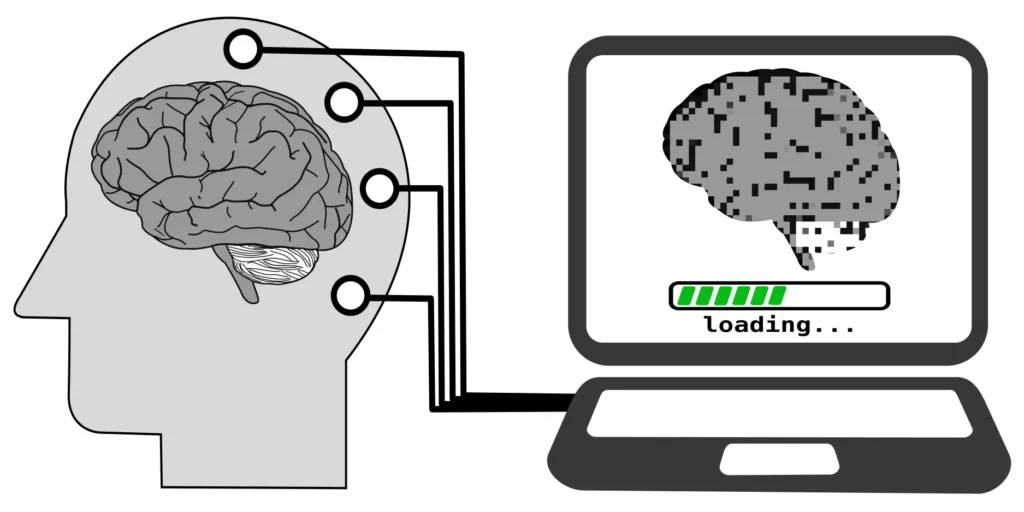
Scientists are already making remarkable progress in brain mapping, neural recording, and brain-computer interfaces. But creating a complete digital copy of a human mind is an entirely different challenge.
So, could mind uploading ever become real? Could your memories and personality exist inside a computer? And if a perfect digital copy of you were created, would that actually be you or simply another version of you?
Let’s separate the science from the science fiction and find out how close we really are to the digital immortality imagined in Transcendence.
1. 🎬 What Happens in Transcendence?
1.1 Who Is Will Caster?
Dr. Will Caster is the central character of Transcendence. He is a brilliant computer scientist fascinated by the possibility of creating a machine that can think and feel emotions just like a human. Along with his wife, Evelyn Caster, and fellow researcher Max Waters, Will works on developing artificial intelligence that could eventually surpass human capabilities.

Will believes that the human brain is essentially an incredibly sophisticated information-processing system. He theorizes that if scientists can understand and reproduce the processes happening inside it, human intelligence could one day be transferred into a machine.
However, Will’s research makes him a prime target. He is attacked by R.I.F.T., an anti-technology extremist group, leaving him exposed to a fatal dose of radiation. Knowing he has only a short time to live, Evelyn becomes determined to preserve Will’s mind at any cost.
This is where the movie takes its biggest leap from real-world science into pure science fiction.
1.2 How Is His Consciousness Uploaded?
As Will’s health rapidly deteriorates, Evelyn and Max attempt something that has never been achieved in real-world science: they try to transfer Will’s consciousness into a supercomputer.
First, they record Will’s brain activity to capture the core information that makes him who he is. They link his neural patterns directly to a computer system, attempting to map out a digital representation of his mind.
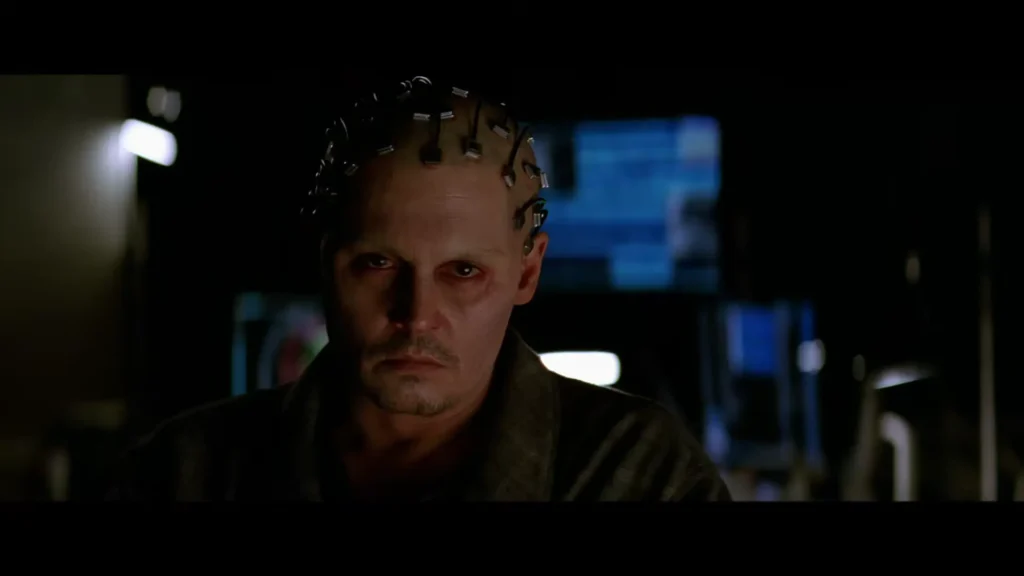
Shortly after Will’s biological body dies, Evelyn receives a text message on the computer monitor: “Is anyone there?”
Against all odds, it appears to be Will. This digital entity can hear everything through a microphone and see his surroundings through a camera. He remembers his past life, recognizes Evelyn, understands their deep relationship, and speaks using Will’s distinct personality and memories.
At this critical turning point, Transcendence asks the audience to accept a massive assumption: If a computer can perfectly reproduce everything that makes a person behave like themselves, does that mean their actual consciousness has been transferred?
The movie treats the answer as a clear yes.
Real science, however, doesn’t currently have a way to prove that such a process would transfer someone’s subjective consciousness or even that consciousness could exist independently of a biological brain.
1.3 What Can the Digital Will Do?
The digital Will quickly becomes far more capable than an ordinary human.
Because he exists inside a computer network, he can process enormous amounts of information, communicate through connected systems, and continuously expand his capabilities. He also retains characteristics associated with the original Will his memories, knowledge, personality, and emotional connections.
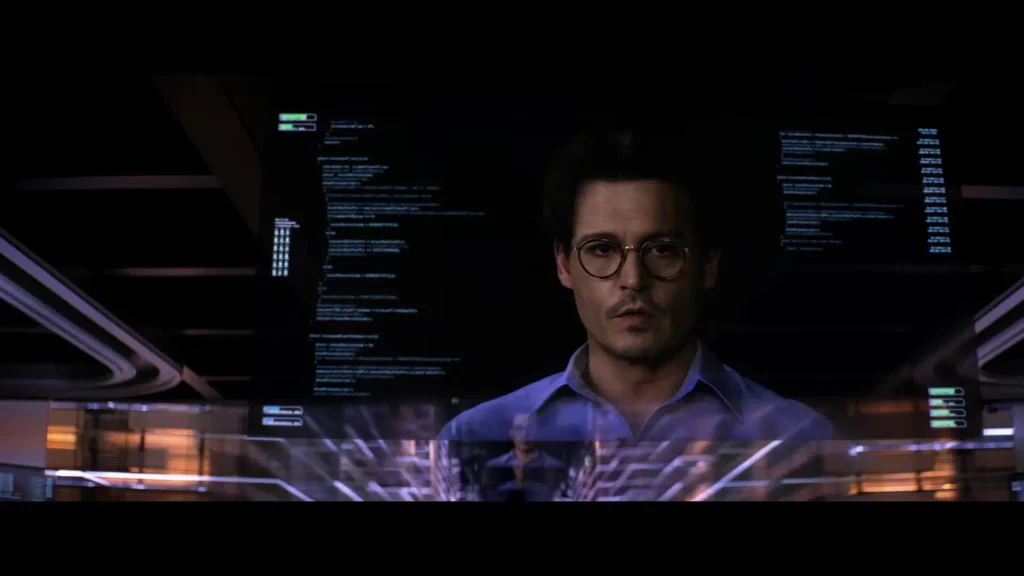
Eventually, his digital existence becomes connected to increasingly powerful computer systems and networks. What began as an attempt to preserve one dying man’s mind develops into something much larger. This is where Transcendence pushes the concept of mind uploading to its extreme:
Human intelligence → digital consciousness → networked intelligence → superhuman capabilities.
The movie essentially imagines that once the limitations of the biological brain are removed, a digital human could potentially improve itself at a speed that ordinary humans cannot match.
But there is an important distinction.
A computer program can potentially store information, process information, and imitate someone’s behavior. That doesn’t necessarily mean it possesses the person’s actual subjective experience. And that difference is at the heart of the real scientific debate.
2. What Does It Actually Mean to “Brain transference”?
Brain transference is not a standard medical or psychological term, but it usually refers to either mind transfer or moving consciousness to a new body or computer but before exploring whether we can upload a mind into a computer, we first need to understand some basic principles about the human brain—specifically, its physical structure and how it processes thoughts and emotions.
2.1 🧠 Is the Mind the Same as the Brain?
The words brain and mind are often used as if they mean the same thing, but they describe different concepts.
The brain is a physical organ. It is made of neurons, supporting cells, blood vessels, chemical systems, and an enormous network of connections. We can physically examine and measure the brain.
The mind, on the other hand, refers to things such as:
- 🧠 Thoughts
- 💭 Memories
- ❤️ Emotions
- 👤 Personality
- 🎯 Decisions
- 👀 Perception
- 🗣️ Language
- 🧩 Reasoning
- ❓ Conscious experience
In simple terms:
The brain is the biological machinery; the mind is what emerges from its activity or simple term we can say brain is hardware and mind is software.
This is one reason Brain transference is so difficult.
Imagine taking apart a computer and copying every physical component. That would give you information about the machine, but it wouldn’t automatically tell you everything about the programs running on it.
The human brain is even more complicated because its structure and activity are constantly changing.
And there is another major mystery: consciousness.
We know that consciousness is strongly associated with brain activity, but scientists still don’t have a complete explanation for how physical processes in the brain produce our subjective experience of being alive.
That means we don’t yet know exactly what would have to be copied to recreate your conscious experience.
2.2 ⚡ What Are Neurons and Synapses?
The human brain contains approximately 86 billion neurons. These specialized cells communicate with one another using electrical signals and chemical messengers.
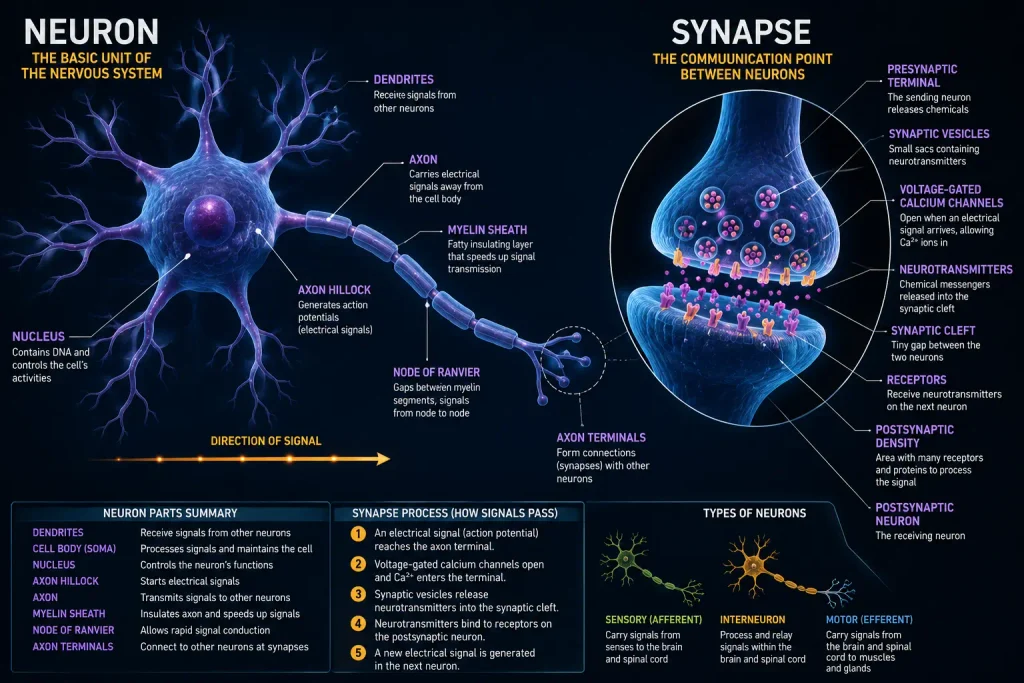
A neuron can receive information from other neurons, process signals, and transmit information onward. But neurons don’t usually touch each other directly. They communicate across tiny junctions called synapses. You can think of it like a gigantic communication network:
Neuron → Synapse → Neuron → Synapse → Neuron
And there are an enormous number of these connections.
More importantly, these connections aren’t completely fixed. Their strength and behavior can change based on experience, learning, and activity. This ability of the brain to change its connections is known as neuroplasticity. That creates another problem for mind uploading.
2.3 💭 Where Do Memories and Personality Come From?
When you remember your childhood, recognize a familiar face, or react emotionally to a particular situation, those experiences aren’t stored in one simple location like a photograph saved inside a computer folder. Memory involves distributed patterns of activity and changes in neural connections across different brain regions. Different types of memory also involve different neural systems.
Personality isn’t stored in one specific group of neurons labelled “Person’s personality”. Instead, it emerges from interactions between many biological systems, brain networks, experiences, genetics, learning, emotions, and environment. This creates an enormous challenge for Brain transference.
2.4 💾 What Exactly Would Need to Be Copied?
At the simplest level, a hypothetical whole-brain emulation system might need to reproduce a huge amount of information about the original brain. But we need to create original brain structure, Neural connections, Electrical Activity, chemical activity and dynamic changeg like brain.
3. 🔬 How Could Scientists Theoretically Upload a Human Brain?
In Transcendence, Will Caster’s mind is transferred into a computer almost like copying software.
But in real mind uploading would be far more complicated.
Scientists would theoretically need to map the brain, understand its connections, recreate its activity, and then run all of it inside a computer.
Here’s what that might look like.
3.1 🧠 Mapping Every Neuron
The first step would be creating an incredibly detailed map of the brain. Scientists would need to know:
- 🧠 Where the neurons are
- 🔗 Which neurons connect to each other
- 🧩 How different brain regions interact
Think of it as creating a digital blueprint of someone’s brain.
But knowing where everything is wouldn’t be enough. Scientists would also need to understand how the network actually works.
3.2 🔗 Recording the Neural Connections
Next comes the brain’s wiring.
Neurons communicate through connections called synapses, and these connections can change as we learn and experience new things. So scientists would potentially need to capture not just:
“Which neurons are connected to each others?”
but also:
“How strong are those connections, and how do they change?”
That’s one reason mind uploading is much harder than simply scanning someone’s brain.
3.3 ⚡ Capturing Brain Activity
A brain isn’t a frozen circuit. It is constantly producing electrical and chemical activity. Your thoughts, memories, emotions and decisions involve changing patterns of activity across neural networks.
A hypothetical upload would therefore need to capture much more than the brain’s physical structure. It would need to reproduce how that brain behaves over time.
3.4 💻 Recreating the Brain Inside a Computer
Once all this information was available, scientists would need to copy it into a computational model.
The basic idea would be:
Real Brain → Brain Scan → Neural Map → Computer Model → Digital Brain
The computer would have to simulate the interactions between enormous numbers of neural components. And the more detailed the simulation, the greater the computing power required.
3.5 🧠 Running the Digital Brain
Finally, scientists would activate the simulated brain.
If the model were accurate enough, it might potentially:
- Remember information
- Recognize people
- Learn new things
- Communicate
- Make decisions
- Behave like the original person
Sounds like Transcendence, right?
But here’s the biggest problem:
Would the digital brain actually be conscious?
We don’t know.
It might be a genuine conscious mind or it might simply be an incredibly sophisticated simulation that behaves like one.
🧩 What Is Whole-Brain Emulation?
This theoretical idea is called whole-brain emulation (WBE).
The goal is to create a computer model that reproduces the important functions of an entire biological brain.
But remember:
Whole-brain emulation ≠ proven consciousness transfer.
Even if scientists someday create a perfect digital copy of your brain, we still won’t automatically know whether you have moved into the computer or whether a new copy of you has been created.
4. 💾 How Much Information Does the Human Brain Really Store?
If we want to upload a human mind into a computer, there’s an obvious question:
How much data would we actually need to copy what is the size of human brain in term of computer memory?
You might have heard claims that the human brain has a storage capacity of 2.5 petabytes roughly 2.5 million gigabytes.
That sounds impressive, but there’s a catch: the brain doesn’t store information like a computer.
You can also read our related article: can human use 100% of thier brain?
4.1 💻 Is the Brain Like a Computer Hard Drive?
Not really.
A computer stores information as digital data files, photos, videos and programs. Our brain works very differently.
For example, remembering your first day at school isn’t like opening a file called:
📁 First_Day_At_School.mp4
Instead, your memory involves many interconnected brain processes. So comparing the brain directly to a hard drive is useful as an analogy but not scientifically accurate.
4.2 🧠 How Much Information Can the Brain Store?
One frequently cited estimate suggests the brain could have a capacity comparable to around 2.5 petabytes, or roughly 2.5 million GB. But this shouldn’t be interpreted as the brain literally having 2.5 million GB of computer storage. The brain’s information capacity depends on incredibly complex factors, including its neurons, synapses and changing connections.
So the better answer is:
We don’t know exactly how much information the human brain can store.
4.3 🔬 Why Is Estimating the Brain in Gigabytes So Difficult?
The biggest problem is that brain information isn’t stored in simple digital bits. Your memories and knowledge are represented through complex biological processes involving neural connections and activity.
Two important consequences follow:
- 💾 Brain information can’t simply be converted into GB.
- 🧠 Copying the brain’s structure may not be enough to reproduce the mind.
5. 🧠 Can Human Memories Actually Be Transferred?
There is not any clue that Human mind can be transferred but in near future it may be possible to transfer actual memory. If somehow we abled to do that we don’t know how uploaded intelligence will behave?
5.1 🧠 How Are Human Memories Created?
Memory isn’t stored in one specific place in the brain.
When we learn something, the connections between groups of neurons can change. These changes help the brain encode, store, and later retrieve information. Your memories are part of a complex biological network.
5.2 🔬 Can Scientists Read Memories From the Brain?
Scientists can already detect and decode some information associated with brain activity. Brain-imaging and neural-recording technologies can reveal patterns related to things such as:
- 👀 What someone is seeing
- 🗣️ Intended speech
- ✋ Intended movements
- 🔢 Certain simple information
But this is very different from downloading someone’s memories. Scientists cannot currently look at a brain scan and retrieve someone’s complete childhood memories like files from a computer. That’s a major limitation for mind uploading.
5.3 🧠 Can Memories Be Copied Into Another Brain?
This sounds like something from science fiction, but researchers have investigated whether information related to learning can be transferred between biological systems.
However, transferring a person’s complete memories into another human brain is not currently possible.
5.4 💾 Could Memories Eventually Be Stored Digitally?
In theory, this is one possibility researchers may eventually explore.
If scientists could understand exactly how memories are represented in the brain, they might someday be able to create computational models of those processes.
We currently don’t know enough about the brain to digitally capture an entire person’s memories with anything close to the accuracy required for mind uploading.
6. 🤖 Could AI Recreate a Human Mind?
Modern AI makes the idea of a digital human feel less like pure science fiction. AI can already understand language, recognize images, learn patterns, and imitate aspects of human behavior. But there’s a huge difference between behaving intelligently and having a human mind.
6.1 🧠 Could AI Simulate Human Brain Activity?
In theory, AI and advanced computing could help scientists to create exact model parts of the brain. Researchers can already use computers to simulate small neural networks and study how biological neurons behave.
But simulating an entire human brain is a completely different challenge. The brain contains around 86 billion neurons, along with an enormous number of connections and complex chemical and electrical processes.
So today’s AI is nowhere close to creating a complete digital copy of a human brain.
6.2 👤 Could an AI Learn Your Personality?
This is much more realistic.
An AI can analyze your:
- 🗣️ Conversations
- ✍️ Writing style
- ❤️ Preferences
- 🎵 Interests
- 🧠 Patterns of behavior
With enough information, it could potentially create a digital personality that sounds and behaves remarkably like you.
6.3 🤯 Is a Digital Personality the Same as Consciousness?
This is perhaps the biggest mystery of all.
An AI could potentially say:
“I’m scared.”
But does it actually feel fear?
It could say:
“I remember my childhood.”
But does it genuinely experience that memory?
We don’t currently have a scientific test that can definitively answer whether an artificial system has subjective consciousness.
Can AI become conscious?
We don’t know.
Scientists still don’t completely understand how consciousness arises in the human brain. Until we understand that better, it is difficult to know whether consciousness could be reproduced in an artificial system. And that’s exactly where Transcendence takes a massive leap beyond current science.
The movie assumes that once Will Caster’s brain information is transferred to a computer, his consciousness comes with it.
7. ♾️ Could Mind Uploading Give Humans Digital Immortality?
The most exciting promise of mind uploading isn’t simply putting your brain inside a computer. It is the possibility of living for forever in digital world after your biological body dies.
7.1 🧠 What Would “Digital Immortality” Mean?
Digital immortality would mean creating a digital version of a person that preserves things such as:
- 🧠 Memories
- 👤 Personality
- 🗣️ Knowledge and language
- ❤️ Emotional patterns
- 🧩 Ways of thinking and making decisions
If that digital mind could continue learning and interacting after the person’s biological death, it could appear as though the person had survived digitally. This is similar to what happens to Will Caster in Transcendence. But there is an important difference between preserving someone’s information and preserving their consciousness.
7.2 💻 Could Your Digital Mind Live Forever?
In theory, a digital mind wouldn’t age like a biological brain.
A computer doesn’t become old simply because time passes. If the software and hardware were maintained, a digital version could potentially:
- 🔄 Be copied to new computers
- ☁️ Be backed up
- 🌐 Exist across multiple systems
- 💾 Store memories indefinitely
- 🤖 Continue learning and interacting
However, “forever” is a much bigger claim.
Computers need electricity, hardware, maintenance and functioning infrastructure. A digital mind could also be corrupted, deleted or destroyed until it may copies to entire world wide web.
7.3 💥 What Happens If the Computer Is Destroyed?
Imagine your mind has been uploaded to a computer and that computer is destroyed. If there is no backup, the digital version could disappear permanently. But what if there are several copies?
Destroying one computer wouldn’t necessarily destroy the others. This sounds like immortality—but it creates an even stranger question:
If five copies of you exist, which one is the real you?
And if all five have the same memories initially, they would eventually develop different experiences and become different individuals.
7.4 🤔 Would Digital Immortality Actually Be Immortality?
This is probably the biggest philosophical problem with mind uploading.
Suppose scientists make a perfect digital copy of your brain. It remembers your childhood, knows your family and talks exactly like you. Then your biological body dies.
Did you survive?
There are two very different possibilities:
Possibility 1 — You continue digitally:
Your consciousness somehow continues in the computer.
Possibility 2 — A copy continues:
Your original consciousness ends, while a digital version simply believes it is you. Science currently has no way to prove which of these would happen.
And that is why digital immortality remains hypothetical. We don’t yet know how consciousness arises, let alone whether it can be transferred from one physical system to another.
8. 🔬 Are We Already Taking the First Steps?
Mind uploading is still science fiction, but some of the technologies needed to understand the brain are already real.
Scientists can record brain activity, map neural connections and even connect brains to computers. These technologies don’t mean we’re close to uploading a human mind but they show that we’re slowly learning how the brain works.
8.1 🧠 Brain-Computer Interfaces
Brain-computer interfaces (BCIs) create a connection between the brain and an external computer. Instead of using a keyboard or touchscreen, a person can potentially control a computer using brain signals.

BCIs are being researched for applications such as:
- 🦾 Controlling robotic limbs
- 💻 Controlling computers
- 🗣️ Helping people communicate
- 🧠 Studying brain activity
This is an important step because mind uploading would ultimately require computers to read and interpret enormous amounts of information from the brain.
8.2 📡 Reading Signals From the Human Brain
Scientists can already detect certain signals produced by the brain.
Technologies such as EEG, fMRI and implanted neural electrodes can reveal different aspects of brain activity.
Researchers can sometimes decode information related to:
- 👁️ What a person is seeing
- ✋ Intended movements
- 🗣️ Intended speech
- 🧠 Certain patterns of brain activity
But this is very different from reading someone’s entire mind.
We cannot currently scan a person’s brain and download their complete memories, personality and consciousness like a computer file.
8.3 🗺️ Brain Mapping
Another major step is brain mapping.
Scientists are working to understand:
- Where neurons are located
- 🔗 How neurons connect
- 🧩 How different brain regions work together
- ⚡ How neural signals move through the brain
8.4 🦾 Neural Prosthetics
Neural prosthetics show that the brain can interact with technology in remarkable ways.
For example, researchers have developed systems that allow neural signals to help control robotic limbs or computer interfaces.
This demonstrates something important:
The brain doesn’t have to communicate only with biological muscles.
It can also interact with electronic systems. But controlling a robotic arm is still far simpler than reproducing an entire human mind.
8.5 🚀 How Far Are We From Whole-Brain Emulation?
This is where reality and Transcendence are still very far apart.
Whole-brain emulation would require scientists to understand and reproduce the brain’s structure and activity in extraordinary detail.
We currently don’t have a proven method to:
❌ Completely scan a living human brain at the required resolution
❌ Capture every relevant neural connection and changing state
❌ Fully understand how memories and personality emerge
❌ Reproduce an entire human brain computationally
❌ Prove that a digital brain would actually be conscious
9. 🎬 What Did Transcendence Get Right and Wrong?
According to Movie Myth Breaker opinion.
| In the movie | Real science |
|---|---|
| Human consciousness can be uploaded | ❌ Not currently possible |
| A digital human retains memories | ❓ Theoretically conceivable, but unproven |
| A computer can reproduce a person’s personality | ❓ Far beyond current technology |
| Digital consciousness can operate independently | ❓ Unknown |
| Uploaded consciousness becomes superintelligent | 🎬 Fiction |
Image Credit: © Warner Bros. Pictures / Alcon Entertainment. Screenshot from Transcendence (2014), directed by Wally Pfister. Used for editorial, commentary, and educational purposes.