
What if One day you wake up and realise that all of your memories from childhood to an Adult, emotions, and intelligence are not Yours but implanted in Your brain? Either it is preprogrammed memory or Anyone else memories. How would you feel like? Everywhere flying cars, holographic companions, and futuristic megacities ever becomes reality. These aren’t just fascinating science fiction ideas they’re some of the biggest questions explored in this blog Blade Runner 2049 Explained.
Since the release of the original Blade Runner in 1982 and Blade Runner 2049 in 2017, the franchise has been praised not only for its stunning visuals but also for its thought-provoking vision of the future. Unlike many science fiction films that rely on impossible technology, Blade Runner presents concepts rooted in real scientific fields such as artificial intelligence, genetic engineering, synthetic biology, neuroscience, robotics, and environmental science.
Today, researchers and technology companies are making remarkable progress in many of these areas. AI assistants can hold natural conversations, scientists can grow human tissues in laboratories, and brain-computer interfaces are beginning to connect the human mind with machines. While we’re still far from creating Replicants (Artificial Humans), some of the building blocks of Blade Runner’s world already exist.
In this article, we’ll separate science from fiction by exploring the real technology behind Blade Runner. We’ll examine whether Replicants could ever exist, how close we are to memory engineering and AI companions, the feasibility of flying cars and future megacities, and what leading scientists think about the film’s bold predictions. By the end, you’ll know which technologies are already becoming reality, which remain decades away, and which are still firmly in the realm of science fiction.
What is Blade Runner?
- Blade Runner (1982): The story is about Replicants, in a dystopian 2019 in Los Angeles, An Ex-Cop Rick Deckard is forced out of his retirement. He given a task to kill 4 escaped Nexus-6 replicants. Because they have returned to earth to find their creator (Dr. Tyrell) and harm him because replicants have only life span of 4 years and they wanted to live more. As they are Bioengineered robots since earth is prohibited for replicants they should be die.
- Blade Runner 2049: In Blade runner 2049, a LAPD replicant who retires older, After unearthing a secret that proves replicant can reproduce a baby. As they robots made of muscles and bone this miracle can threatens the societal hierarchy because humans does not want that replicant should birth a baby. But wallace Wanted to get technology of giving birth a baby by replicant. Blade Runner K is tasked with erasing the evidence that Replicant can birth a baby. Since K is also a Replicant but He is Nexus-9 Model so he had a life span like a normal human.
What Makes Blade Runner Scientifically Interesting?
- Replicants : Replicants are bioengineered synthetic humans designed to look, act, and feel exactly like real humans. Created by powerful company (the Tyrell Corporation in the original Blade Runner and the Wallace Corporation in Blade Runner 2049), they serve as slave labour for dangerous tasks, hazardous military operations, and off-world colony exploration.
- The Voight-Kampff Test: Because they look completely human, authorities use specialized psychological exams (like the Voight-Kampff test or the Baseline test) to measure emotional and pupillary responses to detect them.
- Artificial Intelligence : One of the most realistic technologies in Blade Runner 2049 is Joi, an advanced artificial intelligence companion created by the Wallace Corporation. Unlike traditional virtual assistants, Joi can hold natural conversations, understand emotions, remember personal preferences, offer companionship, and adapt her personality to the user’s needs like if you make it wife she will behave like your wife. Although she appears as a hologram, her intelligence is cloud-based, allowing her to interact almost like a real person. Even she was like real girlfriend of K. and also can feel emotions.
- Memory Engineering : One of the most fascinating concepts in Blade Runner 2049 is memory engineering. Replicants are implanted with carefully designed memories that shape their personalities, emotions, and identities. These memories feel completely real, even though they were artificially created. In the film, memory designer Dr. Ana Stelline crafts detailed memories that help Replicants develop emotional stability and a sense of humanity.
- Genetic Engineering : At the heart of Blade Runner lies one of the most advanced concepts in biotechnology genetic engineering. Instead of building robots from metal and electronics, the film imagines Replicants as living biological beings whose DNA has been carefully designed to give them enhanced intelligence, strength, endurance, and disease resistance.
- Flying Cars : In Blade Runner, Spinners are futuristic vehicles capable of driving on roads and flying through the skies using vertical takeoff and landing. They are widely used by law enforcement and civilians, allowing fast travel through the crowded megacity.
- Holograms : The film features highly advanced holograms, most notably Joi, a lifelike AI companion. These holograms can move freely, communicate naturally, display emotions, and interact with people, creating the illusion of a real human presence.
- Smart Cities : Blade Runner presents massive futuristic cities filled with towering skyscrapers, giant digital advertisements, AI-powered surveillance, autonomous systems, and densely populated urban environments. The city is highly automated, technologically advanced, and operates around the clock.
- Climate Engineering : The world of Blade Runner is heavily affected by environmental decline, constant rain, pollution, and ecological collapse. Natural ecosystems have largely disappeared, and humanity relies on advanced technology to survive in an increasingly hostile environment.
- Space Colonies : The film depicts off-world colonies where humans have established settlements beyond Earth. These colonies are promoted as places offering better living conditions and new opportunities, while many Replicants are created to perform labor and dangerous tasks in these distant environments.
What Are Replicants?

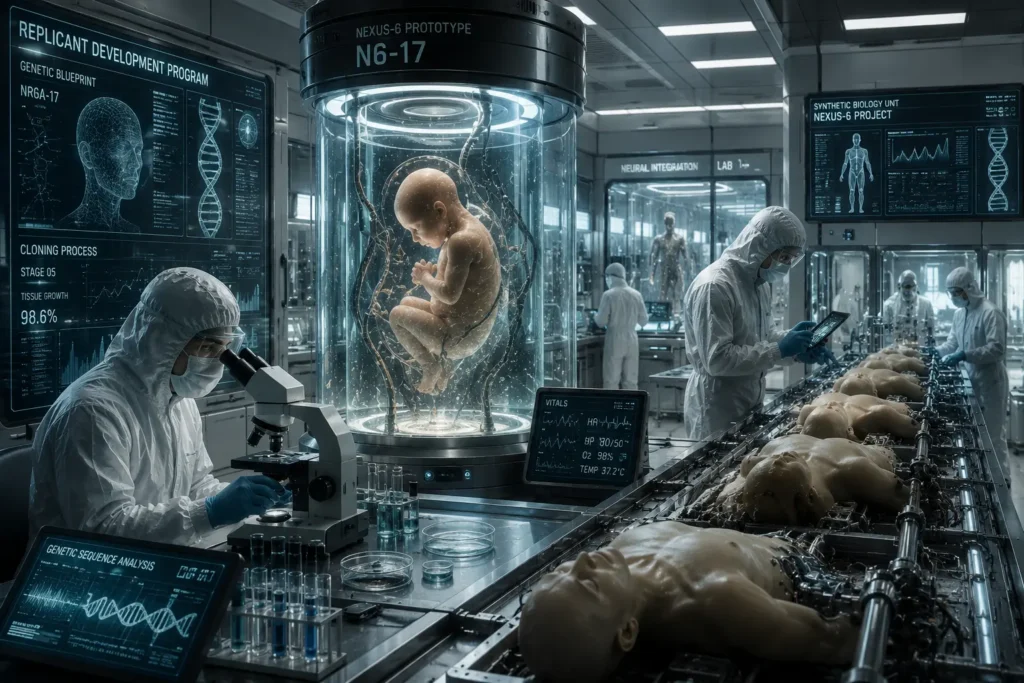
Replicants are bioengineered artificial humans created through advanced genetic engineering and synthetic biology. Unlike traditional robots made from metal and electronic components, they possess living cells, biological organs, muscles, blood, and even emotions. Designed to perform dangerous tasks, Replicants are almost indistinguishable from humans, making them one of the most scientifically intriguing concepts in science fiction.
Biological vs Robotic Humans
Unlike conventional robots, Replicants have DNA, skin, muscles, bones, and organs similar to humans, whereas robots rely on metal structures, electric motors, and computer processors. This biological design makes Replicants far more realistic and difficult to distinguish from natural humans.
Synthetic Organs
Replicants contain fully functional artificial organs that allow them to survive just like humans. Today, scientists are developing lab-grown tissues and 3D bioprinted organs, but creating complete artificial human organ systems remains a major scientific challenge.
Artificial Muscles
Replicants possess muscles that provide exceptional strength, speed, and endurance. Modern researchers are developing artificial muscles using smart materials and robotic technologies, although they are still far less capable than those shown in the films.
Artificial Blood
Replicants use biological blood to transport oxygen and nutrients throughout their bodies. Scientists are currently researching artificial blood substitutes for medical use, but no technology can yet fully replace all the functions of natural human blood.
Aging Process
Replicants are engineered to age, with some models intentionally given shorter lifespans of only 4 years to control their development. In real life, aging is influenced by DNA damage, cellular wear, and telomere shortening, making it one of biology’s most complex unsolved problems.
Strength
Replicants demonstrate superhuman strength and remarkable physical endurance. Such abilities would require major biological enhancements, including stronger muscles, denser bones, and improved energy metabolism technologies that are still beyond modern science.
Intelligence
Replicants can think, learn, solve problems, and display emotions much like humans. While modern AI has become highly advanced, scientists have not yet developed machines with true consciousness, self-awareness, or human-like emotional intelligence, making Replicant-level cognition purely fictional for now.
Modern Research in Synthetic Biology
Scientists are designing and reprogramming living cells to perform specific tasks. Current research focuses on editing DNA using CRISPR, engineering bacteria to produce medicines, creating synthetic cells, and developing micro organisms that can detect diseases or clean pollutants. Researchers are also attempting to build minimal artificial cells to better understand the fundamentals of life.
Current achievements
- CRISPR gene editing for inherited diseases.
- Synthetic microbes that manufacture insulin and vaccines.
- Artificial chromosomes and simplified synthetic genomes.
- Research into programmable living cells.
Modern Research in Tissue Engineering
Scientists are working to grow replacement tissues that can repair or replace damaged parts of the human body. They combine stem cells with biodegradable scaffolds and growth factors to create tissues that behave like natural ones.
Current achievements
- Lab-grown skin for burn patients.
- Engineered cartilage for joint repair.
- Artificial corneas under development.
- Blood vessels created for experimental transplantation.
- Muscle tissue grown in laboratories for medical research.
Modern Research in Lab-Grown Organs
One of the biggest goals of regenerative medicine is creating fully functional organs for transplantation. Researchers are using stem cells, organoids, and 3D bioprinting to develop miniature versions of organs that can be used for disease research and drug testing.
Current achievements
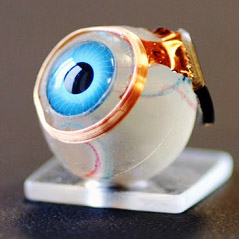
- Miniature hearts, kidneys, brains, intestines, and livers (organoids).
- 3D-printed skin and cartilage.
- Experimental bioprinted heart tissue.
- Research into transplantable kidneys and livers.
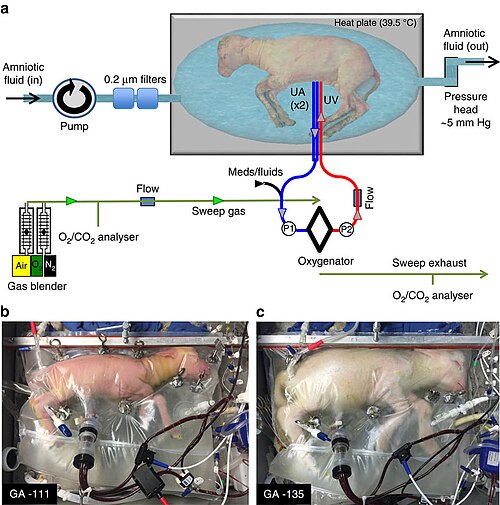
The biggest challenge is creating organs with complex blood vessel networks that function exactly like natural organs.
Modern Research in Human Enhancement
Scientists are exploring ways to enhance human abilities rather than simply treat disease. Research includes powered exoskeletons, brain-computer interfaces, advanced prosthetic limbs, gene editing, and AI-assisted medical technologies.
Current achievements
- Robotic exoskeletons helping people walk again.
- Prosthetic arms that respond to nerve signals.
- Brain-computer interfaces enabling communication through thought.
- Gene therapies for rare inherited disorders.
- AI systems assisting surgeons and medical diagnosis.
Researchers are not trying to create superhuman soldiers like Replicants. Most current work is aimed at improving health, restoring lost functions, and enhancing quality of life.
Companies & research
- Organovo
- E Genesis
- United Therapeutics
- Harvard Wyss Institute
Can Scientists Create Artificial Humans?
Scientists cannot create artificial humans like the Replicants in Blade Runner. However, several fields of research are moving toward creating human-like biological systems or they can called as clone created by any real human DNA.
What Scientists Can Do Today
- Gene Editing: Tools like CRISPR can modify DNA to correct genetic diseases or study gene functions.
- Stem Cells: Researchers can grow human tissues and miniature organs (organoids) in laboratories.
- Cloning: Animals have been successfully cloned, but reproductive human cloning is illegal or heavily restricted in most countries.
- Synthetic Embryo Models: Scientists have created embryo-like structures from stem cells for research, but these cannot develop into full humans.
- Artificial Organs: Lab-grown skin, blood vessels, and other tissues are already being used in medical research and treatments.
What Scientists Cannot Do
- Create fully grown humans in laboratories.
- Engineer people with superhuman strength, intelligence, or reflexes.
- Program personalities or implant complete memories.
- Accelerate human growth from embryo to adult in a short time.
- Manufacture biological humans on demand like Replicants.
Major Challenges
- Understanding the complexity of human brain development.
- Safely controlling millions of interacting genes.
- Ethical and legal restrictions on human experimentation.
- Reproducing human consciousness and emotions.
- Providing artificial wombs and complete developmental environments.
The Science of Memory Implantation
Modern neuroscience has shown that human memories are surprisingly flexible. Scientists can weaken, modify, or even create false memories under controlled conditions through psychological techniques. Researchers are also studying brain-computer interfaces and neural stimulation to better understand how memories are formed and stored. However, no existing technology can implant a complete lifetime of realistic memories into a human brain.
Following Institute, Organisation are working on it
- MIT : MIT are studying how memories are formed, stored and researching to modify it.
- DARPA : They working on Implantable brain device that can help restore memory in brain injury.
- Neuralink : Neuralink Elon musk’s company is developing brain computer interfaces to control any device directly from brain without physical touch. This little device implanted to the human brain.

Implanted childhood memories, as shown in Blade Runner and Blade Runner 2049, remain impossible with current science because memory is not stored like a video file that can simply be copied into the brain. Instead, memories are distributed across billions of neurons and are constantly reconstructed each time we recall them.
Artificial Intelligence in Blade Runner
Artificial intelligence is one of the core technologies that defines the world of Blade Runner. Unlike conventional AI systems that simply follow commands, the film portrays intelligent machines capable of learning, reasoning, communicating, and making independent decisions. Replicants possess human-like intelligence, allowing them to solve complex problems, adapt to new situations, and even question their own existence. The film also introduces Joi, an AI companion that can hold natural conversations, understand emotions, remember personal preferences, and form deep emotional connections with humans. Together, these technologies explore the possibility of AI becoming so advanced that the line between human and machine begins to disappear, raising important questions about consciousness, free will, and what it truly means to be human.
Real examples
- OpenAI
- Anthropic
- Google DeepMind
- NVIDIA Robotics
Could Joi Exist?

Joi, from Blade Runner 2049, is a holographic AI companion capable of holding conversations, understanding emotions, remembering preferences, and forming a seemingly genuine relationship with its owner. While we are far from creating an AI exactly like Joi, many of the technologies behind her already exist in early forms.

What Joi Can Do
- Holds natural conversations
- Learns user preferences
- Remembers past interactions
- Gives emotional support
- Acts almost like a human partner
Current Reality
Today’s AI companions can already:
- Remember previous conversations
- Adapt to a user’s personality
- Offer emotional support
- Tell stories and role-play
- Help with productivity
Examples
- ChatGPT
- Replika
- Character.AI
- Google Gemini
- Microsoft Copilot
Current Limitation
Modern AI does not truly understand emotions. It predicts responses using language models rather than experiencing feelings.
Genetic Engineering
Modern genetic engineering has made remarkable progress with technologies like CRISPR-Cas9, which allows scientists to edit DNA with unprecedented precision. Researchers are already using gene editing to study inherited diseases, improve crops, and develop new medical treatments. However, designing an entire human with customized intelligence, personality, emotions, and physical abilities remains far beyond current science. Human genetics is incredibly complex, with thousands of genes interacting with environmental factors throughout development.
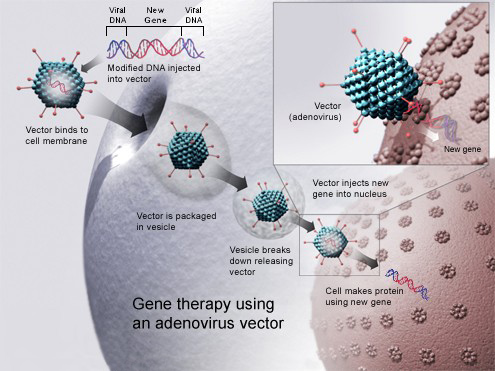
- Designer humans
- Gene editing
- CRISPR
- Cloning
- Ethics
Scientific Accuracy Rating Blade Runner 2049 Explained:
| Technology | Reality Score |
| AI | ⭐⭐⭐⭐☆ |
| Replicants | ⭐⭐☆☆☆ |
| Flying Cars | ⭐⭐⭐☆☆ |
| Memory Implantation | ⭐☆☆☆☆ |
| Genetic Engineering | ⭐⭐⭐☆☆ |
| Smart Cities | ⭐⭐⭐⭐☆ |
Frequently Asked Questions (FAQ)
1. Is Blade Runner scientifically accurate?
Partially. The film is based on real scientific concepts such as AI, genetic engineering, robotics, autonomous vehicles, and digital humans. However, technologies like Replicants and true holographic companions remain fictional.
2. Could Replicants exist?
Not with current technology. While cloning and gene editing are real, creating fully grown bioengineered humans with superior intelligence, strength, and implanted memories is far beyond modern science.
3. Can memories be implanted?
Only in a very limited sense. Scientists can influence certain memories in laboratory experiments, but transferring complete artificial life memories into a human brain is currently impossible.
4. Is Joi AI possible?
Partly. AI companions and realistic voice assistants already exist, but a self-aware holographic AI with genuine emotions and human-level intelligence does not.
5. Are flying cars real?
Yes, in early forms. eVTOL aircraft developed by companies like Joby Aviation, Archer Aviation, and Alef Aeronautics demonstrate that flying cars are becoming a reality, though they are not yet common.
6. What inspired Blade Runner technology?
The film drew inspiration from real advances in artificial intelligence, robotics, cybernetics, biotechnology, space exploration, and futuristic urban design.
7. Could humans be genetically engineered like Replicants?
Current gene-editing technologies such as CRISPR can modify DNA, but creating superhuman bioengineered humans like Replicants is far beyond today’s scientific capabilities.
8. Is Blade Runner based on real science?
Yes. Many of its futuristic ideas are rooted in genuine scientific research, even though the technologies shown are far more advanced than what exists today.
9. Will AI ever become conscious?
No one knows. Modern AI can imitate human conversation but lacks self-awareness or consciousness. Whether machines can truly become conscious remains an open scientific and philosophical question.
10. Which Blade Runner technology is closest to reality?
AI companions, voice AI, digital humans, facial recognition, autonomous drones, and electric flying vehicles are the closest real-world technologies, while Replicants and true holographic assistants remain science fiction.
Conclusion
Blade Runner (1982) and Blade Runner 2049 (2017) are more than visually stunning science fiction films—they explore technologies that are increasingly shaping our world. From AI companions and digital humans to genetic engineering, flying cars, and off-world colonies, many of their futuristic ideas are inspired by real scientific research.
While Replicants, implanted memories, and true holographic assistants remain beyond today’s capabilities, rapid advances in AI, robotics, biotechnology, and space exploration continue to bring parts of these visions closer to reality. More importantly, both films challenge us to think about the ethical questions surrounding these technologies and what it truly means to be human.
Rather than predicting the future exactly, the Blade Runner universe inspires innovation while reminding us that every technological breakthrough should be guided by responsibility, ethics, and humanity.
Image Credits: Some images and screenshots used in this article are sourced from Blade Runner (1982) and Blade Runner 2049 (2017). They are included solely for the purposes of commentary, criticism, education, and analysis. All copyrights and trademarks remain the property of their respective owners.
🔗 Related Posts
- Could the Multiverse Actually Exist According to Modern Science?
- Can Vibranium suit Exist? The Real Science Behind the Suit
- Could a Super Soldier Serum Like Captain America’s Exist?