
If you are a Marvel fan, you are definitely also a fan of Iron Man, and the Iron Man suit is one of the coolest technologies we have seen in any sci-fi movie. But have you ever wondered how close we are to building a real life Iron Man suit? In this blog, we’ll look at what technology is possible today and whether we will build it by 2030.
- But in the real world, there are multiple options available related to the Iron Man suit:
- Many creators have already built a same to same 3d printed similar suit, but Alex is one step ahead; his armour suit is 100% like the real one, made of metal.
- Real exoskeletons can assist human movement.
- Personal jet suits can achieve human flight.
- AI, sensors and advanced materials are also developing.
- But combining all of these into one compact, armored, long-duration flying suit is a much bigger challenge.
What Can Iron Man’s Suit Actually Do?
Before going to the topic of whether a real life Iron Man suit is possible or not, let us understand what features a fictional Iron Man suit has and what we need to build a real life Iron Man suit.
- Enhanced physical strength: From Iron Man’s Mark 1 to Mark 42 suit can enhance it’s user physical strength multiple times like a simple person can lift a whole car using suit.
- Armoured protection: The suit can withstand heavy armoured impact, like in Iron Man 1, Mark 2 was able to sustain the tank attack. Also suit was equipped with multiple defence system like repulsor blast, Micro missile and small bullet and laser mounted on it.

- Flight: Mark 1 was not equipped with a proper flight system. It could launch only like a ballistic missile; it could not fly, but Mark 2 was properly equipped and tested for flight. It had 2 boosters in both feet and two repulsor flights in hand for stabilising; also, this suit had proper flaps to quickly manoeuvre during flight.

- Computer-assisted targeting and information: Mark 2 was the most basic suit of Iron Man, so it was the first time the suit was equipped with real-time AI assistance, JARVIS. JARVIS tells about each and every problem related to the suit and can calculate distance, images, and any kind of data available world wide.
- Sensors: There are multiple sensors in the suit like computer vision, temperature and Motion and basic health monitor sensor which always tracks Tony’s health.
- Communication: Tony always communicates with JARVIS in real time, and he can also talk with any person on phone calls, like in Iron Man 1, when he was attacked by two Raptor fighter jets, he immediately calls his friend James Rhode to tell him It’s me, do not fire on me.
- Energy-intensive equipment: Suit have Multiple mechanical components and weapons systems, and high power-consuming devices like repulsor blast and flight system. And this energy can not be fulfilled with normal batteries, so the suit relies on Tony’s tiny arc reactor, which produces massive energy, like gigajoules per second, by nuclear fusion.

- MCU nanotechnology: Nano tech suit is far more advanced than normal one. first Nanotech suit was Mark 50. But today we are only discussing the most basic suit of Iron Man, Mark 2, which is far beyond current available technologies.
How Close Are We to a Real life Iron Man Suit?
Iron Man suit is really a collection of different technologies rather than one invention. Although it seems to be pure fiction in 2008 when this movie was released but in 2026 Most of the technogy have been developed are in developing phase. Let’s see how many technologies are close to building a real suit by 2030.
🤖Powered exoskeleton:
Powered Exoskeletons are the main device behind the suit’s physical strength. It enhances small muscle movements into large physical strength several times using electrical, mechanical or hydraulic actuators.

Real-life progress in Exoskeleton:
Lockheed Martin has developed an Exoskeleton named the Onyx Exoskeleton, which is capable of lifting heavy weapons and loads and can carry them at any height. It has a built-in artificial intelligence system that can track the movement of feet, hips, and other body parts and control the suit’s actuators accordingly.
SABER Exoskeleton has already been deployed by the United States Army. Although it is not a metal suit, it has multiple elastic bands that can reduce human muscle strain.\
Super Flex Exosuit is a project of DARPA. This suit is equipped with multiple actuators that respond to electrical signals.
🛡️Armor/protection
The military is already using many weapons that can be attached to their dress and helmet, like night vision cameras and bulletproof vests, although we are much behind in this sector compared to a real Iron Man suit. Until now, we have used portable and lightweight suits that soldiers can easily walk and run in. Although protection system is not up to mark till now.
🚀Flight system
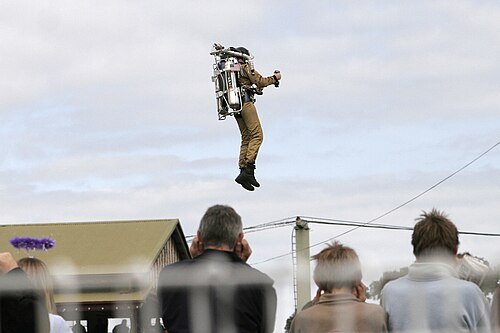
Although we have not developed a booster like a real Iron Man suit, we can fly like the real Iron Man. Today we can use miniature gas turbine engines that can lift to 200 kg. It can fly up to 50-80 miles per hour and easily can be controlled by body and hand movement like real suit.
⚡Energy source
Energy is the biggest challenge in developing a real life Iron Man suit. We can use a battery or a small engine, but they can never produce as much energy as a real suit requires. Today’s jet small engine can run only 3-4 hours on so much fuel that can fill in wearable suit also li-ion batteries are not that capable handling too many equipments for long time in limited space.
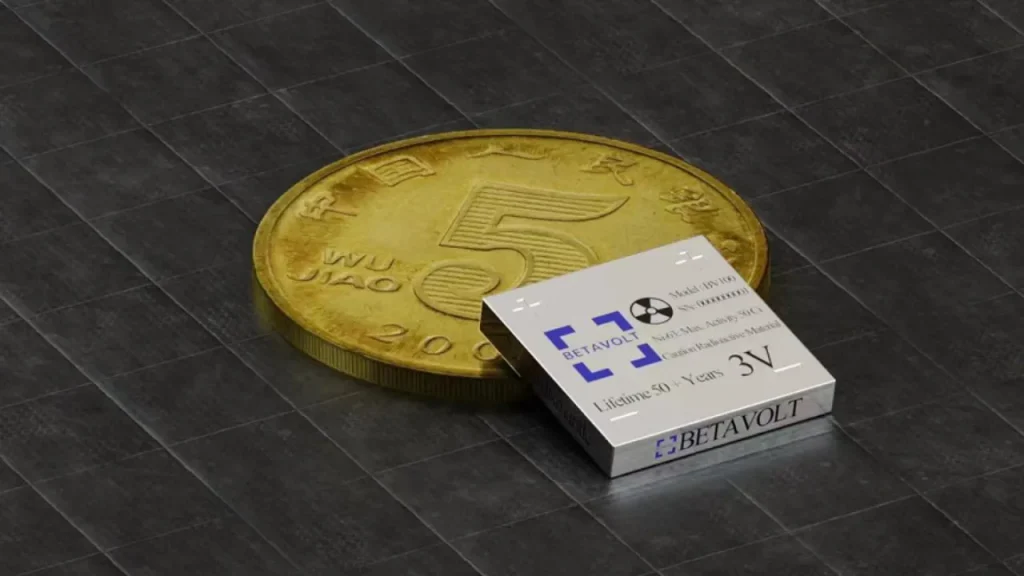
We need nuclear energy if we build a real suit like a nuclear battery. China have already developed a coin-sized nuclear battery named Betavolt BV100. It is based on nickel-63. This battery can last for 500 to 100 years. But this has very low output: 100 microwatts and 3v. So we still need decades to use this type of battery in any equipment.
🖥️Sensors and computers:
This is the sector where we are close to a real life Iron Man suit; we have advanced computers in tiny sizes and every sensor we require to put in a suit. Although many sensor are not very tiny that can fit on a wearable suit but in some years we will make it possible.
🤖AI assistance:
We already have much more advanced AI like ChatGPT and Google Gemini, which is very close to JARVIS. So yes, by 2030 we will have AI that will be up to the intelligence level of JARVIS.
Final Verdict:
So yes, by 2030 we will not have a real life Iron Man suit, but we will have many technologies that can be used in a real suit. Let’s see what is already possible, what will be possible in 2030 and what will still be fiction by 2030.
Already possible
- Exoskeleton assistance
- Wearable computing
- Sensors
- AI-assisted systems
- Personal flight demonstrations
Technically challenging by 2030
- Combining armor with flight
- Compact propulsion
- Long-duration operation
- Thermal management
- High-power wearable systems
Still fictional at MCU scale
- Movie-level compact power
- Fully integrated superhero capabilities
- Power supply fulfilment
A real life Iron Man suit is becoming technically possible in pieces, but a movie-accurate Iron Man suit by 2030 is not something current evidence can confidently predict.
Image Credit: Screenshots from Iron Man and other Marvel Studios films featuring JARVIS. © Marvel Studios / The Walt Disney Company. Used for commentary, criticism, analysis, and educational purposes.