
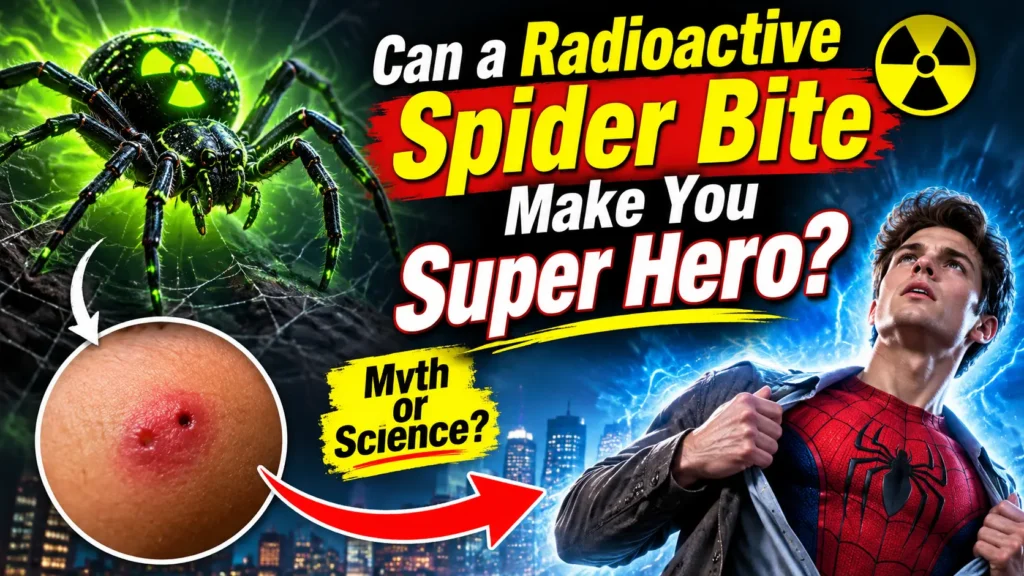
Peter Parker’s transformation into Spider-Man first movie was one of the most iconic superhero origin stories in cinema history. After being bitten by a radioactive spider, he develops extraordinary abilities, including superhuman strength, enhanced reflexes, wall-crawling skills using small hooks like hair in his palm, and a mysterious Spider-Sense.
But could something like this actually happen in real life? Could a radioactive spider bite change human DNA and give an ordinary person spider-like abilities? or can a radioactive spider kill you? Today in this blog I’m going to cover this whole topic.
1. How Did Peter Parker Become Spider-Man?
Peter Parker was an ordinary teenager in the movie who loves science and lives a relatively normal life and was the weakest boy in the college who always gets beaten by other boys of the college, until he was bitten by that radioactive spider. In the original Marvel comic-book story, Peter attends a scientific demonstration where a spider is exposed to radiation. Shortly afterward, the spider bites him, giving him extraordinary abilities.
After the Radioactive Spider bite, Peter discovers several unusual changes in his body:
- Superhuman strength: He can lift objects much heavier than an ordinary human.
- Enhanced reflexes: He can react quickly to danger.
- Wall-crawling: He can climb walls and cling to surfaces.
- Spider-Sense: He develops a mysterious warning ability that alerts him to approaching threats.
However, Spider-Man’s origin story is not identical across every adaptation. Peter Parker original story involves a radioactive spider, while some modern versions introduce genetic engineering. For example, Miles Morales gains his abilities from a genetically modified spider.
2. Can Radiation Actually Change Human DNA?
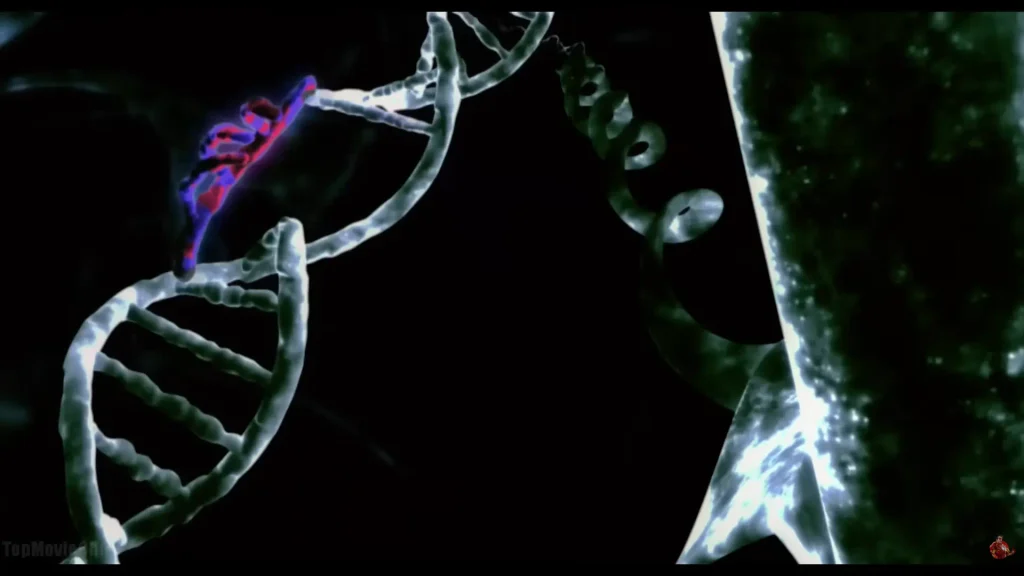
Yes, radiation can change human DNA, but the results are very different from what we see in Spider-Man movies. To understand this, we first need to know what DNA does inside our bodies.
DNA carries the genetic instructions that control how our cells grow, function, and repair themselves. You can think of it as a biological instruction manual for building and maintaining the human body.
Certain types of radiation, particularly ionizing radiation, have enough energy to damage this genetic material.
Examples include:
X-rays
Gamma rays
Certain radioactive particles
When ionizing radiation passes through living tissue, it can damage DNA in several ways. Sometimes cells repair the damage successfully. In other cases, the repair process introduces mutations, or the affected cells die.
But here is the important difference: a DNA mutation does not automatically create a useful new ability.
Radiation cannot selectively instruct your body to develop stronger muscles, sticky hands, or enhanced reflexes. Its effects are unpredictable and can increase the risk of cancer and other health problems.
So, although radiation can alter human DNA, it cannot turn an ordinary person into Spider-Man.
How Ionizing Radiation Damages DNA
Not all radiation has the same effect on the human body. Some types carry enough energy to damage the molecules inside our cells, while others do not. This difference helps explain why the radioactive spider concept doesn’t work scientifically.
1. Ionizing vs Non-Ionizing Radiation
Radiation is generally divided into two broad categories:
- Ionizing radiation: Has enough energy to remove electrons from atoms and molecules. Examples include X-rays, gamma rays, and certain radioactive particles.
- Non-ionizing radiation: Does not have enough energy to directly ionize atoms. Examples include radio waves, microwaves, and visible light.
Ionizing radiation is particularly important because it can damage DNA and other cellular structures.
2. How Does Radiation Damage DNA?
There are two main ways ionizing radiation can damage DNA:
- Direct damage: Radiation deposits energy directly into the DNA molecule, potentially breaking its chemical bonds or damaging its structure.
- Indirect damage: Radiation interacts with water molecules inside cells, producing highly reactive chemicals called free radicals. These chemicals can attack DNA and damage its structure.
3. What Happens After DNA Damage?
Once DNA is damaged, a cell can experience three possible outcomes:
- DNA repair: The cell successfully repairs the damaged genetic material.
- Mutation: Incorrect repair leaves permanent changes in the DNA sequence.
- Cell death: If the damage is too severe, the cell may stop functioning or die.
4. Why Are Radiation-Induced Mutations Unpredictable?
Radiation doesn’t choose which genes to modify or what characteristics an organism should develop. Mutations can affect different parts of DNA, and their consequences depend on which cells and genetic instructions are damaged.
Some mutations have little noticeable effect, while others can interfere with normal biological functions or contribute to cancer.
This is the biggest scientific problem with Spider-Man’s origin story: radiation can damage genetic instructions, but it cannot intelligently rewrite them to create superhuman abilities.
3. Can a Radioactive Spider Transfer Genetic Mutations Through Its Bite?
A Radioactive Spider bite can introduce venom into human tissue, but it cannot transfer the spider’s genetic abilities to another person. Radioactive Spider venom contains a mixture of proteins, peptides, and other chemicals that can affect nerves, muscles, and surrounding tissues. These substances are very different from genetic material such as DNA.
There are three important scientific points to understand:
- Venom is not DNA: Radioactive Spider venom can cause pain, swelling, and other biological reactions, but it does not rewrite human genetic instructions.
- Radioactive contamination is different: A radioactive substance can contaminate a spider’s body, but this does not mean its genetic mutations will transfer through a bite.
- Radiation exposure is possible under specific conditions: If radioactive material is present on or inside a spider, so a Radioactive Spider bite could potentially introduce some radioactive material into the wound. However, the resulting exposure would depend on the substance and amount involved.
A Radioactive Spider bite cannot function as genetic engineering. Even if radioactive material entered the human body, it would not produce controlled mutations or Spider-Man’s abilities.
4. What Would Happen If a Radioactive Spider Bit You in Real Life?
If a radioactive spider somehow bit you, the outcome would depend on two things: the spider’s venom and whether it carried radioactive material. An ordinary spider bite may cause:
- Redness, itching, and swelling around the bite.
- Local pain or irritation.
- In some cases, more serious symptoms depending on the spider species.
If the spider also carried radioactive contamination, the situation could become more complicated. However, being exposed to radioactive material does not automatically mean you will develop radiation sickness. The health effects depend on the type of radioactive substance, the amount involved, and how long your body remains exposed.
A sufficiently high radiation dose can damage cells, injure tissues, and increase the risk of cancer. However, low-level exposure may produce no immediately noticeable symptoms.
The most likely outcome would be a medical problem requiring attention, not a superhero transformation. Radiation damages biological systems; it does not provide them with new abilities.
5. Could Radiation Give Humans Spider-Man’s Powers?
Spider-Man’s abilities look impressive on screen, but each one depends on complicated biological systems. Let’s examine whether radiation could realistically give humans similar characteristics.

Superhuman Strength
Spiders can lift objects many times heavier than their own body weight, partly because of their small size and specialized body structure. Humans, on the other hand, have larger bodies with different muscle and skeletal arrangements.
Muscle strength depends on several factors:
- Muscle size and fibre composition.
- Nervous system control.
- Energy supply and metabolism.
- Bone and tendon strength.
Radiation cannot coordinate changes in all these systems to create superhuman strength. In fact, excessive radiation exposure can damage muscle tissue and other cells.
Wall-Crawling Ability
Spiders and geckos use specialized structures on their feet to grip surfaces. Geckos, for example, have millions of microscopic hair-like structures called setae that create adhesive forces through molecular interactions.
Humans do not have these specialized structures. Radiation cannot suddenly develop microscopic gripping pads on our hands and feet.
Spider-Sense and Superhuman Reflexes
Spider-Sense is a fictional ability that warns Peter Parker about approaching danger, even before he consciously notices it.
Human beings already have a nervous system that detects environmental changes and triggers rapid responses. However, our reflexes depend on sensory information travelling through nerves and being processed by the nervous system.
Radiation cannot create a new biological warning system capable of predicting danger.
The scientific reality: These abilities require specialized biological structures and coordinated systems, not random DNA mutations caused by radiation.
6. Can Genetic Engineering Create a Real-Life Spider-Man?
Unlike radiation, modern genetic engineering allows scientists to make targeted changes to DNA. One important technology is CRISPR-Cas9, a gene-editing tool that can modify specific sections of genetic material.

Think of CRISPR as a molecular editing tool. Scientists can use it to target particular DNA sequences and study how changing them affects living cells.
However, creating Spider-Man would require much more than editing a single gene. His fictional abilities depend on several interconnected biological systems:
- Muscles and bones: To support extraordinary strength without damaging the body.
- Skin and limbs: To develop specialized structures for climbing walls.
- Nervous system: To improve sensory processing and reaction speed.
Changing one gene cannot automatically coordinate all these systems. Their development involves numerous genes, tissues, and complex biological processes.
CRISPR can modify genetic material, but today’s genetic engineering cannot transform a human into Spider-Man. But do Genetic engineering bring dinosaur back read this Article here.
7. Spider-Man vs Real Science: What Is Possible?
Spider-Man’s abilities are inspired by characteristics found in real spiders and other animals. However, science can only reproduce certain aspects of these abilities through technology, biology, or specialized equipment. Here is how the fictional powers compare with real-world science.
| Spider-Man’s ability | Real-world scientific counterpart | Possible today? |
|---|---|---|
| Superhuman strength | Powered exoskeletons | Partially |
| Wall-crawling | Gecko-inspired adhesive technology | Partially |
| Spider-Sense | Sensors and artificial intelligence | Partially |
| Superhuman reflexes | Advanced neural and robotic systems | Limited |
| Web shooting | Artificial spider silk research | Partially |
| Enhanced agility | Athletic training and biomechanics | Yes, to a degree |
The key difference is that real science develops external tools and specialized technologies rather than giving humans supernatural abilities through a spider bite.
8. Final Verdict: Could a Radioactive Spider Create Spider-Man?
No, a radioactive spider bite cannot turn a human into Spider-Man. Although ionizing radiation can damage DNA and cause mutations, these changes are unpredictable and potentially harmful. They cannot selectively develop superhuman strength, wall-crawling abilities, or Spider-Sense. Modern genetic engineering can modify specific genes, but recreating Spider-Man’s complex biological abilities remains far beyond current science. Marvel’s radioactive spider bite is an entertaining fictional explanation, not a scientifically possible transformation.
Frequently Asked Questions
1. Can a radioactive spider bite give humans superpowers?
No. A radioactive spider bite cannot give humans superpowers. Radiation can damage DNA and cause mutations, but these changes are unpredictable and may lead to serious health problems. They cannot create abilities such as superhuman strength, wall-crawling, or Spider-Sense.
2. Can radiation change human DNA?
Yes. Ionizing radiation, such as X-rays and gamma rays, can damage DNA. Sometimes cells repair the damage, while other times mutations remain or damaged cells die. These changes do not automatically produce beneficial characteristics.
3. Can spider venom change human genetics?
No. Spider venom contains proteins and other chemicals that affect biological functions. It can cause pain, swelling, and other symptoms, but it does not transfer the spider’s genetic abilities into human cells.
4. Is Spider-Man’s wall-crawling ability scientifically possible?
Not naturally with current human biology. However, researchers have developed experimental adhesive technologies inspired by gecko feet. Such technologies may help humans climb certain surfaces using specialized equipment.
5. Could genetic engineering create a real Spider-Man?
Not with current technology. Tools such as CRISPR-Cas9 allow scientists to modify specific DNA sequences, but developing Spider-Man’s abilities would require complex changes across multiple biological systems. That remains science fiction.
Disclaimer:
All images, logos, and characters related to Spider-Man are trademarks of Marvel Studios, Sony Pictures Entertainment, and associated copyright holders.
This article uses small portions of copyrighted material under Section 107 of the U.S. Copyright Act (Fair Use) for purposes of commentary and criticism.