
🎬 Introduction: Could Jurassic World Rebirth Ever Become Reality?
Imagine visiting a theme park where a towering Tyrannosaurus rex shakes the ground with every step, a pack of Velociraptors hunts with military precision, and gentle giants like Brachiosaurus peacefully roam across vast landscapes.
It sounds like a dream or perhaps a nightmare but it’s exactly the world that Jurassic Park introduced in 1993. More than three decades later, Jurassic World Rebirth has once again sparked the same fascinating question:
Could scientists really bring dinosaurs back to life?
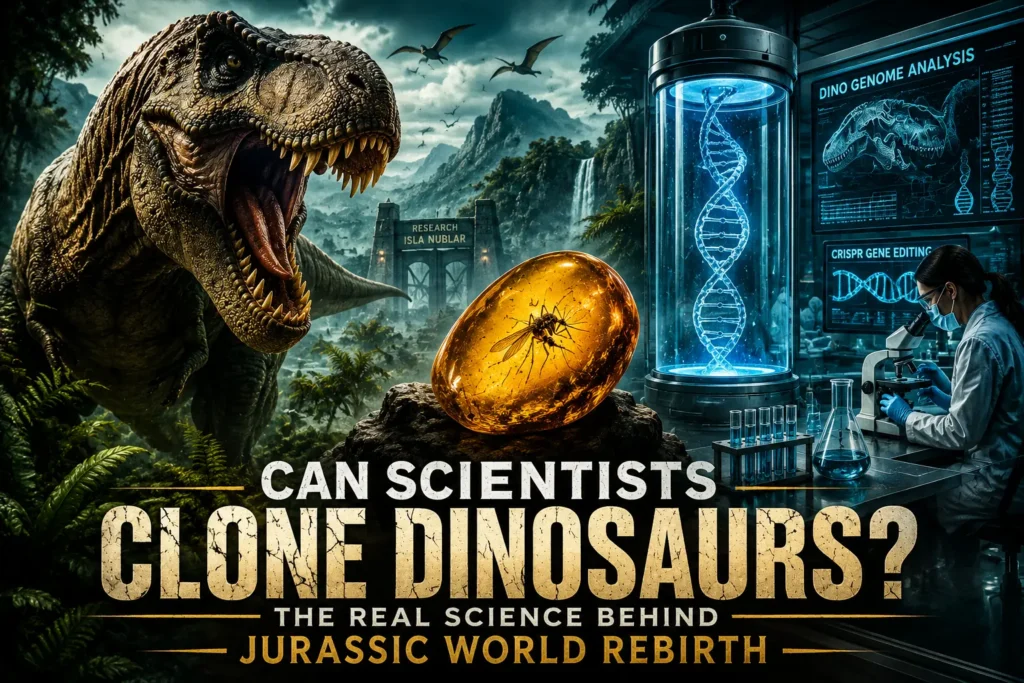
The movies make it look surprisingly simple. Scientists discover mosquitoes trapped inside amber, extract dinosaur blood, repair missing DNA using frog genes, and hatch living dinosaurs inside futuristic laboratories.
It feels believable because modern science has achieved incredible milestones.
Scientists have cloned mammals, edited genes with CRISPR, created genetically modified animals, and are actively working on de-extinction projects to revive species like the woolly mammoth and the dodo.
So it’s only natural to wonder:
If we can clone sheep today, why can’t we clone a Tyrannosaurus rex?
The answer is both fascinating and disappointing.
Contrary to Hollywood, dinosaur cloning isn’t simply waiting for better technology. The biggest obstacle isn’t our cloning techniques it’s the complete disappearance of dinosaur DNA. Without a full genetic blueprint, even the world’s most advanced laboratory cannot recreate a dinosaur.
In this article, we’ll separate movie fiction from scientific reality by exploring:
- 🧬 How animal cloning actually works
- 🦟 Whether dinosaur DNA could survive inside amber
- ❌ Why Jurassic World’s cloning method is scientifically impossible
- ✂️ How CRISPR is changing modern genetics
- 👨🔬 Whether scientists are secretly trying to clone dinosaurs
- 🐦 Why birds are considered the last surviving dinosaurs
- 🎬 How scientifically accurate Jurassic World Rebirth really is
By the end, you’ll know exactly how close science is to resurrecting dinosaurs and whether these prehistoric giants could ever walk the Earth again.
💡 Did You Know?
Every bird you see today, from a tiny sparrow to a giant ostrich is actually a living descendant of dinosaurs. In evolutionary terms, dinosaurs never completely disappeared. Only the non-avian dinosaurs went extinct around 66 million years ago.
🦖 What Is Dinosaur Cloning?
At its core, dinosaur cloning means creating a living dinosaur using its original DNA.
The idea sounds simple:
Find dinosaur DNA ➜ Clone it ➜ Hatch a baby dinosaur.
Unfortunately, biology isn’t nearly that straightforward. To clone any animal, scientists need four essential ingredients:
✅ A complete and undamaged DNA sequence
✅ Living cells containing that DNA
✅ A healthy egg cell
✅ A suitable surrogate mother (or an artificial incubation system)
Modern cloning works because scientists can obtain all four.
For example, if researchers want to clone a horse, they can collect living cells from the horse, transfer its DNA into an egg cell, and allow the embryo to develop inside another horse. Dinosaurs are a completely different story.
They became extinct about 66 million years ago, long before humans evolved. Their bones gradually turned into fossils, but their soft tissues—including DNA—did not survive.
🔬 Cloning vs De-extinction: What’s the Difference?
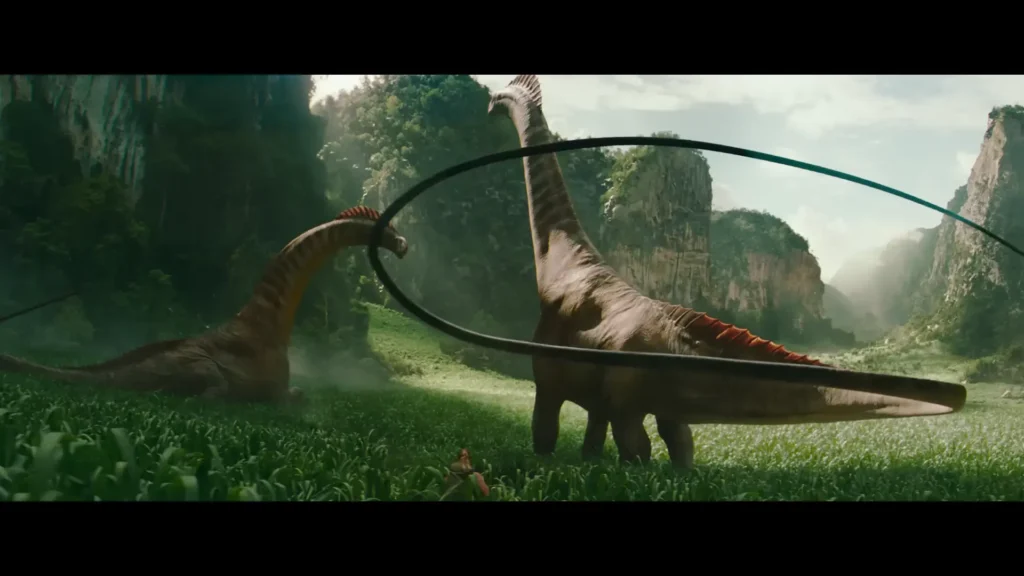
Many people use the terms cloning and de-extinction interchangeably, but they’re actually very different.
| 🧬 Cloning | 🌍 De-extinction |
|---|---|
| Creates a genetic copy of an existing or recently living animal. | Uses genetic engineering to recreate extinct species or animals that closely resemble them. |
| Requires complete DNA and living cells. | Uses DNA from living relatives and modern gene-editing tools like CRISPR. |
| Example: Dolly the Sheep. | Example: Woolly Mammoth Project. |
This distinction is important because no laboratory today is attempting to clone a Tyrannosaurus rex.
Instead, researchers are focusing on recently extinct species whose DNA is still partially preserved, such as the woolly mammoth, thylacine (Tasmanian tiger), and dodo.
🧬 How Does Animal Cloning Actually Work?
Before we can answer whether dinosaur cloning is possible, we first need to understand how scientists clone living animals today. Many people imagine cloning as a magical machine that instantly creates an identical copy of an animal. Movies often make it look as easy as pressing a button.
The reality is much more fascinating. So, how exactly do scientists create a clone?
Let’s start with the animal that changed biology forever.
🐑 Meet Dolly: The Sheep That Changed Science Forever
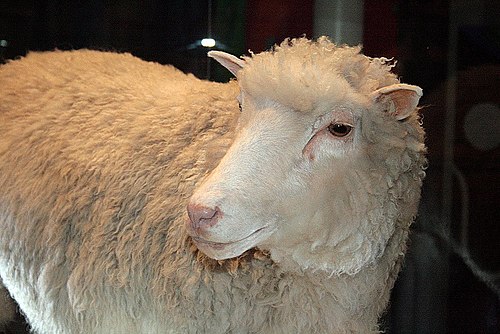
In 1996, scientists at the Roslin Institute in Scotland shocked the world by introducing Dolly the Sheep, the first mammal successfully cloned from an adult body cell.
At the time, many experts believed that once a body cell became specialized—such as a skin cell or muscle cell—it could never create an entirely new animal.
Dolly proved them wrong.
Instead of using sperm and egg cells like normal reproduction, researchers took the DNA from an adult sheep’s body cell and used it to create a genetically almost identical lamb.
This achievement marked a turning point in genetics and opened the door to cloning many other animals.
Since Dolly, scientists have successfully cloned:
- 🐄 Cows
- 🐎 Horses
- 🐈 Cats
- 🐕 Dogs
- 🦌 Deer
- 🐐 Goats
- 🐇 Rabbits
- 🐺 Wolves
- 🐒 Monkeys
Although cloning is now possible, it’s still incredibly difficult. Many embryos fail to develop, and even successful clones may experience health problems.
In other words, cloning isn’t a routine procedure—it remains one of biology’s most challenging technologies.
⚙️ The 5-Step Process Scientists Use to Clone an Animal
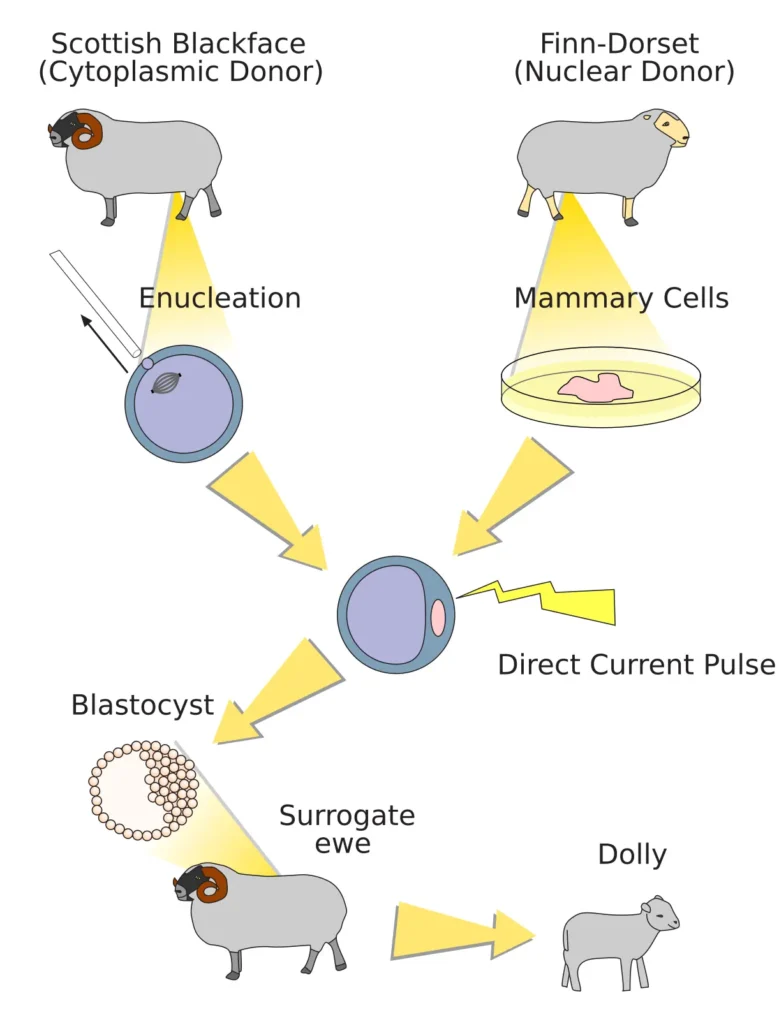
The technique used to clone Dolly is called Somatic Cell Nuclear Transfer (SCNT).
Don’t worry about the complicated name.
Let’s break it down into five simple steps.
① 🔬 Step 1: Collect a Living Cell
Everything begins with a healthy body cell.
Scientists take a small sample of tissue—usually from the skin, muscle, or another organ—of the animal they want to clone.
Inside almost every body cell lies the complete DNA of that animal.
Think of DNA as a giant instruction manual containing billions of letters that tell every cell how to build and maintain the body.
If researchers wanted to clone a tiger, they would first collect healthy cells from that tiger.
Without living cells, cloning cannot even begin.
② 🥚 Step 2: Prepare an Egg Cell
Next, scientists collect an unfertilized egg from a female of the same species—or sometimes a very closely related one.
However, they don’t use the egg exactly as it is.
The egg’s own nucleus, which contains its DNA, is carefully removed.
This leaves behind an empty egg cell that acts like a biological shell, ready to receive new genetic instructions.
③ 🧬 Step 3: Insert the Donor DNA
Now comes the most critical part of the entire process.
The nucleus from the donor animal’s body cell is inserted into the empty egg.
At this point, the egg no longer carries its original DNA.
Instead, it now contains the complete genetic blueprint of the animal being cloned.
Imagine replacing the hard drive inside a computer with another one containing a completely different operating system.
The computer is the same, but the instructions running it have changed.
That’s essentially what scientists do with the egg cell.
④ ⚡ Step 4: Wake Up the Egg
An egg containing new DNA doesn’t automatically begin growing.
Scientists must “switch it on.”
They do this using a tiny electrical pulse or special chemicals that trick the egg into behaving as though it has just been fertilized.
If everything goes according to plan, the egg begins dividing into two cells, then four, then eight, eventually developing into a tiny embryo.
Unfortunately, this is also where many cloning attempts fail.
Some embryos stop developing after only a few divisions, while others never become healthy enough to survive.
⑤ 🤰 Step 5: Implant the Embryo
Once a healthy embryo has formed, scientists implant it into the uterus of a surrogate mother.
If the pregnancy is successful, the surrogate eventually gives birth to the cloned animal.
This is exactly how Dolly the Sheep entered the world.
Although Dolly looked almost identical to the original sheep, she wasn’t a perfect copy in every way.
Environmental factors, diet, and random biological processes still influenced her growth and health throughout her life.
✅ Why Cloning Works for Living Animals
At this point, cloning may seem surprisingly straightforward.
But that’s only because scientists already have access to everything they need.
Successful cloning depends on four essential ingredients:
✔️ Fresh, living cells containing intact DNA
✔️ Healthy egg cells
✔️ A compatible surrogate mother
✔️ A thorough understanding of the animal’s reproductive biology
If even one of these ingredients is missing, cloning becomes extremely difficult—or completely impossible.
That’s why scientists can clone sheep, horses, and cats.
The necessary biological materials are readily available.
🦖 So… Why Doesn’t This Work for Dinosaurs?
Now imagine trying to clone a Tyrannosaurus rex.
Immediately, several impossible questions arise:
🧬 Where would scientists obtain fresh dinosaur cells?
🥚 Which animal could provide a compatible dinosaur egg?
🤰 What living species could carry a dinosaur embryo?
🧫 Most importantly… where is the dinosaur DNA?
The answer is simple.
It no longer exists.
Dinosaurs disappeared around 66 million years ago, leaving behind fossilized bones—not living cells. Fossils are remarkable records of ancient life, but they are not frozen bodies waiting to be revived. Over millions of years, minerals gradually replace the original biological material. The bones may retain their shape, but the cells and DNA are long gone.
Imagine finding the stone shell of an old smartphone after millions of years.
You might recognize its shape, but the battery, circuits, and data have completely disappeared. Fossils are much the same. They preserve the structure, not the genetic information.
💡 Movie Myth Breaker Fact
Cloning doesn’t create life from nothing.
It simply copies an organism when scientists already possess its complete genetic blueprint.
Without DNA, there is nothing to copy.
🎯 Movie Myth Breaker Verdict
🎬 Movie Claim: If cloning works for sheep, it should work for dinosaurs too.
🔬 Reality: Cloning technology isn’t the biggest obstacle. The real problem is that no usable dinosaur DNA has survived for 66 million years.
Scientific Accuracy: ⭐⭐⭐☆☆ (3/10)
🦟 Can DNA Really Survive Inside Amber?
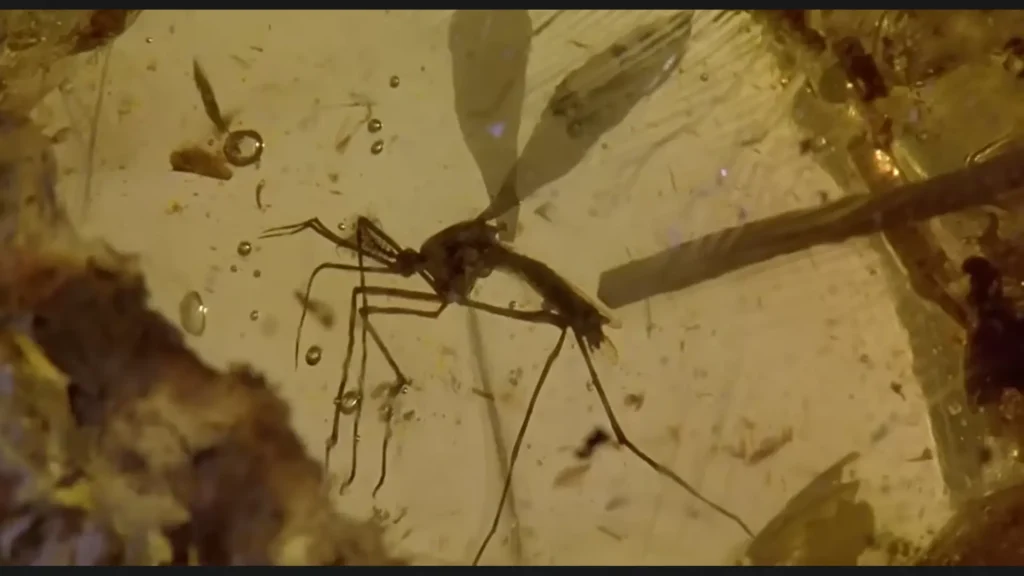
If you’ve watched Jurassic Park or Jurassic World Rebirth, you probably remember the iconic scene where scientists discover a mosquito trapped inside a piece of amber.
The mosquito had supposedly bitten a dinosaur millions of years ago, preserving its blood—and its DNA—inside the fossilized tree resin.
Scientists then extracted that DNA, filled in the missing pieces with frog genes, and created living dinosaurs.
It’s one of the most famous ideas in movie history.
But here’s the real question:
Could this actually happen in real life?
The short answer is no.
Although the idea is brilliant for storytelling, modern genetics tells a very different story.
🌳 First, What Exactly Is Amber?
Amber isn’t a special crystal or magical fossil. It’s actually fossilized tree resin.
Millions of years ago, sticky resin flowed from ancient trees. Small insects, spiders, leaves, and even feathers sometimes became trapped inside it. Over millions of years, that resin hardened into amber, creating incredibly detailed fossils.
That’s why scientists occasionally find insects that look almost perfectly preserved. Some even appear as though they died yesterday.
This remarkable preservation often makes people believe that everything inside the insect including blood and DNA must also be perfectly preserved.
Unfortunately, that’s not how biology works.
💡 Did You Know?
Amber can preserve an insect’s shape for tens of millions of years, but it cannot stop the natural breakdown of DNA inside the insect.
🧬 Why Doesn’t DNA Last Forever?
Many people think DNA is indestructible.
In reality, it’s surprisingly fragile.
The moment an animal dies, its cells stop repairing themselves. Natural enzymes begin breaking DNA into smaller and smaller fragments. Then nature takes over. Over time, several factors continue destroying the genetic material:
☀️ Heat
💧 Water
🌬️ Oxygen
🦠 Bacteria
☢️ Natural radiation
Every year, the DNA becomes a little more damaged. After thousands of years, it’s badly fragmented. After millions of years, almost nothing remains.
⏳ How Long Can DNA Actually Survive?
This is one of the biggest misconceptions in popular science.
Scientists have studied ancient DNA for decades, and the results are surprisingly clear.
Under ideal conditions—such as permanently frozen environments—DNA can survive for hundreds of thousands of years.
That’s why researchers have successfully recovered DNA from:
- 🦣 Woolly Mammoths
- 🐺 Ice Age Wolves
- 🦥 Giant Ground Sloths
- 🦴 Neanderthals
- 🐎 Ancient Horses
These animals lived relatively recently compared to dinosaurs.
Dinosaurs, however, disappeared around 66 million years ago.
That’s nearly 100 times older than the oldest DNA scientists have ever recovered.
Even in perfect conditions, DNA simply cannot survive for that length of time.
💡 Movie Myth Breaker Fact
The oldest DNA ever recovered is only a tiny fraction of the age of dinosaur fossils. That’s why scientists study mammoths and Neanderthals—not Tyrannosaurus rex.
🦟 What About Mosquitoes Trapped in Amber?
This is where Jurassic World becomes pure science fiction. Yes, mosquitoes have been discovered inside amber. Yes, some ancient mosquitoes almost certainly fed on dinosaurs. But that doesn’t mean dinosaur blood is still waiting inside them.
Over millions of years:
- Blood proteins break down.
- Cells disintegrate.
- DNA completely degrades.
- Chemical reactions destroy whatever remains.
Scientists have examined amber fossils for decades. They have discovered beautifully preserved insects…But no complete dinosaur DNA has ever been recovered.
In fact, several early claims of ancient DNA preserved in amber were later shown to be the result of modern contamination rather than genuine dinosaur genetic material.
🧪 Could Scientists Rebuild Missing DNA?
Suppose, just for a moment, scientists somehow found a few tiny fragments of dinosaur DNA. Could they fill in the missing pieces like the movies show?
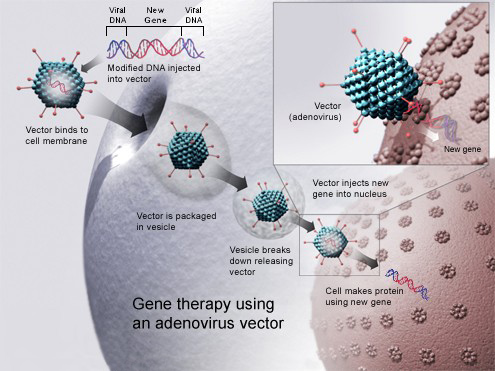
Unfortunately, no.
Imagine finding only 10 random sentences from a lost 1,000-page novel. Could you recreate every missing chapter? Almost certainly not.
The same problem exists with DNA. A dinosaur genome contains billions of genetic letters. Finding a few damaged fragments wouldn’t provide enough information to reconstruct the complete organism. The missing sections aren’t like blank spaces in a crossword puzzle—they represent almost the entire instruction manual.
🐸 Could Frog DNA Fill the Gaps?
One of Jurassic Park’s most memorable ideas is using frog DNA to repair missing dinosaur genes. It sounds clever. But genetics doesn’t work like mixing puzzle pieces from different boxes.Every species has evolved over millions of years with its own unique genetic instructions. Replacing huge sections of dinosaur DNA with frog DNA wouldn’t magically recreate a dinosaur. Instead, the embryo would almost certainly fail to develop.
Ironically, if scientists ever attempted such an experiment, birds—not frogs—would be the better choice, because modern birds are the closest living relatives of non-avian dinosaurs.
We’ll explore that fascinating connection later in this article.
⚖️ Jurassic World vs Real Science
| 🎬 Movie | 🔬 Scientific Reality |
|---|---|
| Mosquitoes preserve dinosaur blood forever | ❌ Blood and DNA naturally degrade over time |
| Amber protects DNA for 66 million years | ❌ Amber preserves fossils, not usable DNA |
| Scientists rebuild missing DNA using frog genes | ❌ Modern genetics cannot reconstruct an entire extinct genome this way |
| Dinosaur cloning begins with amber DNA | ❌ No complete dinosaur DNA has ever been discovered |
🎯 Movie Myth Breaker Verdict
🎬 Movie Claim: Dinosaur DNA can be extracted from mosquitoes trapped in amber.
🔬 Reality: Amber can preserve the appearance of insects for millions of years, but it cannot preserve usable dinosaur DNA. Without a complete genome, cloning remains scientifically impossible.
Scientific Accuracy: ⭐☆☆☆☆ (1/10)
✂️ Can CRISPR Bring Dinosaurs Back?
If scientists can’t clone dinosaurs because their DNA has disappeared, could modern gene-editing technology solve the problem?
One of the most powerful tools in genetics today is CRISPR. It allows scientists to edit DNA with incredible precision and has already transformed medicine, agriculture, and biotechnology.
But can it recreate a Tyrannosaurus rex?
The short answer is no.
🧬 What Is CRISPR?
Think of DNA as a giant instruction manual for building a living organism.
CRISPR works like a pair of molecular scissors. It allows scientists to:
- ✂️ Cut DNA
- ➕ Add new genes
- ➖ Remove unwanted genes
- 🔄 Correct faulty DNA
This technology has already been used to treat genetic diseases, improve crops, and study animal genetics.
💡 Did You Know?
CRISPR was discovered in bacteria, where it naturally protects them from viruses.
❌ Why Can’t CRISPR Create Dinosaurs?
Here’s the biggest misunderstanding about CRISPR. It can edit existing DNA, but it cannot create DNA that no longer exists.
Imagine trying to repair a damaged book. If most of the pages are still there, you can replace a few missing words. But if the entire book has been destroyed, there’s nothing left to edit. That’s exactly the problem with dinosaurs. Scientists don’t have a complete dinosaur genome, so CRISPR has nothing to work with.
🌍 What Is CRISPR Actually Used For?
Although it can’t resurrect dinosaurs, CRISPR is helping scientists explore de-extinction—bringing back traits of recently extinct animals.
Researchers are currently working on projects involving:
- 🦣 Woolly Mammoths
- 🦤 Dodos
- 🐅 Tasmanian Tigers (Thylacines)
These species disappeared relatively recently, meaning scientists still have usable DNA and closely related living relatives.
Dinosaurs, which vanished 66 million years ago, are far beyond that limit.
🐦 Could Birds Become Dinosaur-Like Again?
This is where things get really interesting.
Modern birds evolved from small feathered dinosaurs, making them the closest living relatives of species like Velociraptor. Scientists have discovered that bird embryos still carry ancient genes capable of producing dinosaur-like features, such as:
- 🦷 Tooth buds
- 🦴 Longer tails
- 🦖 Primitive leg structures
Researchers have even nicknamed this concept “Chickenosaurus.”
It wouldn’t be a real dinosaur, but it could resemble one by reactivating ancient traits already hidden in bird DNA.
🎯 Movie Myth Breaker Verdict
🎬 Movie Claim: CRISPR can recreate dinosaurs.
🔬 Reality: CRISPR is an amazing gene-editing tool, but it cannot rebuild a dinosaur genome that no longer exists. Its real strength lies in treating diseases, improving crops, and supporting de-extinction research.
Scientific Accuracy: ⭐⭐⭐☆☆ (3/10)
👨🔬 Are Scientists Really Trying to Clone Dinosaurs?
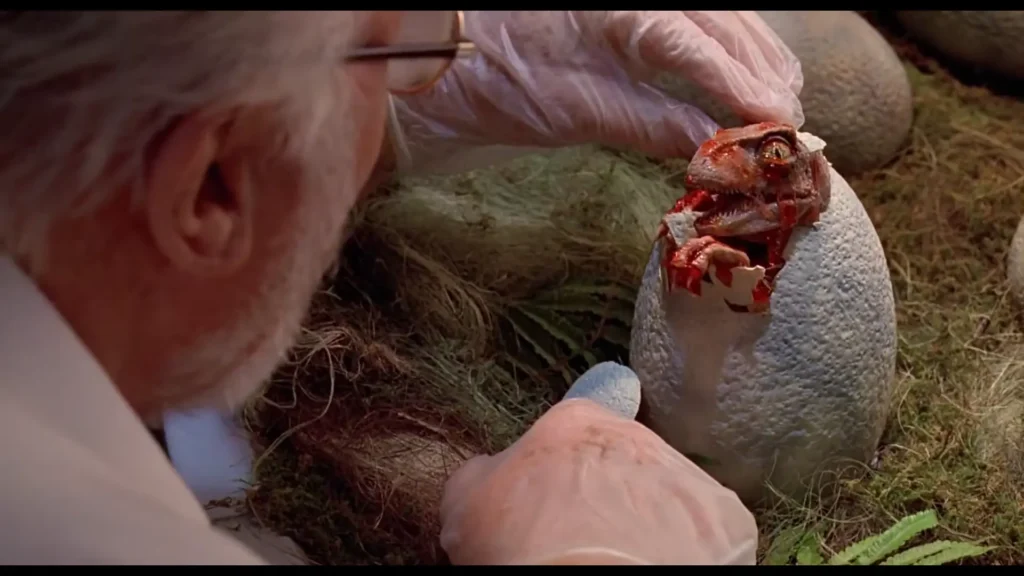
The short answer is No. Scientists are not trying to clone Tyrannosaurus rex or Velociraptors because usable dinosaur DNA no longer exists.
Instead, researchers are focusing on de-extinction—bringing back recently extinct animals using advanced gene-editing technology.
🧬 Current De-extinction Projects
Scientists are currently working on:
- 🦣 Woolly Mammoth – Editing elephant DNA to create mammoth-like traits.
- 🦤 Dodo – Studying its closest living relatives to recreate lost characteristics.
- 🐅 Tasmanian Tiger (Thylacine) – Exploring ways to revive this recently extinct predator.
🐔 What Is the “Chickenosaurus”?
Since birds evolved from dinosaurs, scientists have discovered that bird embryos still carry ancient dinosaur genes.
Researchers have already observed dinosaur-like features such as:
- 🦷 Tiny tooth buds
- 🦴 Longer tail structures
- 🦖 Primitive leg anatomy
The goal isn’t to create a real dinosaur but to better understand how dinosaurs evolved into modern birds.
💡 Did You Know?
Every chicken, pigeon, and eagle you see today is a distant descendant of the dinosaurs that survived the mass extinction 66 million years ago.
🎯 Movie Myth Breaker Verdict
❌ Movie: Scientists are cloning dinosaurs.
✅ Reality: Scientists are studying de-extinction, not dinosaur cloning. Without complete dinosaur DNA, creating a real Jurassic Park remains scientifically impossible.
🧪 Scientific Accuracy: ⭐⭐☆☆☆ (2/5)
⚖️ Jurassic World Rebirth vs Real Science
How scientifically accurate is Jurassic World Rebirth? While the movie is inspired by real genetics, many of its biggest ideas are exaggerated for entertainment.
| 🎬 Movie Science | 🔬 Real Science |
|---|---|
| 🦟 Dinosaur DNA survives inside mosquitoes trapped in amber. | ❌ DNA breaks down over time and cannot survive for 66 million years. |
| 🐸 Frog DNA fills the missing dinosaur genes. | ❌ DNA from another species cannot recreate an extinct animal. |
| 🦖 Scientists clone dinosaurs in laboratories. | ❌ Cloning requires complete DNA, which dinosaurs no longer have. |
| 🧬 Hybrid dinosaurs like Indominus Rex are easily created. | ⚠️ Scientists can edit individual genes, but creating complex hybrids is far beyond today’s technology. |
| 🦖 Velociraptors have near-human intelligence. | ⚠️ Some dinosaurs were intelligent, but nothing suggests they were as smart as shown in the movies. |
🎬 What’s Scientifically Accurate?
The movie does get a few things right:
- ✅ Dinosaurs are closely related to modern birds.
- ✅ Gene editing technologies like CRISPR are real.
- ✅ Scientists are researching de-extinction projects.
- ✅ Genetic engineering is advancing rapidly every year.
❌ What’s Pure Science Fiction?
The following concepts are not possible with today’s science:
- 🦟 Extracting dinosaur DNA from amber.
- 🧬 Rebuilding an entire dinosaur genome.
- 🦖 Cloning a Tyrannosaurus rex or Velociraptor.
- 🧪 Creating hybrid super-predators like Indominus Rex.
💡 Did You Know?
Steven Spielberg hired real paleontologists as consultants for Jurassic Park, which is why many scientific ideas in the franchise are inspired by real research—even though the cloning itself is fictional.
🎯 Movie Myth Breaker Verdict
🎬 Entertainment Value: ⭐⭐⭐⭐⭐ (5/5)
🔬 Scientific Accuracy: ⭐⭐☆☆☆ (2/5)
⚠️ Should We Bring Back Extinct Animals?
Even if scientists develop the technology to revive extinct species, an important question remains:
Should we actually do it?
While de-extinction could benefit science and conservation, it also raises serious ethical and environmental concerns.
✅ Potential Benefits
Bringing back extinct animals could:
- 🌍 Restore damaged ecosystems.
- 🧬 Improve genetic and medical research.
- 🦣 Help scientists better understand extinct species.
- 🛡️ Develop new conservation techniques to protect endangered animals.
❌ Potential Risks
There are also significant challenges:
- 🌿 Disrupt modern ecosystems.
- 🦠 Introduce unknown diseases.
- 🏞️ Lack suitable habitats for extinct animals.
- 💰 Require enormous financial resources.
- ❤️ Raise animal welfare and ethical concerns.
💡 Did You Know?
Many conservationists believe the money spent on de-extinction could instead help save thousands of endangered species that are still alive today.
🎯 Movie Myth Breaker Verdict
🎬 Movie: Bringing back extinct animals is always a great scientific achievement.
🔬 Reality: De-extinction offers exciting possibilities, but scientists must carefully consider its environmental, ethical, and ecological consequences before reviving any extinct species.
❓ Frequently Asked Questions (FAQs)
1️⃣ Can dinosaurs really be cloned?
❌ No. Scientists cannot clone dinosaurs because no complete dinosaur DNA has survived the 66 million years since they became extinct.
2️⃣ Has dinosaur DNA ever been found?
🧬 Scientists have discovered fossil proteins and exceptionally preserved tissues, but no complete dinosaur genome suitable for cloning has ever been recovered.
3️⃣ Can CRISPR recreate dinosaurs?
✂️ No. CRISPR edits existing DNA—it cannot recreate an extinct genome that no longer exists.
4️⃣ Why are birds called living dinosaurs?
🐦 Modern birds evolved from small feathered dinosaurs, making them the only surviving dinosaur lineage.
5️⃣ Could Jurassic World happen in real life?
🎬 Not with today’s science. While the movies are inspired by real genetics, dinosaur cloning remains scientifically impossible because usable dinosaur DNA no longer exists.
🎯 Final Verdict
So, can scientists really clone dinosaurs?
For now, the answer is no.
Modern biotechnology has achieved incredible breakthroughs, from cloning mammals like Dolly the Sheep to editing genes with CRISPR. Scientists are even exploring de-extinction projects involving mammoths and dodos. However, dinosaur cloning faces one impossible challenge—the complete loss of dinosaur DNA.
That doesn’t make the future any less exciting. As gene-editing technology continues to evolve, researchers may one day create animals that resemble extinct species or unlock more secrets about evolution. But a real Jurassic World filled with cloned Tyrannosaurus rex and Velociraptors remains firmly in the world of science fiction.
💡 Movie Myth Breaker Final Score
🎬 Entertainment: ⭐⭐⭐⭐⭐ (5/5)
🔬 Scientific Accuracy: ⭐⭐☆☆☆ (2/5)
🧠 Educational Value: ⭐⭐⭐⭐⭐ (5/5)
Until science proves otherwise, dinosaurs will continue to live where they belong—in fossils, museums, and our imagination. 🦖
Movie screenshots and related visuals are used for educational, commentary, and fair use purposes. Copyright belongs to Universal Pictures and Amblin Entertainment. AI-generated illustrations are created by Movie Myth Breaker unless otherwise stated.
Read More Articles:
Blade Runner 2049 Explained: Does real life Replicant Exist?
Can We Build a Time Machine? Amazing Science of Time Travel
Is Tony stark Arc Reactor Possible? 2026 Science Explained