
Introduction
The Odyssey Explained : For nearly 3,000 years, The Odyssey has captivated readers with its epic tale of adventure, survival, monsters, and gods. Now, Christopher Nolan brings Homer’s legendary story back to the big screen in The Odyssey (2026), combining breathtaking practical filmmaking with one of history’s greatest myths. From the terrifying Cyclops to the enchanting Sirens and the wrath of Poseidon, the film promises to immerse audiences in a world where the impossible feels real.
But how much of The Odyssey is actually based on reality?
Could ancient sailors really navigate across the Mediterranean without maps or GPS? Were mythical creatures like the Cyclops inspired by real discoveries? Could dangerous whirlpools have given rise to legends such as Charybdis? And is it possible that some of Homer’s supernatural stories were exaggerated accounts of real historical events?
These questions make The Odyssey more than just a fantasy adventure. Like many ancient myths, it blends history, observation, and imagination into a story that has survived for centuries. While gods and monsters belong to mythology, many elements of Odysseus’ journey may have been inspired by real geography, ancient technology, and natural phenomena that people of the Bronze Age struggled to understand.
In this article, we’ll separate myth from reality by exploring the science behind The Odyssey. We’ll examine ancient Greek navigation, survival at sea, legendary creatures, historical evidence for the Trojan War, and the practical technologies that made long-distance voyages possible over 3,000 years ago. We’ll also look at how Christopher Nolan’s filmmaking style helps bring this ancient epic to life with an unprecedented sense of realism.
Whether you’re excited about Nolan’s latest film or simply curious about the real-world inspirations behind Homer’s masterpiece, this guide will reveal how science and history intersect with one of the greatest stories ever told.
What Is The Odyssey?
The Odyssey is one of the oldest and most influential works of Western literature. It is traditionally attributed to the ancient Greek poet Homer, who is also credited with writing The Iliad. Historians generally believe these poems were composed around the 8th century BCE, although the events they describe may reflect traditions dating back several centuries earlier.
While The Iliad focuses on the final stages of the Trojan War, The Odyssey tells the story of what happens after the war ends. Its hero, Odysseus, the king of Ithaca, begins a journey home that should have taken only a few weeks. Instead, due to storms, mythical creatures, divine intervention, and countless hardships, the voyage lasts ten years.
During his journey, Odysseus encounters:
- The one-eyed Cyclops Polyphemus
- The enchanting Sirens whose songs lure sailors to their deaths
- The six-headed monster Scylla
- The deadly whirlpool Charybdis
- The Lotus Eaters who erase people’s desire to return home
- The witch Circe
- The nymph Calypso
- Numerous storms said to be sent by Poseidon, the Greek god of the sea
These adventures combine mythology, morality, exploration, and survival into an unforgettable narrative that has inspired countless books, films, television series, and video games.
Even today, many modern stories borrow elements from The Odyssey. Themes such as perseverance, leadership, loyalty, and the struggle against impossible odds continue to resonate with audiences around the world.
Why Does The Odyssey Still Matter Today?
Although it was written nearly three millennia ago, The Odyssey remains surprisingly relevant.
At its core, the story explores universal human experiences:
- The desire to return home
- The challenges of leadership
- The importance of intelligence over brute strength
- The consequences of pride and poor decisions
- Humanity’s curiosity about the unknown
Long before satellites, weather forecasting, or accurate maps existed, the Mediterranean Sea was an unpredictable and often dangerous place. Sailors depended on experience, stars, seasonal winds, and luck. Every voyage carried the risk of storms, shipwrecks, disease, and starvation.
Many historians believe that stories like The Odyssey helped preserve the knowledge and fears of ancient seafarers. Over generations, real dangers may have evolved into mythical monsters, while extraordinary natural events became tales of angry gods and supernatural powers.
This combination of reality and imagination is one reason why the story continues to fascinate scientists, historians, archaeologists, and filmmakers alike.
Christopher Nolan’s Vision for The Odyssey
Christopher Nolan has built his reputation on creating films that blend spectacular storytelling with scientific authenticity. Movies like Interstellar, Oppenheimer, and Dunkirk demonstrated his commitment to practical effects, large-format cinematography, and grounded realism.
With The Odyssey, Nolan brings the same philosophy to one of history’s greatest myths.
Instead of relying heavily on computer-generated imagery, the production emphasizes:
- Large-scale practical sets
- Real-world filming locations
- Massive IMAX film cameras
- Authentic costumes and props
- Natural lighting wherever possible
This approach gives the film a tangible sense of realism, making audiences feel as though they are experiencing the ancient Mediterranean firsthand rather than watching a digitally created fantasy.
Even when depicting mythical creatures and divine events, Nolan’s filmmaking style encourages viewers to imagine how these legends may have appeared to the people who first told them thousands of years ago.
History or Myth? The Origins of The Odyssey
One of the biggest questions surrounding The Odyssey is whether it contains any historical truth.
Most scholars agree that the story is not a literal historical record. Gods, monsters, and supernatural events belong firmly to Greek mythology. However, that does not mean the entire narrative was invented from nothing.
Ancient oral traditions often preserved memories of real events by combining them with legends. Over centuries, storytellers exaggerated heroic deeds, transformed dangerous animals into monsters, and explained natural disasters through the actions of gods.
For example:
- A violent whirlpool may have become the monster Charybdis.
- Fossils or unusual animal skulls may have inspired stories of the Cyclops.
- Dangerous coastal rocks could have evolved into tales of Scylla.
- Psychoactive plants may have influenced the legend of the Lotus Eaters.
In this way, mythology became an early attempt to explain a world that science had not yet uncovered.
The challenge for modern researchers is determining where history ends and imagination begins.
In the following sections, we’ll examine each major element of The Odyssey through the lens of archaeology, biology, geology, and modern science to discover how much truth may be hidden within one of humanity’s greatest adventures.
Was Odysseus a Real Person?
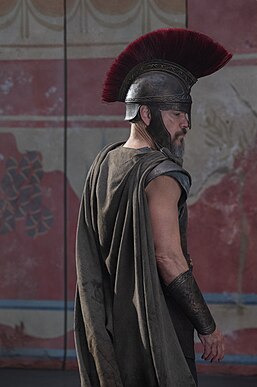
One of the biggest mysteries surrounding The Odyssey is whether its legendary hero, Odysseus, was a real king or simply a fictional character created by Homer. The answer is more complicated than a simple yes or no.
Unlike modern historical figures, there are no written records from the Bronze Age that directly mention a king named Odysseus ruling the island of Ithaca. Ancient Greece did not maintain detailed historical documents in the way later civilizations did, and much of what we know about this period comes from archaeology rather than written history.
However, the absence of direct evidence does not necessarily mean Odysseus never existed.
A Hero Inspired by Real Kings?
Many historians believe Odysseus may represent a combination of several real Mycenaean rulers whose stories were passed down orally for generations before Homer transformed them into a single legendary hero.
During the Late Bronze Age (around 1600–1100 BCE), Greece was divided into numerous independent kingdoms ruled by warrior kings. Archaeological excavations at places such as Mycenae, Pylos, Tiryns, and Ithaca reveal impressive palaces, advanced fortifications, and evidence of wealthy rulers who commanded fleets of ships and participated in trade across the Mediterranean.
It is entirely possible that one or more of these rulers inspired the character we now know as Odysseus.
Instead of recording exact historical events, oral storytellers often combined the achievements of different leaders into one larger-than-life hero. Over centuries, real battles, voyages, and political struggles gradually evolved into epic legends filled with monsters, gods, and supernatural events.
Archaeological Clues from Ithaca
Odysseus is traditionally described as the king of Ithaca, a small island in the Ionian Sea west of mainland Greece.
Archaeologists have discovered Bronze Age settlements on Ithaca, confirming that people lived there during the period in which the Trojan War is believed to have taken place. Excavations have uncovered:
- Defensive structures
- Pottery from the Mycenaean period
- Storage facilities
- Evidence of long-distance trade
- Large buildings that may have belonged to local elites
Although none of these discoveries prove that Odysseus himself existed, they demonstrate that Ithaca was an active and prosperous community capable of supporting local rulers.
Some researchers have even proposed locations that could have served as the inspiration for Odysseus’ palace, though no definitive evidence has been found.
The Oral Tradition
To understand why historical certainty is so difficult, it’s important to remember how stories were preserved in ancient Greece.
Before writing became widespread, history was transmitted orally. Professional poets, known as bards, memorized thousands of lines and performed them for audiences. Each performance could introduce new details, remove old ones, or exaggerate heroic deeds.
Over several centuries, stories naturally changed.
A brave sailor might become an unbeatable warrior.
A dangerous storm might become the anger of Poseidon.
A clever escape from an enemy could transform into a battle with a giant one-eyed monster.
By the time Homer composed The Odyssey, these stories had already evolved through generations of storytelling.
Scientific Verdict
From a scientific and historical perspective, there is no evidence that Odysseus existed exactly as described in The Odyssey.
However, it is entirely plausible that the character was inspired by one or more real Bronze Age kings whose exploits gradually became legendary.
Reality Rating: ★★★☆☆ (Possible inspiration, but unproven)
Could the Trojan War Really Have Happened?
If Odysseus may have been inspired by a real ruler, what about the war that began his journey?
For centuries, many people believed the Trojan War was nothing more than mythology. Today, archaeology tells a far more interesting story.
The Discovery of Ancient Troy
In the late nineteenth century, German businessman and amateur archaeologist Heinrich Schliemann excavated a site in modern-day northwestern Turkey called Hisarlik.
Beneath layers of earth, he uncovered the remains of multiple ancient cities built one on top of another over thousands of years.
Modern archaeologists now identify one of these layers known as Troy VI or Troy VII as the most likely candidate for the city described in Homer’s epics.
These cities existed during the Late Bronze Age, the same general period traditionally associated with the Trojan War.
Evidence of Conflict
Excavations at Troy reveal several signs that the city experienced violent destruction:
- Burned buildings
- Collapsed defensive walls
- Arrowheads embedded in structures
- Human skeletons found in unusual positions
- Emergency food storage suggesting preparation for siege
These discoveries indicate that Troy almost certainly experienced warfare.
However, archaeology cannot confirm whether the conflict involved the famous wooden horse or the legendary Greek heroes described by Homer.
Was There Really a Wooden Horse?
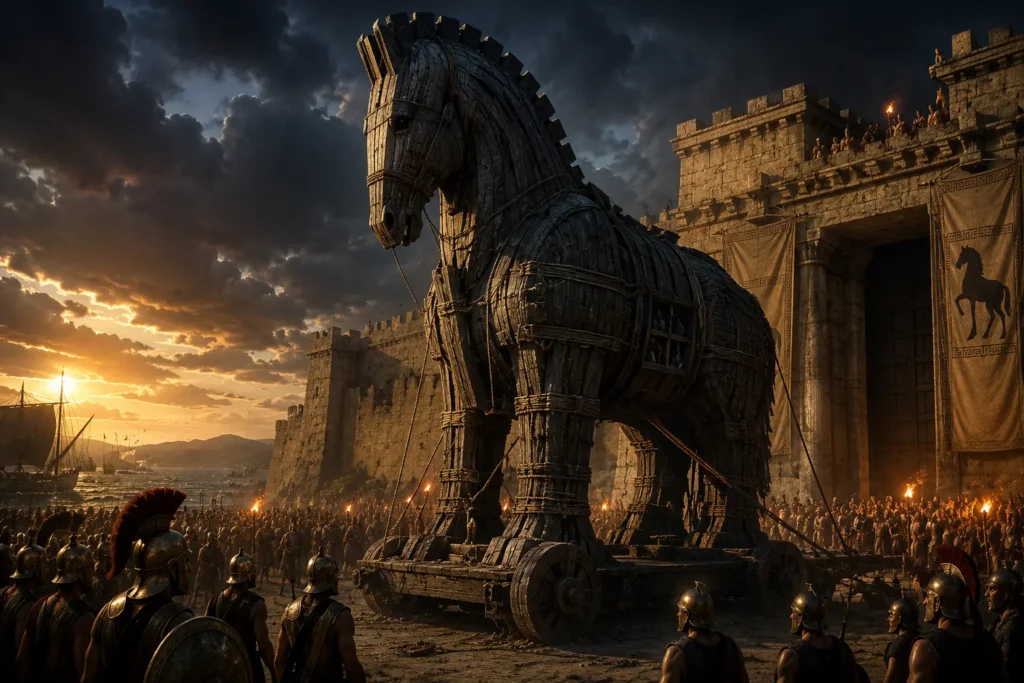
The Trojan Horse is one of history’s most famous military stories.
According to the legend, Greek soldiers hid inside a giant wooden horse, which the Trojans brought into their city as a victory trophy. During the night, the soldiers emerged, opened the city gates, and allowed the Greek army to capture Troy.
Historians remain skeptical that this event occurred literally.
Several alternative theories have been proposed:
A Siege Engine
Some researchers suggest the “horse” may have symbolized a large wooden siege machine used to breach city walls.
An Earthquake
In ancient Greece, horses were associated with Poseidon, who was also considered the god of earthquakes.
A devastating earthquake could have damaged Troy’s walls, allowing attackers to enter. Over time, storytellers may have transformed this event into the legend of the Trojan Horse.
A Symbol Rather Than an Object
Others believe the horse was simply a poetic metaphor representing deception, infiltration, or military strategy rather than an actual structure.
Although no archaeological evidence supports the existence of a giant wooden horse, the story demonstrates the importance ancient Greeks placed on intelligence over brute force—a recurring theme throughout The Odyssey.
What Do Historians Think Today?
Most modern historians agree on several points:
- A wealthy city existed at Troy.
- The city experienced at least one major conflict during the Bronze Age.
- Greek kingdoms had contact with western Anatolia.
- Oral traditions preserved memories of these events.
What remains uncertain is how much of Homer’s story reflects actual history.
Instead of viewing the Trojan War as either completely true or completely false, many scholars see it as a historical conflict that gradually accumulated centuries of mythological storytelling.
Scientific Verdict
Archaeology strongly suggests that a real city called Troy existed and suffered violent destruction.
Whether Achilles, Hector, Odysseus, or the Trojan Horse existed exactly as described remains unknown.
Reality Rating: ★★★★☆ (Historical conflict likely; legendary details uncertain)
Ancient Greek Ships and Navigation
One of the most believable aspects of The Odyssey is not its monsters or gods—but its sailing.
Unlike mythical creatures, ancient Greek seafaring was a remarkable technological achievement for its time.
Around 1200 BCE, sailors crossed hundreds of kilometers of open water without engines, compasses, or maps.
So how did they do it?
The Ships of the Bronze Age
The ships used during the Mycenaean period were primarily long wooden vessels powered by both sails and oars.
Typical features included:
- Lightweight wooden hulls
- A single square sail
- Rows of oars for maneuvering
- Shallow draft for beach landings
- Steering oars instead of modern rudders
These vessels were surprisingly efficient in calm Mediterranean waters but remained vulnerable to storms and rough seas.
Unlike modern ships, they rarely sailed far from land whenever possible.
Navigating Without GPS
Ancient sailors relied on careful observation of nature.
They used:
The Stars
The position of familiar stars helped determine direction during clear nights.
The Sun
Its rising and setting points provided orientation during the day.
Wind Patterns
Experienced sailors understood seasonal winds that returned each year.
Ocean Currents
Knowledge passed down through generations allowed captains to predict local currents and avoid dangerous waters.
Coastlines
Most voyages followed visible shorelines whenever practical, reducing the risk of becoming lost at sea.
This combination of experience, astronomy, and environmental observation formed the world’s earliest navigation system.
Why the Mediterranean Was So Dangerous
Although the Mediterranean appears relatively calm today, it can quickly become deadly.
Ancient sailors faced:
- Sudden storms
- Strong seasonal winds
- Hidden reefs
- Narrow straits
- Powerful currents
- Limited weather prediction
Without modern forecasting, even an experienced captain could lose an entire fleet within hours.
Many of these natural dangers likely inspired the supernatural events described in The Odyssey.
When frightened sailors encountered violent storms or strange coastal formations, attributing them to angry gods seemed perfectly reasonable.
Scientific Verdict
Everything we know about Bronze Age archaeology confirms that long-distance sea voyages were possible using the technology available to ancient Greece.
While Homer’s timeline is greatly exaggerated, the methods of navigation described throughout The Odyssey closely resemble what historians believe Mycenaean sailors actually practiced.
Reality Rating: ★★★★★ (Strong archaeological support)
Could Someone Really Survive a 10-Year Voyage?
One of the most remarkable claims in The Odyssey is that Odysseus spent ten years wandering the seas before finally returning to Ithaca. At first glance, this seems impossible. But was such a long journey truly beyond the limits of ancient technology?
The answer depends on how literally we interpret Homer’s story.
Most historians agree that Odysseus did not spend ten continuous years sailing. Instead, the timeline likely represents a combination of real voyages, extended stays on islands, delays caused by war, oral storytelling, and symbolic numbers commonly used in ancient literature.
However, let’s examine whether humans could survive such a journey using Bronze Age technology.
Food at Sea
Ancient Greek sailors carried food that could last for weeks or even months. Their supplies typically included:
- Dried fish
- Salted meat
- Olives
- Barley bread
- Cheese
- Dried fruits
- Wine mixed with water
Salt was one of the most effective preservatives available at the time. Properly stored meat and fish could remain edible for extended periods, although fresh food was always preferred whenever ships reached land.
During long voyages, sailors often stopped at coastal settlements to hunt, fish, refill supplies, and repair their vessels.
Fresh Water
Water presented a much greater challenge than food.
Unlike modern ships equipped with desalination systems, ancient vessels relied on:
- Clay storage jars
- Rainwater collection
- Freshwater springs on islands
- Rivers near coastal settlements
Running out of water was one of the greatest dangers faced by ancient sailors. Many expeditions planned routes specifically around known freshwater sources.
Disease and Medical Challenges
Life aboard an ancient ship was far from comfortable.
Sailors constantly faced:
- Infected wounds
- Food poisoning
- Parasites
- Sunburn
- Heat exhaustion
- Hypothermia during storms
One illness often associated with long sea voyages is scurvy, caused by a deficiency of vitamin C.
Fortunately, Mediterranean sailors regularly stopped at islands where they could gather fresh fruits and vegetables, making severe scurvy less common than on later transoceanic voyages during the Age of Exploration.
Ship Maintenance
Wooden ships required constant repairs.
Crews frequently had to:
- Replace damaged ropes
- Repair sails
- Seal leaks with pitch
- Replace broken oars
- Strengthen weakened wooden planks
Fortunately, many Mediterranean coastlines offered natural harbors where ships could be beached and repaired.
Could It Really Take Ten Years?
A direct voyage from Troy to Ithaca would probably have taken only a few weeks under favorable conditions.
The famous ten-year journey is therefore best understood as a literary device rather than a historical travel log.
It symbolizes the countless hardships, delays, and unexpected challenges faced by sailors in the ancient world.
Science Verdict
Could ancient sailors survive for years by repeatedly stopping at islands and coastal settlements?
Yes.
Could one continuous ten-year voyage at sea happen?
Almost certainly not.
Reality Rating: ★★★☆☆
Could the Cyclops Exist?
Perhaps the most famous creature in The Odyssey is Polyphemus, the gigantic one-eyed Cyclops who traps Odysseus and his crew inside a cave.
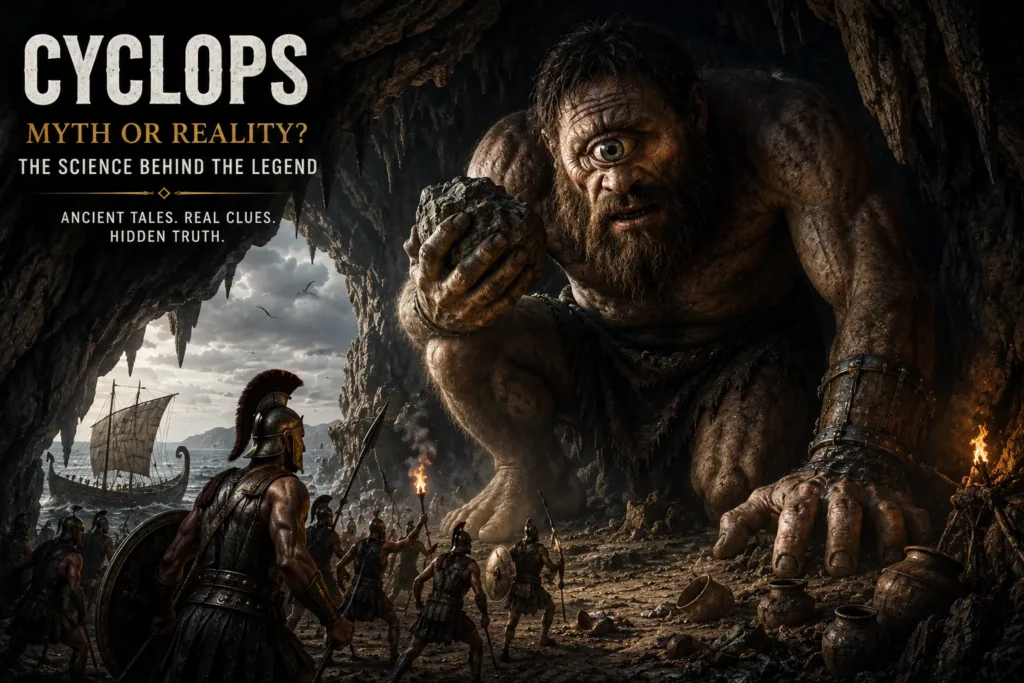
The image of a giant human with a single eye has fascinated audiences for centuries.
But could such a creature ever exist?
Human Gigantism
Modern medicine has documented rare cases of gigantism, a condition usually caused by excessive production of growth hormone.
Individuals with gigantism can exceed:
- 7 feet (2.1 meters)
- 8 feet (2.4 meters)
- In exceptional cases, nearly 9 feet (2.7 meters)
However, even these extraordinary heights come with severe medical problems including joint damage, heart disease, and shortened life expectancy.
A Cyclops many times larger than an ordinary human would face impossible biological challenges.
Could Someone Have Only One Eye?
A condition called cyclopia does exist.
Cyclopia is an extremely rare congenital disorder in which the eyes fail to separate properly during early fetal development.
Sadly, babies born with cyclopia do not survive long after birth because the condition is associated with severe brain abnormalities.
This medical condition cannot produce a healthy, giant, intelligent creature like Polyphemus.
The Elephant Skull Theory
So where did the myth originate?
One of the most convincing explanations involves prehistoric elephant skulls.
Ancient dwarf elephants once lived on several Mediterranean islands, including Sicily and Cyprus.
Their skulls contain a large central opening where the trunk was attached.
To people unfamiliar with elephant anatomy, this opening could easily appear to be the socket of one enormous eye.
Imagine discovering a massive skull inside a cave without knowing elephants once inhabited the island.
A giant one-eyed monster suddenly becomes a much more reasonable explanation.
Many archaeologists believe such discoveries helped inspire the legend of the Cyclops.
Giants in Mythology
Stories about giants appear in cultures around the world.
These legends often served as explanations for:
- Large fossils
- Unusual rock formations
- Ancient ruins
- Massive bones belonging to extinct animals
Without modern paleontology, ancient people interpreted extraordinary discoveries using the mythology available to them.
Science Verdict
Human biology makes a giant one-eyed race impossible.
However, fossil discoveries provide a fascinating scientific explanation for how the Cyclops legend may have begun.
Reality Rating: ★★☆☆☆
Could the Sirens Exist?
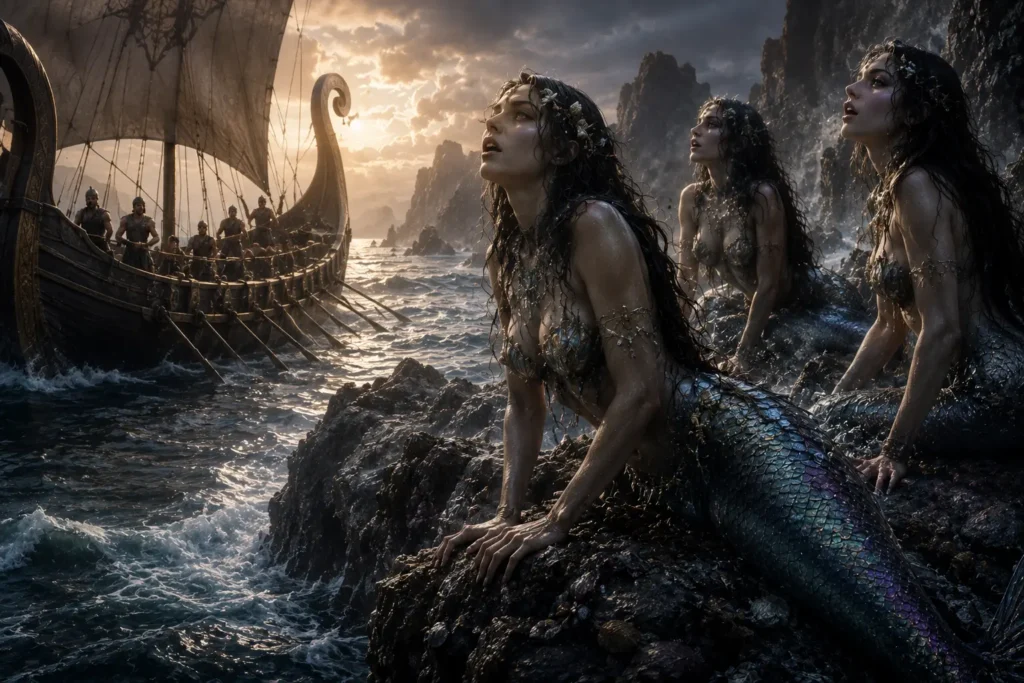
Among the most memorable scenes in The Odyssey is Odysseus ordering his crew to plug their ears with beeswax while he has himself tied to the ship’s mast.
Why?
Because the Sirens sang so beautifully that sailors became hypnotized, steering their ships toward rocky coastlines where they crashed and died.
But could there be any scientific basis for this famous myth?
Marine Mammals Mistaken for Monsters
For centuries, exhausted sailors have misidentified animals seen at sea.
Manatees, dugongs, seals, and even dolphins have all inspired myths about mysterious sea creatures.
Poor visibility, rough weather, exhaustion, and distance can dramatically alter human perception.
A seal resting on a rock at sunset might appear far more mysterious than it actually is.
The Psychology of Sound
Could beautiful singing really cause sailors to lose control?
Not literally.
However, sound can strongly influence human emotions.
Music affects:
- Attention
- Memory
- Mood
- Decision-making
Ancient sailors spending weeks at sea under stressful conditions may have been especially vulnerable to unusual sounds carried over the water.
Combined with fatigue and fear, ordinary animal calls could easily become supernatural voices in their imagination.
Acoustic Illusions Over Water
The sea creates unusual acoustic conditions.
Temperature differences between air and water can bend sound waves, allowing voices, bird calls, or animal sounds to travel surprisingly long distances.
A sailor might hear sounds without seeing their source.
In ancient times, such experiences naturally encouraged supernatural explanations.
Dangerous Coastlines
Many historians believe the Sirens symbolized hazardous coastal areas.
Rather than representing literal creatures, they warned sailors about:
- Hidden rocks
- Strong currents
- Narrow passages
- Dangerous reefs
The beautiful song became a metaphor for temptation.
Captains who ignored warnings could lose both their ships and their crews.
Science Verdict
There is no evidence that supernatural singing creatures ever existed.
However, marine animals, unusual acoustics, psychological effects, and dangerous coastlines together offer a remarkably convincing explanation for how the Siren legend developed.
Reality Rating: ★★★☆☆
Scylla and Charybdis: Were They Based on Real Ocean Hazards?
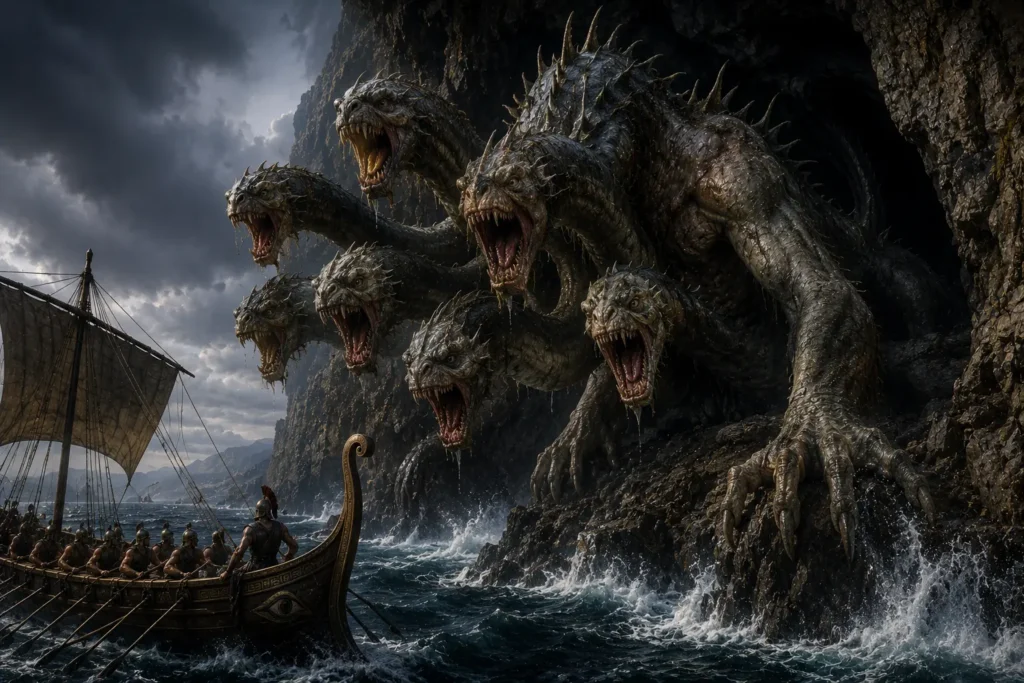
Among all the dangers Odysseus faced, none were more terrifying than sailing between Scylla and Charybdis. Homer describes Scylla as a six-headed monster that snatched sailors from passing ships, while Charybdis was a gigantic whirlpool capable of swallowing an entire vessel.
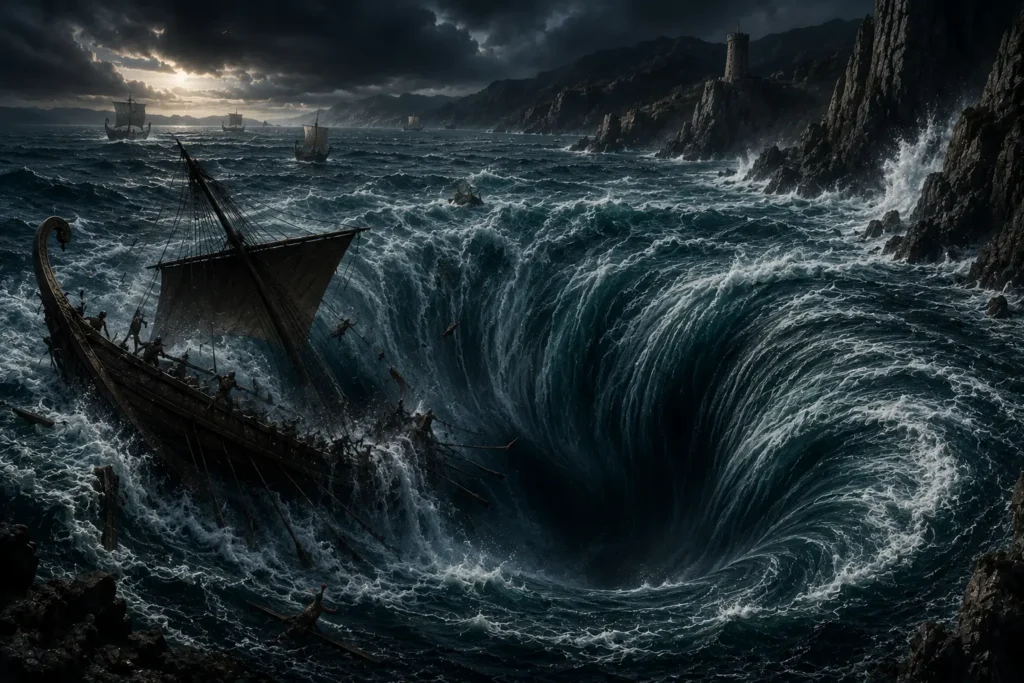
Although these creatures sound purely mythical, many historians believe they were inspired by real geographical features in the Mediterranean Sea.
The Strait of Messina
The most widely accepted theory links Scylla and Charybdis to the Strait of Messina, the narrow passage between mainland Italy and Sicily.
This strait is known for:
- Powerful tidal currents
- Sudden changes in water flow
- Dangerous whirlpools
- Sharp underwater rocks
- Unpredictable winds
For Bronze Age sailors in wooden ships, these conditions could be deadly. A captain trying to avoid one danger might unknowingly steer closer to another.
This perfectly matches Homer’s description of choosing between Scylla and Charybdis.
Could Giant Sea Monsters Exist?
Modern oceans contain some enormous creatures, including:
- Giant squid
- Sperm whales
- Whale sharks
- Giant oarfish
The giant squid, in particular, inspired many sea monster legends because sailors rarely saw one alive. Most sightings occurred during storms or after dead specimens washed ashore.
However, no known marine animal has multiple heads or attacks ships in the way Scylla is described.
Most likely, Scylla represents the fear of hidden coastal rocks that could destroy ships without warning.
Science Verdict
Scylla and Charybdis were almost certainly inspired by real maritime hazards rather than actual monsters.
Reality Rating: ★★★★☆
The Lotus Eaters: Could a Plant Make You Forget Home?
One of the most unusual episodes in The Odyssey involves the Lotus Eaters, a mysterious people whose fruit causes Odysseus’ crew to lose all desire to continue their journey home.
At first glance, this sounds like pure fantasy. Surprisingly, science suggests there may be a real-world explanation.
Psychoactive Plants
Throughout history, many plants have been known to alter human consciousness.
Examples include:
- Blue water lily (used in ancient Egypt)
- Opium poppy
- Cannabis
- Henbane
- Mandrake
Some of these plants can produce:
- Euphoria
- Drowsiness
- Memory impairment
- Reduced motivation
- Hallucinations
It is possible that travelers encountered communities using naturally occurring psychoactive plants. Over generations, these experiences may have evolved into the legend of the Lotus Eaters.
A Symbolic Meaning
Many scholars also believe the Lotus represents temptation rather than a specific plant.
Odysseus’ greatest challenge is not only surviving monsters but resisting comfort and distraction. Forgetting home symbolizes abandoning responsibility, family, and purpose.
Science Verdict
No known fruit permanently erases memories, but psychoactive plants can certainly affect judgment, motivation, and perception.
Reality Rating: ★★★☆☆
Could the Greek Gods Really Control the Weather?
Throughout The Odyssey, storms are often blamed on Poseidon, the Greek god of the sea. Zeus throws lightning bolts, while other gods influence winds and weather.
Today we know that weather follows the laws of physics rather than the wishes of supernatural beings.
Ancient Explanations for Natural Events
Thousands of years ago, people had no understanding of:
- Atmospheric pressure
- Wind circulation
- Ocean currents
- Lightning formation
- Seasonal weather systems
When a violent storm suddenly destroyed a fleet, the most logical explanation seemed to be divine anger.
Mythology gave meaning to unpredictable events that science could not yet explain.
Modern Meteorology
Today, satellites monitor storms across the globe, while computer models predict weather days in advance.
Mediterranean storms are now understood to result from interactions between:
- Warm sea temperatures
- Cold air masses
- Pressure differences
- Wind systems
What once appeared to be the wrath of Poseidon is now explained through atmospheric science.
Science Verdict
The gods do not control the weather, but ancient myths reflect humanity’s early attempts to understand nature.
Reality Rating: ★★☆☆☆
Ancient Greek Technology: More Advanced Than You Might Think
Although The Odyssey contains many mythical elements, its depiction of Bronze Age technology is surprisingly believable.
Bronze Weapons
Greek warriors fought using:
- Bronze swords
- Spears
- Axes
- Large shields
- Bronze helmets
- Body armor
Bronze was the strongest widely available metal before the spread of iron technology.
Shipbuilding
Ancient Greek shipbuilders demonstrated remarkable engineering skills.
Their vessels featured:
- Carefully shaped wooden hulls
- Mortise-and-tenon joints
- Linen sails
- Hemp ropes
- Waterproofing using natural pitch
These innovations allowed trade and exploration across the Mediterranean centuries before the invention of modern navigation equipment.
Astronomy
Ancient sailors understood the movements of stars well enough to navigate at night.
Constellations served as natural compasses long before magnetic compasses reached Europe.
This practical knowledge made long-distance sea travel possible despite the limitations of Bronze Age technology.
Science Verdict
Many technological aspects of The Odyssey are supported by archaeological evidence.
Reality Rating: ★★★★★
Christopher Nolan’s Realistic Approach
Christopher Nolan has earned a reputation for combining spectacular storytelling with practical filmmaking.
Rather than relying heavily on CGI, his productions often emphasize:
- Practical sets
- Real locations
- Large-scale physical effects
- IMAX cinematography
- Authentic props and costumes
This philosophy suits The Odyssey particularly well.
By grounding mythical events in realistic environments, Nolan encourages audiences to experience the story as ancient people might have imagined it.
The result is likely to feel less like a fantasy and more like history viewed through the lens of mythology.
Myth vs Reality Summary
| Myth from The Odyssey | Scientific Explanation |
|---|---|
| Cyclops | Possibly inspired by elephant skulls and fossil discoveries |
| Sirens | Marine animals, unusual acoustics, and dangerous coastlines |
| Scylla | Hidden rocks and dangerous sea passages |
| Charybdis | Powerful whirlpools in the Strait of Messina |
| Lotus Eaters | Psychoactive plants and symbolic storytelling |
| Poseidon’s storms | Natural weather systems and ocean conditions |
| Ten-year voyage | Literary symbolism based on real seafaring hardships |
| Bronze Age ships | Supported by archaeological discoveries |
Final Verdict: Is The Odyssey Scientifically Accurate?
At first glance, The Odyssey appears to be a story filled with impossible monsters, magical islands, and gods who control the sea. Yet beneath these mythical elements lies a fascinating foundation of history, archaeology, geography, and science.
Modern research suggests that many of Homer’s legendary adventures were likely inspired by real experiences of Bronze Age sailors. Dangerous whirlpools became sea monsters, unusual fossils evolved into tales of giants, and mysterious plants transformed into stories of enchanted islands.
Christopher Nolan’s adaptation has the potential to introduce a new generation to these timeless ideas. By combining practical filmmaking with one of history’s greatest epics, the film reminds us that mythology often begins with real people trying to understand an extraordinary world.
The true power of The Odyssey is not that every event happened exactly as described. Instead, it shows how observation, imagination, and storytelling can preserve fragments of history for thousands of years.
In the end, science doesn’t diminish Homer’s masterpiece—it makes it even more fascinating.
Frequently Asked Questions
Was Odysseus a real person?
There is no direct historical evidence that Odysseus existed. Most historians believe he was likely inspired by one or more real Mycenaean rulers whose stories became legendary over time.
Did the Trojan War really happen?
Archaeological evidence strongly suggests that the ancient city of Troy existed and experienced violent destruction. However, many details from Homer’s account remain unverified.
Could the Cyclops exist?
No. Human biology makes a giant one-eyed race impossible. The legend may have been inspired by prehistoric elephant skulls discovered on Mediterranean islands.
Were Sirens real?
No evidence supports the existence of Sirens. Their legend may have developed from dangerous coastlines, marine animals, and unusual acoustic effects over the sea.
What is Charybdis based on?
Most researchers believe Charybdis represents powerful whirlpools and tidal currents in the Strait of Messina.
Could ancient Greeks really navigate without GPS?
Yes. They relied on stars, the Sun, coastlines, seasonal winds, and generations of sailing experience.
Why did ancient Greeks believe in sea gods?
Without modern meteorology, storms and earthquakes were often explained as the actions of gods like Poseidon.
Is Christopher Nolan’s The Odyssey historically accurate?
The film is based on Homer’s epic poem, which blends mythology with possible historical inspiration. While many supernatural elements are fictional, the setting, seafaring technology, and aspects of Bronze Age life are grounded in historical research.
Image Credit
Some screenshots used in this article are from The Odyssey (2026) and are included solely for educational, commentary, criticism, and review purposes under the principles of fair use/fair dealing, where applicable. All copyrights and trademarks belong to their respective owners. Original analysis and scientific commentary are provided by Movie Myth Breaker.
Read More Articles:
- Interstellar (space-time and realism in Nolan’s films)
- Blade Runner 2049 (science vs fiction)
- Iron Man Mark 50 (advanced technology in films)