

The release of the Dune Part Three trailer has sparked one question across the internet: Is Robert Pattinson joining the Dune universe, and who is he playing? While fans are excited to see one of Hollywood’s biggest stars enter Denis Villeneuve’s epic sci-fi saga, book readers know that the real mystery isn’t the actor it’s the terrifying character rumored to appear: Scytale.
Unlike the giant sandworms or futuristic spacecraft that dominate the earlier films, Scytale represents a completely different kind of science fiction. He belongs to a secretive group known as the Face Dancers, beings capable of transforming their appearance to perfectly imitate other people. Imagine an assassin who can copy your face, voice, body language, and even fool your closest friends. It’s one of the most fascinating biological concepts ever created in science fiction.
But how realistic is such an ability? Could advances in genetic engineering, synthetic biology, stem-cell research, or even nanotechnology someday allow humans to change their appearance almost instantly?
In this article, we’ll explain who Scytale is, why he is so important to the story of Dune Messiah, and whether the incredible abilities of the Face Dancers have any basis in real science.
👤 Robert Pattinson Dune 3 is True ? Who Is He Playing?
Ever since the Dune Part Three trailer and casting news began circulating online, one question has dominated search results:
Is Robert Pattinson in Dune Part Three?

The answer is yes. Robert Pattinson has officially joined the cast of Dune Part Three, the upcoming film adaptation of Dune Messiah. His casting has generated huge excitement because he is expected to portray one of the most mysterious and dangerous characters in Frank Herbert’s Novel Scytale.
Unlike traditional villains who rely on brute strength or advanced weapons, Scytale is a master manipulator. His greatest weapon is deception. He belongs to a secretive civilization known as the Bene Tleilax, famous for developing advanced biotechnology that pushes the boundaries of human evolution.
What makes Scytale truly terrifying is that he is a Face Dancer, a genetically engineered being capable of changing its appearance to perfectly imitate another person. Instead of attacking enemies head-on, Face Dancers infiltrate, spy, manipulate, and assassinate by becoming someone their victims already trust.
For science enthusiasts, Scytale is far more than just another movie villain. He represents one of the most fascinating biological ideas in science fiction. His abilities raise intriguing questions:
- 🧬 Could scientists genetically engineer humans that can alter their appearance?
- 🔬 Can biology ever become flexible enough to reshape muscles, skin, and facial features?
- 🤖 Could future nanotechnology assist in rapid physical transformation?
- 🧠 How much of a person’s identity depends on appearance, and how much depends on the brain?
Before we examine whether Face Dancers could ever exist in reality, let’s first understand who Scytale is and why he plays such a crucial role in the story of Dune Messiah.
🧬 Who Is Scytale?
⚠️ Mild Spoiler Warning: This section discusses Scytale’s background from Dune Messiah but avoids revealing the novel’s biggest plot twists.

Scytale is one of the central antagonists in Dune Messiah, the novel that serves as the basis for Dune Part 3. Unlike the brutal Harkonnens or the powerful Sardaukar warriors, Scytale doesn’t rely on armies or overwhelming force. His greatest weapon is intelligence, patience, and deception.
He is a member of the Bene Tleilax, a highly secretive civilization famous for mastering advanced biotechnology. While the Bene Gesserit manipulate politics and bloodlines, the Bene Tleilax specialize in manipulating life itself. Through genetic engineering, cloning, and biological experimentation, they create living organisms that perform extraordinary tasks.
🏛️ The Bene Tleilax: Masters of Genetic Engineering
The Bene Tleilax are among the most scientifically advanced factions in the Dune universe. Their knowledge extends far beyond conventional medicine or genetics. They develop technologies that can:
- 🧬 Engineer entirely new forms of life.
- 👤 Create beings capable of perfectly imitating other humans.
- 🔄 Clone human bodies through a process known as ghola creation.
- 🧠 Experiment with memory, identity, and biological evolution.
- 🧪 Push genetic science far beyond anything seen in today’s world.
🎭 Why Is Scytale So Dangerous?
At first glance, Scytale doesn’t appear physically intimidating. He isn’t the strongest fighter, nor does he command massive fleets of warships. His true power lies in making people question everything and everyone around them.
Because Face Dancers can alter their appearance, Scytale can:
- 👥 Blend into almost any environment.
- 🕵️ Gather information without being recognized.
- 🎭 Pretend to be trusted allies.
- ⚔️ Manipulate political leaders from within.
- 🧠 Exploit fear, uncertainty, and psychological weakness.
This ability makes him one of the most unpredictable villains in the Dune saga. When your enemy can become anyone, trust itself becomes a weapon.
🧬 How Do Face Dancers Transform?
Although Frank Herbert never explains the exact biological mechanism, the novels suggest that Face Dancers can rapidly alter their bodies by controlling their own tissues.
Their transformation appears to include:
- 👤 Facial structure
- 🦴 Bone positioning
- 💪 Muscle shape
- 🩸 Skin texture
- 🎤 Voice
- 👁️ Facial expressions
- 🚶 Body posture and movement
This means they don’t simply wear another face, they become another person.
⚔️ Why Scytale Is One of the Most Powerful Villains in the Dune Universe
When people think about powerful villains, they often imagine someone with a massive army, advanced weapons, or superhuman strength. Scytale is different. His greatest weapon isn’t physical power, it’s deception.
In the world of Dune, many enemies challenge Paul Atreides through open warfare. Scytale takes a far more dangerous approach. Instead of fighting from the battlefield, he works from the shadows, manipulating events and exploiting the weaknesses of those around him.
This makes him one of the most intelligent and unpredictable antagonists in the entire Dune saga.
🎭 A Master of Disguise
As a Face Dancer, Scytale possesses an ability that no ordinary human has—the power to become someone else.
Rather than wearing masks or disguises, he can alter his physical appearance to imitate another person with astonishing accuracy.
Imagine trying to defend yourself against an enemy when you can’t answer simple questions like:
- 👤 Is this person really who they claim to be?
- 🤝 Can I trust my closest allies?
- 🕵️ Has my friend been replaced?
- 🎭 Am I speaking to a human or a Face Dancer?
When identity itself becomes uncertain, fear spreads faster than any army.
🧠 Psychological Warfare Instead of Physical Combat
Scytale understands that the human mind is often easier to defeat than the human body.
Instead of relying on violence alone, he uses:
- 🧩 Manipulation
- 🤫 Secrets
- 🎯 Political strategy
- 😨 Fear and uncertainty
- 🎭 Perfect impersonation
This form of psychological warfare is much more difficult to detect because victims often don’t realize they are being manipulated until it’s too late.
In many ways, Scytale behaves less like a traditional movie villain and more like a highly sophisticated intelligence operative.
👑 Why Paul Atreides Can’t Simply Defeat Him
Paul Atreides is one of the most powerful characters in science fiction. His extraordinary abilities allow him to foresee many possible futures, making him an almost unbeatable military leader.
Yet even Paul faces a unique challenge with Scytale.
Paul can predict many events, but he cannot control every human decision or every hidden conspiracy. Scytale takes advantage of these limitations by operating through secrecy, misdirection, and carefully planned schemes rather than direct confrontation.
This creates a fascinating conflict between:
- 👑 Absolute political power
- 🧠 Intelligence and strategy
- 🔮 Foresight versus unpredictability
It’s a battle fought with information instead of armies.
🔬 Could Someone Like Scytale Exist in Real Life?
Although Face Dancers remain fictional, the idea of infiltration is very real.
Throughout history, intelligence agencies have relied on agents trained to adopt false identities, memorize personal histories, learn new languages, and blend seamlessly into unfamiliar environments.
Modern technology has introduced even more sophisticated methods of deception, including:
- 🤖 AI-generated voices
- 🎥 Deepfake videos
- 🖼️ AI-generated faces
- 📱 Identity theft
- 💻 Cyber impersonation
While these technologies don’t physically transform a person, they achieve a similar goal: convincing others that someone is who they are not.
In many ways, deepfake technology is the digital equivalent of a Face Dancer. Both blur the line between reality and deception, making it increasingly difficult to distinguish truth from imitation.
🎬 Movie Myth Breaker Verdict
Scytale isn’t terrifying because he’s the strongest character in Dune.
He’s terrifying because he attacks something much harder to defend than the body, trust.
Frank Herbert imagined a future where biotechnology could create the perfect infiltrator. While science hasn’t reached that point, modern developments in artificial intelligence, digital identity, and genetic engineering show that deception is becoming more sophisticated every year.
Perhaps the real lesson isn’t whether Face Dancers can exist, but whether humanity is already creating new ways to blur the line between what’s real and what’s fake.
🔬 Could Biology Really Do This?
Modern science cannot create a Face Dancer today, but nature already provides some surprisingly similar examples.
🐙 1. Octopuses Change Their Appearance
Octopuses are masters of camouflage.
Within seconds they can change:
- 🎨 Skin color
- 🌊 Texture
- 🪨 Surface patterns
- 🌿 Shape to blend with rocks or coral
They achieve this using specialized skin cells called chromatophores, along with muscles that alter the texture of their skin.
While an octopus cannot transform into another species, it demonstrates that living organisms can dramatically change their appearance using biology alone.
Reality Score: ⭐⭐⭐☆☆
🦎 2. Chameleons Change Color
Many people think chameleons simply “paint” themselves.
In reality, microscopic crystals inside their skin reflect different wavelengths of light, allowing rapid color changes.
Again, this is nowhere near becoming another human, but it proves that biology is far more flexible than it first appears.
Reality Score: ⭐⭐☆☆☆
🧬 3. Human Stem Cells
Scientists can already grow:
- ❤️ Heart tissue
- 🩸 Blood cells
- 🦴 Bone
- 🧠 Brain organoids
- 🧫 Artificial skin
Stem cells have the remarkable ability to develop into many different types of human tissue.
However, changing an entire adult body within minutes would require trillions of cells to reorganize simultaneously, something far beyond current science.
Reality Score: ⭐⭐⭐⭐☆
✂️ 4. CRISPR Gene Editing
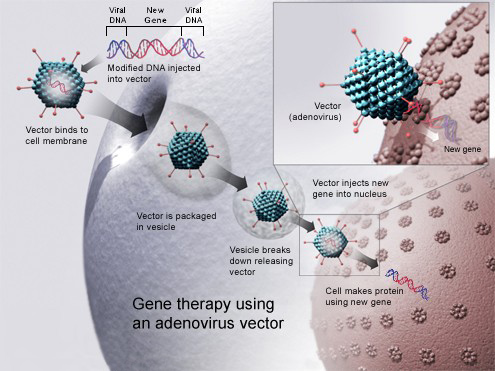
CRISPR allows researchers to edit DNA with incredible precision.
Today it can:
- Correct certain genetic disorders.
- Modify specific genes.
- Improve disease resistance in laboratory studies.
But CRISPR works by editing DNA over time. It cannot instantly reshape an adult person’s face or body.
Reality Score: ⭐⭐⭐☆☆
🤖 5. Programmable Nanotechnology
One theoretical possibility involves medical nanobots.

Imagine billions of microscopic robots capable of:
- Rearranging muscle fibers
- Reshaping skin
- Altering facial features
- Repairing tissues instantly
This idea remains science fiction today, but future nanotechnology is one of the few concepts that could even begin to explain the rapid transformations seen in Dune.
Scientists have already developed experimental nanomaterials for targeted drug delivery, but self-rebuilding human bodies remain purely hypothetical.
Reality Score: ⭐⭐☆☆☆
🧠 The Biggest Scientific Challenge
Changing a person’s appearance is only half the problem.
To truly become another person, a Face Dancer would likely need:
- 🧠 Extremely advanced neuroscience
- 🤖 Artificial intelligence
- 🧬 Perfect genetic engineering
- 📚 Instant memory acquisition
- ⚡ Ultra-fast cellular regeneration
This combination is far beyond modern biology.
🧪 Face Dancers vs Real Science: How Close Are We?
One of the reasons Face Dancers are so fascinating is that their abilities combine several branches of science into a single fictional organism. While no technology today can reproduce everything they do, modern research is beginning to explore some of the individual concepts.
Here’s how Dune’s biotechnology compares with real-world science.
| 🧬 Face Dancer Ability | 🔬 Real Science Today | 🎯 Reality Check |
|---|---|---|
| Instantly change facial appearance | Plastic surgery, facial prosthetics | ❌ Impossible instantly |
| Completely reshape the body | Tissue engineering, regenerative medicine | ❌ Not possible |
| Copy another person’s voice | AI voice cloning | ⚠️ Partially possible |
| Mimic facial expressions perfectly | Robotics and motion capture | ⚠️ Limited |
| Change skin texture and color | Artificial skin, bio-inspired materials | ⚠️ Experimental |
| Regenerate damaged tissues quickly | Stem-cell therapy | ⚠️ Slow process |
| Alter DNA to create new traits | CRISPR gene editing | ✅ Possible, but only in limited ways |
| Grow replacement organs | Lab-grown organs and organoids | ✅ Under active research |
| Copy memories and personality | Neuroscience | ❌ No known method |
| Become another person within seconds | No existing technology | ❌ Pure science fiction |
🚀 Which Technologies Bring Us Closest?
Although instant shape-shifting remains fictional, several emerging fields are pushing biology in remarkable directions.
🧬 Synthetic Biology
Synthetic biology allows scientists to redesign living cells much like engineers design machines.
Researchers are developing microorganisms that can:
- Produce medicines
- Detect diseases
- Manufacture useful chemicals
- Perform complex biological tasks
While these organisms are microscopic, they demonstrate that biology can be programmed in ways that once belonged only to science fiction.
🩹 Tissue Engineering
Scientists have already created laboratory-grown:
- 🩸 Blood vessels
- 🦴 Bone tissue
- 🧫 Skin grafts
- ❤️ Heart tissue
- 👂 Artificial ears
These advances could revolutionize medicine, but they still require weeks or months of growth—not the instant transformations seen in Dune.
🤖 Artificial Intelligence
Face Dancers don’t just change appearance, they imitate human behavior.
Modern AI is beginning to perform similar tasks digitally by generating:
- 🎤 Human-like voices
- 😊 Facial animations
- 🎥 Deepfake videos
- 💬 Natural conversations
While AI cannot physically transform a human body, it shows how convincing imitation is becoming in the digital world.
🌍 The Biggest Scientific Barrier
Even if future technology solved every biological challenge, one enormous obstacle would remain:
Energy.
Changing the shape of an adult human body would require:
- Rearranging trillions of cells
- Breaking and rebuilding bones
- Reshaping muscles
- Stretching or shrinking skin
- Maintaining blood circulation throughout the transformation
The amount of energy needed would be extraordinary, making instant transformation extremely difficult under the laws of modern physics.
This is one reason why scientists consider Face Dancers to be one of the most ambitious biological concepts ever imagined in science fiction.
⭐ Movie Myth Breaker Science Score
Let’s rate the scientific realism behind the Face Dancers.
| Category | Rating |
|---|---|
| 🧬 Genetics | ⭐⭐⭐⭐☆ |
| 🩹 Regenerative Medicine | ⭐⭐⭐☆☆ |
| 🤖 Artificial Intelligence | ⭐⭐⭐⭐☆ |
| 🧠 Neuroscience | ⭐⭐☆☆☆ |
| ⚡ Instant Shape-Shifting | ⭐☆☆☆☆ |
| 🌍 Overall Scientific Plausibility | ★★★☆☆ (3/5) |
🎬 Final Verdict
Frank Herbert’s vision was decades ahead of its time. While today’s science cannot create a true Face Dancer, advances in genetic engineering, synthetic biology, regenerative medicine, and artificial intelligence suggest that parts of the concept are becoming less fictional than they once seemed.
The complete transformation seen in Dune remains beyond modern science—but it continues to inspire scientists and science-fiction fans to imagine what biotechnology might achieve in the distant future.
❓ Frequently Asked Questions (FAQ)
Is Robert Pattinson in Dune Part Three?
Yes. Robert Pattinson has officially joined the cast of Dune Part Three, which adapts Frank Herbert’s Dune Messiah. He is expected to portray Scytale, one of the story’s most mysterious and dangerous antagonists.
Who is Scytale in Dune?
Scytale is a member of the Bene Tleilax, a secretive civilization that specializes in advanced biotechnology and genetic engineering. He is also a Face Dancer, meaning he can alter his appearance to impersonate other people and carry out espionage, manipulation, and assassination.
What is a Face Dancer?
A Face Dancer is a genetically engineered humanoid created by the Bene Tleilax. These beings can transform their physical appearance to resemble another person. In the Dune universe, they are used primarily as spies and infiltrators.
Could Face Dancers Exist in Real Life?
Not with today’s technology. While modern science has made progress in gene editing, stem-cell research, regenerative medicine, and artificial intelligence, none of these fields can instantly transform a person’s body or copy their memories and personality. Face Dancers remain a fascinating work of science fiction.
Are Face Dancers robots?
No. Face Dancers are living biological beings, not robots or androids. Their abilities come from advanced genetic engineering rather than mechanical technology.
What is the Bene Tleilax?
The Bene Tleilax are one of the most scientifically advanced factions in the Dune universe. They specialize in biotechnology, cloning, genetic manipulation, and the creation of artificial life forms such as Face Dancers and gholas.
Is the science behind Face Dancers realistic?
Partially. Some concepts, such as genetic engineering, regenerative medicine, and synthetic biology, are grounded in real scientific research. However, the ability to instantly reshape an entire human body while perfectly copying another person’s appearance, voice, and behavior remains beyond modern science.
Read more Articles:
Shockingly Dune Film Ornithopter Possible in real life?
Gravitational Time Dilation Explained: Is Interstellar Accurate?
I have not read such a good article on this topic. i mean about science behind of any movies. cool concept of writing blog. thankyou for this dune 3 episode.