
🎬1. Introduction
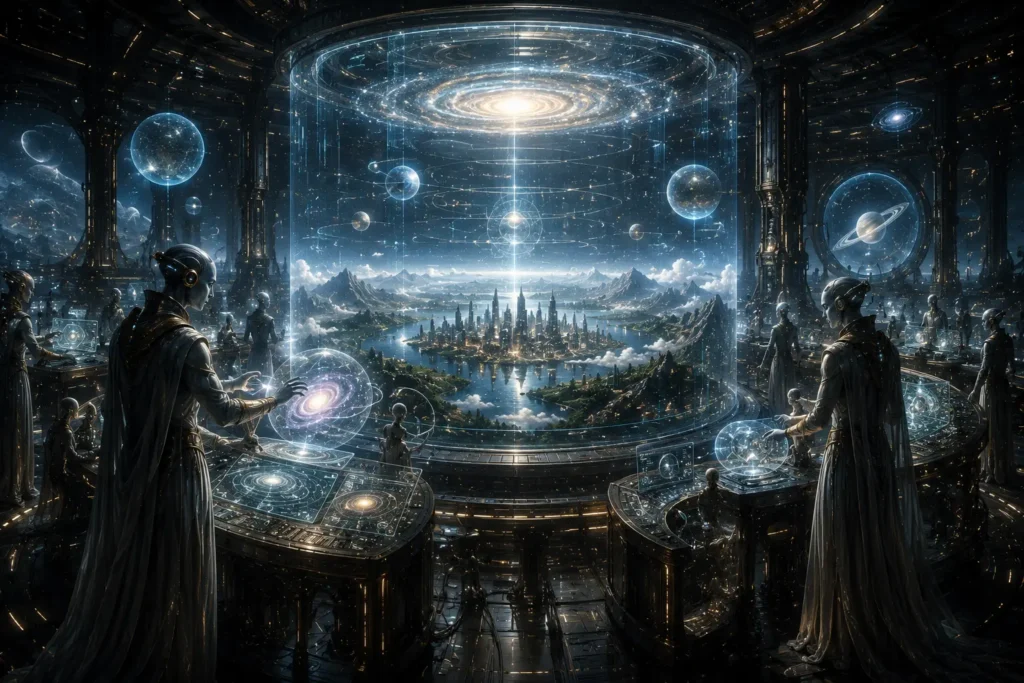
What if everything you see the sky, the Earth, your memories, and even this very moment is part of an unimaginably advanced computer simulation? It sounds like science fiction, but it’s a question that has fascinated philosophers and scientists for decades.
If you’ve watched The Matrix, you’ll remember the famous red pill and blue pill choice. In the movie, humans unknowingly live inside a digital world created by intelligent machines. While the story is fictional, it raises a thought-provoking question:
How do we know the reality we experience is the real one?
Today, this idea is discussed through the Simulation Hypothesis a philosophical argument suggesting that our universe could be an artificial simulation created by a highly advanced civilization. Although there is no scientific evidence proving this claim, it has sparked debates in physics, philosophy, artificial intelligence, and even quantum mechanics.
Could our universe really be programmed like a video game? Can science ever test such an extraordinary idea? And why have people like Elon Musk and philosopher Nick Bostrom taken this possibility seriously?
🔍 In this article, we’ll separate science from science fiction, explore the evidence and criticisms, and discover whether living in a Matrix-like universe is remotely possible.
💊2. The Matrix: Where the Idea Became Popular
🎬 When The Matrix was released in 1999, it wasn’t just another science fiction movie it completely changed the way people thought about reality. Directed by the Wachowskis, the film introduced a world where humans unknowingly live inside a massive computer simulation called the Matrix, while their real bodies remain trapped by intelligent machines.
🌍 Inside the Matrix, everything feels real. People go to work, build relationships, and experience joy and pain without realizing that the world around them is nothing more than computer-generated code. The movie asks a simple but unsettling question:
🤔 What if the world you experience isn’t the real world at all?
💊 One of the film’s most iconic moments is the choice between the Red Pill and the Blue Pill, offered by Morpheus to Neo.
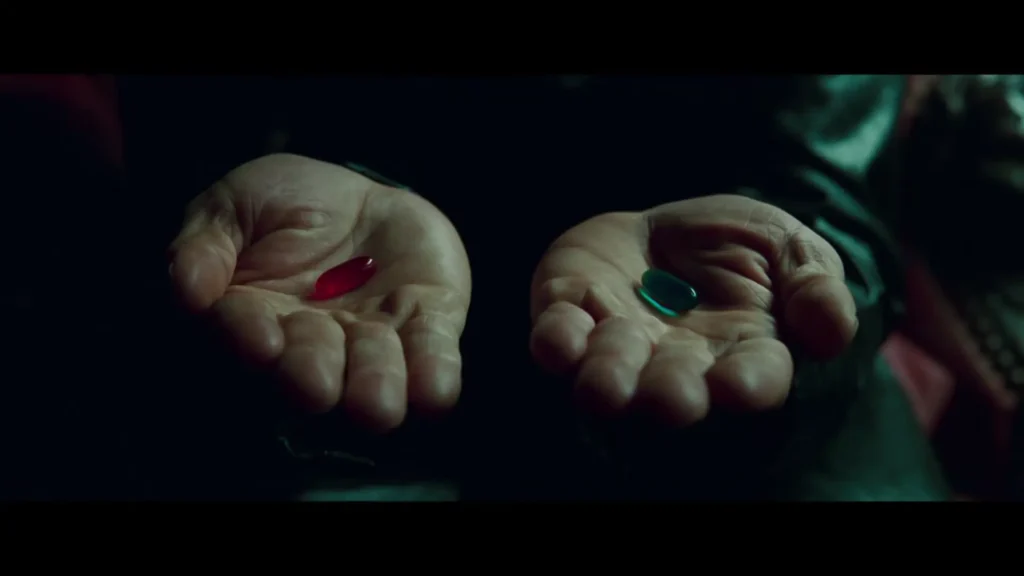
🔴 Red Pill: Wake up and discover the truth, no matter how uncomfortable it may be.
🔵 Blue Pill: Stay inside the illusion and continue living a normal life without questioning reality.
This powerful scene has become a cultural symbol for seeking truth instead of accepting comfortable beliefs.
⚠️ However, it’s important not to confuse The Matrix with the Simulation Hypothesis. The movie tells a fictional story in which machines have already created a digital prison for humanity. The Simulation Hypothesis, on the other hand, is not a scientific claim that this has happened.
🧠 Instead, it is a philosophical argument that asks whether an incredibly advanced civilization could one day create a simulation so realistic that the people living inside it would never realize they were simulated.
🔬 There is no scientific evidence proving that our universe is a simulation. Unlike the movie, scientists are not searching for hidden machines or secret escape routes. Instead, they debate whether such a scenario is even theoretically possible based on our understanding of physics, computing, and consciousness.
🚀 In other words, The Matrix gave us the story—but the Simulation Hypothesis asks the much deeper question:
❓If our universe were a perfect simulation, would we ever be able to prove it?
This fascinating question has inspired philosophers, physicists, and technology experts for decades—and it all begins with understanding what the Simulation Hypothesis really is.
🧠3. What Is the Simulation Hypothesis?
The Simulation Hypothesis is a philosophical idea that suggests our entire universe could be an artificial simulation created by an extremely advanced civilization. Rather than claiming this is true, it simply asks:
🤔 What if our reality is programmed instead of naturally existing?
Unlike a scientific theory, the Simulation Hypothesis has not been proven and currently cannot be tested through experiments. It is best described as a thought experiment about the nature of reality.
👨🏫 Who Proposed It?
The idea became famous in 2003 when Oxford philosopher Nick Bostrom published a paper titled “Are You Living in a Computer Simulation?”

He didn’t claim that we definitely live in a simulation. Instead, he argued that one of three possibilities is likely true:
1️⃣ Advanced civilizations never survive long enough to develop simulation technology.
2️⃣ They survive but choose not to create realistic simulations of conscious beings.
3️⃣ They create countless simulations, making it statistically more likely that we are living inside one than in the original reality.
💡 This is known as Bostrom’s Simulation Argument.
🎮 Simulation vs. Virtual Reality
Many people confuse the Simulation Hypothesis with virtual reality, but they are very different.
- 🥽 Virtual Reality: You know you’re entering a digital world using a headset.
- 🌍 Simulation Hypothesis: You may never realize you’re inside a simulated universe because everything feels perfectly real.
⚠️ Important: The Simulation Hypothesis is not accepted as scientific fact. It remains a fascinating philosophical idea that combines technology, probability, and questions about consciousness.
🖥️4. Could an Advanced Civilization Really Build Such a Simulation?
The biggest question behind the Simulation Hypothesis is simple:
🤔 Would it even be possible to simulate an entire universe?
With today’s technology, the answer is no. Simulating every atom, planet, and galaxy would require an unimaginable amount of computing power. However, supporters of the hypothesis argue that a civilization thousands or even millions of years more advanced than ours might possess technology beyond our imagination.
🚀 Why Some Think It’s Possible
Here are a few reasons why the idea isn’t immediately dismissed:
- 🤖 Artificial Intelligence: AI is becoming increasingly capable of creating realistic worlds, conversations, and digital humans.
- 🎮 Video Games: Games like Minecraft and No Man’s Sky generate massive worlds using procedural generation instead of storing every detail.
- ⚛️ Future Computing: Technologies such as quantum computing may one day solve problems that are impossible for today’s computers.
🎯 Would Everything Need to Be Simulated?
Not necessarily.
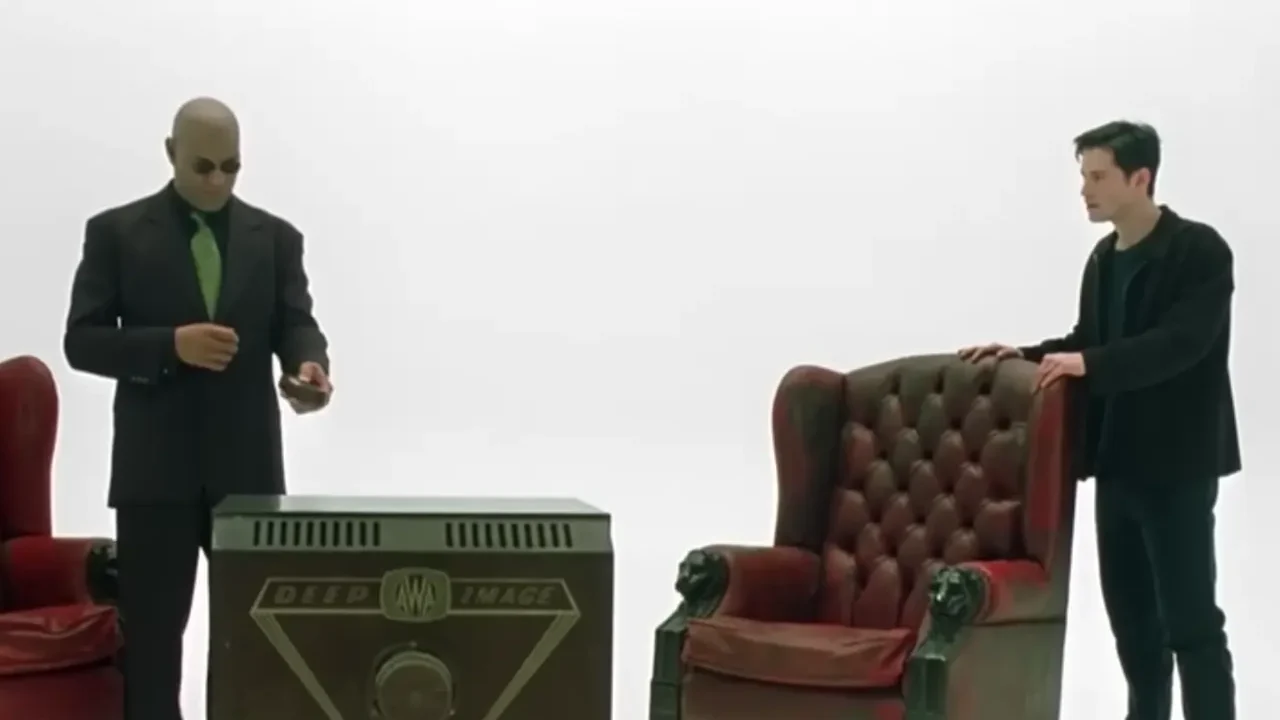
Some researchers speculate that an advanced simulation could save computing power by rendering only what is being observed, similar to how modern video games load only the parts of a map that the player can see.
💡 Did You Know?
Many open-world games don’t generate the entire world at once. New areas appear only as the player explores them, reducing the processing power required.
⚠️ However, this remains pure speculation. There is no evidence that our universe behaves this way, and no existing computer comes close to simulating a universe like ours.
➡️ This raises an even bigger question:
🔬5. Is There Any Scientific Evidence for the Simulation Hypothesis?
The short answer is No. There is currently no scientific evidence proving that we live inside a computer simulation.
However, some scientists and philosophers have pointed to a few intriguing ideas that keep the debate alive. These ideas do not prove the Simulation Hypothesis—they simply raise interesting questions.
⚛️ 1. Quantum Mechanics
In quantum physics, particles behave differently when measured in certain experiments, such as the double-slit experiment.
💡 Some people compare this to a video game that only renders objects when a player looks at them.
⚠️ Reality Check: Physicists do not consider this evidence for a simulation. Quantum mechanics has well-established scientific explanations that don’t require a simulated universe.
🌌 2. The Holographic Principle
Some theories suggest that all the information in our 3D universe could be encoded on a 2D surface, similar to a hologram.
This idea comes from theoretical physics and studies of black holes—not from computer science.
⚠️ It does not mean the universe is a simulation, but it has inspired comparisons with digital information storage.
💻 3. Information as the Building Block
Some physicists believe information may be more fundamental than matter itself.
If the universe is ultimately made of information, some argue it could behave like a giant computational system.
⚠️ This remains a theoretical idea and is not evidence that someone programmed our universe.
📌 What Does Science Say?
🔍 None of these ideas prove the Simulation Hypothesis.
Instead, they show that modern physics is still trying to answer one of humanity’s biggest questions:
What is the true nature of reality?
Very important:
State clearly:
None of these prove we live in a simulation.
🧪6. Can Scientists Ever Test the Simulation Hypothesis?
One of the biggest challenges with the Simulation Hypothesis is that it’s extremely difficult to test. In science, a hypothesis should make predictions that can be verified through experiments. So far, the Simulation Hypothesis hasn’t passed that test.
Still, researchers have proposed a few ways we might look for clues.
🖥️ 1. Looking for “Pixels” in Space
Just as a digital image is made of tiny pixels, some scientists have wondered whether space itself could have a smallest possible unit.
If the universe were built like a computer simulation, it might reveal a hidden “grid” at extremely tiny scales.
⚠️ So far, no such grid has been discovered.
🌠 2. Studying High-Energy Cosmic Rays
Cosmic rays are incredibly energetic particles that travel across the universe.
Some researchers have suggested that if space had a digital structure, these particles might behave in unusual ways.
🔬 Current observations have found no convincing evidence of this.
⚙️ 3. Searching for Glitches
Many people ask:
🤔 Could glitches in reality prove we’re living in a simulation?
Stories about déjà vu, the Mandela Effect, or strange coincidences are often linked to this idea online.
⚠️ However, there is no scientific evidence that these events are actual “bugs” in reality. Most are better explained by psychology, memory, or coincidence.
📌 The Bottom Line
At present, scientists cannot prove or disprove the Simulation Hypothesis.
Without testable evidence, it remains a fascinating philosophical idea rather than an accepted scientific theory.
💡 Science is driven by evidence, not possibilities. Until a measurable test is discovered, the Simulation Hypothesis will remain an intriguing question—not a proven fact.
🕉️7. Does the Bhagavad Gita Hint at a Simulated Reality?
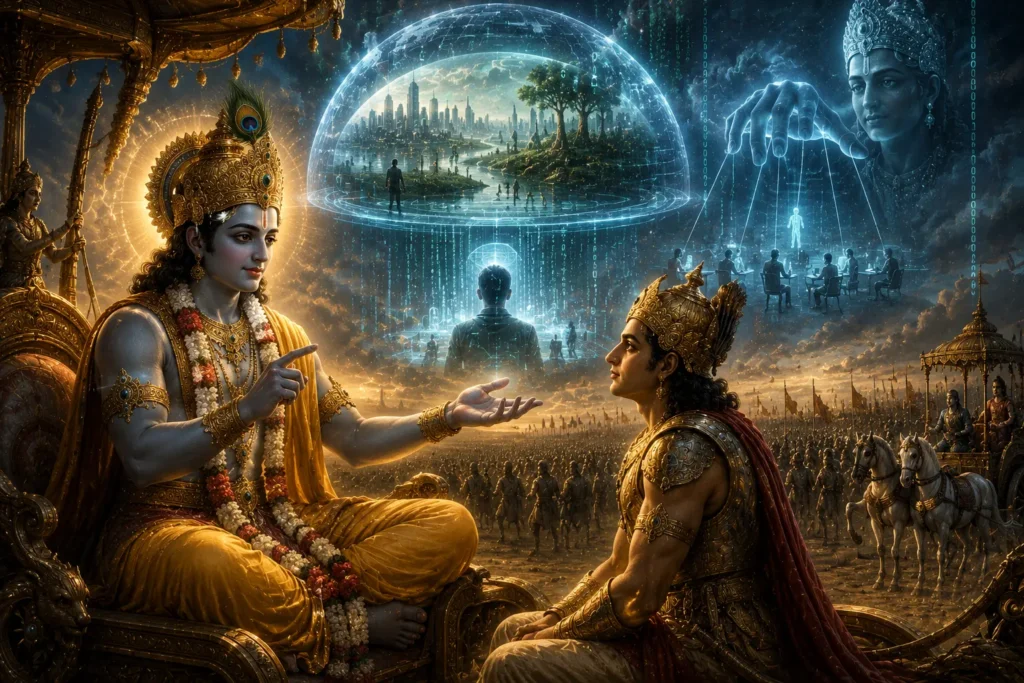
Long before computers and artificial intelligence existed, many ancient philosophies encouraged people to question the nature of reality. One of the most famous examples comes from the Bhagavad Gita.
The Gita doesn’t describe a computer simulation, but it does teach that the material world is temporary, while the soul (Atman) is eternal. It also introduces the concept of Maya often translated as illusion or the veil that hides ultimate reality.
📖 In Bhagavad Gita 2.16, Lord Krishna says:
नासतो विद्यते भावो नाभावो विद्यते सतः ।
उभयोरपि दृष्टोऽन्तस्त्वनयोस्तत्त्वदर्शिभिः
“The unreal has no lasting existence, and the real never ceases to be.”
This verse reminds us that appearances can be deceptive and that true reality may be deeper than what our senses perceive.
🔍 A Philosophical Similarity
Although they come from very different traditions, the Bhagavad Gita and the Simulation Hypothesis share one interesting question:
🤔 Is the reality we experience the ultimate reality?
However, their answers are very different.
| 🕉️ Bhagavad Gita | 💻 Simulation Hypothesis |
|---|---|
| Spiritual teaching | Philosophical thought experiment |
| Reality is hidden by Maya | Reality may be an artificial simulation |
| Focuses on self-realization | Focuses on technology and probability |
| Based on faith and philosophy | Based on logic and future technology |
⚠️ Important: The Bhagavad Gita is not scientific evidence for the Simulation Hypothesis. Any similarities are philosophical, not proof that ancient scriptures predicted modern computer simulations.
💡 Both ideas, however, encourage us to look beyond appearances and ask one timeless question:
“What is the true nature of reality?”
🕉️ A Philosophical Parallel from the Bhagavad Gita
The Bhagavad Gita describes the material world as temporary and ever-changing, while the eternal Self (Atman) remains beyond physical reality. Krishna explains that what we perceive is influenced by Maya, often translated as illusion or the veil that prevents us from seeing ultimate reality.
A famous verse is:
वासांसि जीर्णानि यथा विहाय
नवानि गृह्णाति नरोऽपराणि ।
तथा शरीराणि विहाय जीर्णा
न्यन्यानि संयाति नवानि देही
“As a person puts on new garments, giving up old ones, the soul similarly accepts new material bodies.”
— Bhagavad Gita 2.22
THE explaination:
Although this is not the same as the modern Simulation Hypothesis, both ideas encourage us to question whether the reality we experience is the deepest level of existence. The Bhagavad Gita speaks from a spiritual perspective, while the Simulation Hypothesis is a philosophical thought experiment inspired by modern computing.
This balanced approach respects both science and spirituality.
👨🔬8. What Do Scientists and Experts Think?
The Simulation Hypothesis has sparked debate among philosophers, physicists, and technology leaders. While some believe it’s an interesting possibility, many argue there’s no scientific evidence to support it.
Here’s where some well-known thinkers stand.
🧠 Nick Bostrom (Philosopher)
Nick Bostrom introduced the Simulation Hypothesis in 2003.
✔️ He doesn’t claim we’re definitely living in a simulation.
Instead, he argues that if future civilizations create countless realistic simulations, then statistically we might be one of them.
🚀 Elon Musk (Technology Entrepreneur)
Elon Musk has said that the chances of humans living in the original “base reality” may be very small.
💡 His reasoning is simple:
- 🎮 Video games have become dramatically more realistic in just a few decades.
- 🚀 If technology continues to improve for thousands of years, future simulations could become indistinguishable from reality.
⚠️ However, Musk has never presented this as scientific proof only as an interesting possibility.
🌌 Neil deGrasse Tyson (Astrophysicist)
Tyson believes the idea is possible, but says there is no evidence proving it.

He has even joked that there may be a significant chance we’re in a simulation—but emphasizes that it’s speculation, not science.
⚛️ Sean Carroll & Sabine Hossenfelder (Physicists)

Many physicists remain skeptical.
Their main arguments are:
- 🔬 No experimental evidence.
- 📊 No testable predictions.
- 🧪 Doesn’t follow the scientific method.
Until measurable evidence exists, they consider the Simulation Hypothesis a philosophical discussion rather than a scientific theory.
📌 The Scientific Consensus
Today’s scientific community has not accepted the Simulation Hypothesis as fact.
💡 It remains an intriguing idea that encourages us to think differently about reality, but extraordinary claims require extraordinary evidence, and that evidence simply doesn’t exist yet.
❌ Arguments Against the Simulation Hypothesis
The Simulation Hypothesis is undoubtedly fascinating, but extraordinary ideas require extraordinary evidence. While the concept has captured public imagination, many scientists and philosophers remain skeptical for several important reasons.
🔬 1. There Is No Direct Evidence
The biggest criticism is simple:
There is no measurable evidence that our universe is a computer simulation.
Unlike scientific theories such as relativity or evolution, the Simulation Hypothesis has never been confirmed through observations or experiments.
🧪 2. It Can’t Be Tested
A scientific hypothesis must be testable and falsifiable.
🤔 If every possible observation can be explained by saying, “That’s just how the simulation works,” then there’s no way to prove or disprove the idea.
This makes it more of a philosophical argument than a scientific theory.
💻 3. The Computing Power Problem
Simulating an entire universe would require an unimaginable amount of computing power.
It wouldn’t just involve simulating planets and stars—it would also need to recreate:
- 🌌 Hundreds of billions of galaxies
- ⚛️ Countless particles and physical interactions
- 🧠 Conscious minds with memories and emotions
Many scientists question whether even a super-advanced civilization could achieve this.
🪒 4. Occam’s Razor
Occam’s Razor is a principle that says:
The simplest explanation is usually the best one.
Since we already have scientific models that explain the universe without assuming a hidden programmer, many researchers see no reason to introduce an extra layer of complexity.
📌 The Verdict
The Simulation Hypothesis hasn’t been disproven—but it also hasn’t been proven.
💡 Until scientists discover testable evidence, it remains an intriguing philosophical possibility rather than an accepted scientific explanation of our universe.
🎯9. Final Verdict: Are We Really Living in a Simulation?
After exploring the science, philosophy, and technology behind the Simulation Hypothesis, one thing is clear:
🤔 We simply don’t know.
The idea that our universe could be an advanced computer simulation is fascinating, but there is currently no scientific evidence to prove it. While philosophers like Nick Bostrom argue that it could be statistically possible, most physicists believe the hypothesis remains untestable with today’s technology.
🔬 Science relies on observations, experiments, and evidence—not speculation. Until researchers discover a way to test the Simulation Hypothesis, it will remain an intriguing philosophical thought experiment rather than an accepted scientific theory.
🕉️ At the same time, ancient philosophies like the Bhagavad Gita remind us that questioning reality is not a new idea. Whether viewed through the lens of science or spirituality, humanity has always searched for answers to one timeless question:
What is the true nature of reality?
Perhaps we’ll discover that the universe is exactly as it appears. Or perhaps future generations will uncover something that completely changes our understanding of existence.
Until then, the Simulation Hypothesis remains one of the most fascinating “what if” questions ever asked.
💭 What Do You Think?
🔴 Do you believe we’re living in the real universe, or could our reality be an incredibly advanced simulation?
Share your thoughts in the comments below, we’d love to hear your perspective.
❓10.Frequently Asked Questions (FAQ)
1. What is the Simulation Hypothesis?
The Simulation Hypothesis is a philosophical argument suggesting that our universe could be an artificial simulation created by an advanced civilization. It is not a proven scientific theory.
2. Is there any proof that we live in a simulation?
No. There is currently no scientific evidence proving that our universe is a computer simulation.
3. Who proposed the Simulation Hypothesis?
The modern version of the idea was proposed by Oxford philosopher Nick Bostrom in 2003 through his paper Are You Living in a Computer Simulation?
4. Does quantum physics prove the Simulation Hypothesis?
No. Although concepts like quantum mechanics are sometimes linked to the idea, they do not provide evidence that our universe is simulated.
5. Did Elon Musk say we’re living in a simulation?
Yes. Elon Musk has suggested that the odds of living in “base reality” may be very low. However, he presented it as a philosophical possibility, not scientific proof.
6. Is the Simulation Hypothesis the same as The Matrix?
No. The Matrix is a fictional story about humans trapped inside a digital world, while the Simulation Hypothesis is a philosophical argument about the nature of reality.
7. Can scientists test the Simulation Hypothesis?
Not with current technology. Since the hypothesis doesn’t make testable predictions, many scientists consider it outside the scope of experimental science.
Image Credit: Screenshots from The Matrix are used solely for educational, commentary, criticism, and review purposes under the principles of fair use. All copyrights and trademarks belong to their respective owners.
🔗 Related Posts
- Could the Multiverse Actually Exist According to Modern Science?
- Can Vibranium suit Exist? The Real Science Behind the Suit
- Could a Super Soldier Serum Like Captain America’s Exist?