
🚀 Introduction
Imagine receiving a secret message that says:
“Your mission, should you choose to accept it…”
A few seconds later, the message self-destructs, leaving no evidence behind. Moments later, You wears an incredibly realistic silicone face mask, perfectly imitates another person’s voice, escapes using advanced spy gadgets, and controls high-tech surveillance systems that seem decades ahead of today’s technology.
🎬 These gadgets are one of the biggest reasons why the Mission: Impossible franchise has remained one of the world’s most popular spy series.
But here’s the real question…
🤔 Could any of these gadgets actually exist?
Some technologies shown in the movies are already becoming reality, while others remain far beyond today’s scientific capabilities.
In my this article, we’ll separate Hollywood fiction from real science and examine whether Ethan Hunt’s incredible spy technology could actually be built in real life.
🔍 What You’ll Learn
By the end of this article, you’ll discover:
- 🎭 Can the famous Mission Impossible face mask really exist?
- 🎤 Is AI voice cloning now as powerful as the movies?
- 👁️ Could smart contact lenses secretly record everything you see?
- 🚁 Are tiny spy drones already used by intelligence agencies?
- 💻 Can hackers really break into any computer within seconds?
- 💣 Is a self-destructing message scientifically possible?
- 🛰️ How realistic is Mission Impossible’s satellite surveillance?
- 🤖 Which gadgets may become reality within the next 20 years?
📖 How We’ll Judge Each Gadget
Instead of simply saying whether a gadget is “real” or “fake,” we’ll evaluate it using four criteria.
🔬 Scientific Possibility
Can modern science theoretically build it?
🛠️ Current Technology
Do we already have something similar today?
💰 Practicality
Could governments or intelligence agencies realistically use it?
🚀 Future Potential
Could advances in AI, robotics, nanotechnology, and biotechnology make it possible in the coming decades?
At the end of each section, you’ll see a Reality Score:
🟢 ★★★★★ — Already Exists
🟢🟢🟢🟢☆ — Mostly Possible Today
🟡🟡🟡☆☆ — Partially Possible
🟠🟠☆☆☆ — Mostly Science Fiction
🔴☆☆☆☆ — Impossible with Current Science
🎬 From Fiction to Reality
Throughout history, science fiction has inspired real inventions. Many technologies that once looked impossible are now everyday tools.
Examples include:
- 📱 Smartphones once resembled science fiction communicators.
- 🤖 AI assistants can now answer complex questions.
- 🛰️ GPS navigation guides billions of people.
- 🎙️ AI can clone voices with surprising accuracy.
- 🚁 Tiny drones perform surveillance and military missions.
Could Mission Impossible gadgets follow the same path? Let’s examine each one using real science. Hollywood simply pushes these technologies a few years or decades ahead of reality.
🕵️ 2. Inspired by Real Intelligence Agencies
Many gadgets resemble equipment developed for intelligence organizations such as:
- 🇺🇸 CIA
- 🇬🇧 MI6
- 🇮🇱 Mossad
- 🇫🇷 DGSE
These agencies have historically used technologies like:
- 📷 Hidden cameras
- 🎙️ Miniature microphones
- 📡 GPS trackers
- 💻 Encrypted communication devices
- 🚁 Surveillance drones
However, movies often exaggerate their speed, size, and capabilities for dramatic effect.
🤖 3. Artificial Intelligence Changed Everything
When the first Mission: Impossible film released in 1996, many gadgets seemed impossible.
Today, AI has changed that.
Modern AI can already:
- 🎤 Clone a person’s voice.
- 😊 Generate realistic faces.
- 🎬 Create deepfake videos.
- 🌎 Translate languages instantly.
- 👤 Recognize faces within seconds.
- 📝 Write and summarize documents.
- 🚗 Assist autonomous vehicles.
This is why newer Mission:Impossible movies feel much more realistic than older spy films.
📱 4. Smartphones Replaced Many Spy Gadgets
Thirty years ago, spies carried dozens of specialized devices. Today, one smartphone can perform many of those functions.
It can:
- 📸 Capture high-resolution photos
- 🎥 Record 4K videos
- 📍 Share live location
- 📡 Communicate via satellite (supported devices)
- 🔐 Encrypt conversations
- 💳 Store digital identity
- 🤖 Run AI-powered applications
Technology has quietly turned ordinary phones into powerful tools.
🚀 5. Military Technology Often Appears First
Many inventions reach the military years before becoming available to the public.
Examples include:
| 🛠️ Technology | 🎬 Movie Version | 🌍 Reality |
|---|---|---|
| GPS Navigation | Instant global tracking | Used worldwide today |
| Night Vision | Crystal-clear vision | Widely used by military |
| Drones | Tiny spy aircraft | Already operational |
| Facial Recognition | Instant identification | Used in airports and security |
| Satellite Imaging | Real-time surveillance | Available with limitations |
Mission: Impossible often imagines the next generation of these technologies.
🎥 6. Practical Effects Make the Technology More Believable
Unlike movies that depend heavily on CGI, Mission: Impossible uses many practical effects.
Examples include:
- 🪂 Real HALO jumps
- 🚁 Real helicopter flying
- 🏍️ Practical motorcycle stunts
- 🚆 Train sequences
- 🧗 Real climbing scenes
Because the action looks authentic, audiences are more likely to believe the fictional gadgets as well.
🧠 7. The Movies Predict Future Technology
Several technologies that once seemed impossible are now becoming reality.
Then vs Now
✅ Video calls
➡️ Once science fiction, now everyday.
✅ AI assistants
➡️ Once impossible, now available on phones and computers.
✅ Voice cloning
➡️ Once movie magic, now powered by AI.
✅ Drone surveillance
➡️ Once futuristic, now widely used.
This shows that science fiction can sometimes anticipate real innovation.
⚖️ Hollywood vs Reality
Mission: Impossible usually follows a simple formula:
🎬 In the Movie
- ⚡ Instant hacking
- 🎭 Perfect face masks
- 🎤 Flawless voice imitation
- 📡 Unlimited satellite access
- 🚁 Silent drones
- 👁️ Invisible surveillance
🔬 In Reality
- ⏳ Most technologies take time.
- 🔋 Batteries limit performance.
- 📶 Communication has range limits.
- 🔐 Security systems resist attacks.
- 💰 Advanced gadgets are expensive.
- ⚙️ Many require teams of specialists.
The science is often real—but the speed and perfection are exaggerated.
📊 Reality Meter
Here’s how believable the main technologies are before we examine them individually:
| 🛠️ Technology | Reality Score |
|---|---|
| 🎤 AI Voice Cloning | ⭐⭐⭐⭐⭐ |
| 🚁 Mini Spy Drones | ⭐⭐⭐⭐⭐ |
| 📡 Satellite Tracking | ⭐⭐⭐⭐☆ |
| 💻 Cybersecurity Tools | ⭐⭐⭐⭐☆ |
| 🥽 Smart AR Glasses | ⭐⭐⭐☆☆ |
| 👁️ Contact Lens Camera | ⭐⭐☆☆☆ |
| 🎭 Hyper-Realistic Face Mask | ⭐⭐☆☆☆ |
As you can see, several Mission Impossible gadgets are no longer pure fiction—they already exist in limited forms.
🎭 Hyper-Realistic Face Mask: Could Ethan Hunt’s Perfect Disguise Really Exist?
One of the most iconic Mission Impossible Gadgets is franchise is the hyper-realistic face mask.
In just a few minutes, Ethan Hunt transforms into another person with identical facial features, skin texture, voice, and even facial expressions.
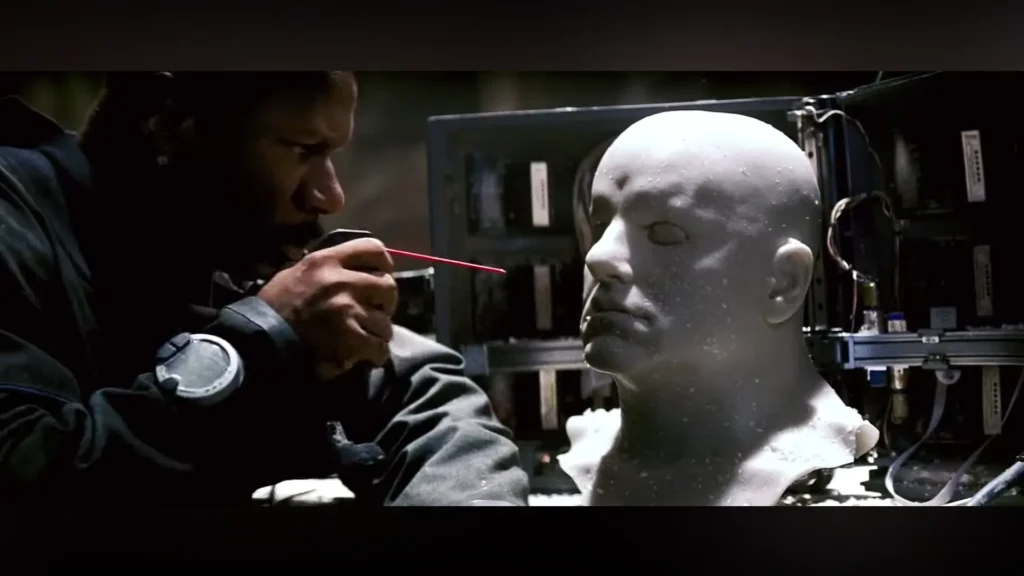
🎬 It looks almost magical. But how close is this technology to reality?
Let’s break it down.
🎬 How the Face Mask Works in Mission: Impossible
Throughout the series, the IMF team uses ultra-thin masks to impersonate other people.
The mask allows agents to:
- 🎭 Copy another person’s entire face
- 👀 Match skin tone and facial wrinkles
- 👃 Replicate the nose and ears
- 😊 Display natural facial expressions
- 🎤 Speak with the target’s voice
- 🕶️ Fool friends, enemies, and even security cameras
In the movie, applying the mask usually takes less than two minutes. The disguise is so convincing that almost nobody notices the difference.
🔬 How Close Are We Today?
Modern science cannot create a perfect Mission: Impossible mask—but several technologies are moving in that direction.
Let’s look at them one by one.
🧪 1. Silicone Prosthetic Masks
This is the closest technology available today.
Professional artists create incredibly realistic masks using:
- 🧴 Medical-grade silicone
- 🎨 Hand-painted skin textures
- 🩸 Artificial veins
- 🧔 Individually implanted hair
- 👁️ Glass or acrylic eyes
These masks are commonly used in:
- 🎬 Hollywood films
- 🎭 Theatre productions
- 🏥 Medical prosthetics
- 🎃 High-end costume design
✅ What They Can Do
- Look realistic from a distance
- Match skin colour
- Hide facial identity
- Fool casual observers
❌ Their Limitations
- Limited facial movement
- Difficult to wear comfortably
- Heavy compared to movie masks
- Close inspection often reveals the disguise
So, while today’s masks are impressive, they are far from Ethan Hunt’s flawless disguises.
🖨️ 2. 3D Face Scanning
Modern scanners can capture a person’s face with incredible accuracy.
Using technologies like:
- 📡 LiDAR
- 📷 Photogrammetry
- 📐 Structured-light scanning
Engineers can create:
- Highly accurate 3D facial models
- Digital twins
- Custom prosthetics
- Personalized medical implants
This makes creating realistic masks much easier than it was twenty years ago.
🤖 3. AI Face Reconstruction
Artificial Intelligence has transformed facial modelling.
Today’s AI can:
- 😊 Predict missing facial features
- 📷 Improve low-quality images
- 🧠 Generate realistic human faces
- 🎭 Create digital avatars
- 🎬 Produce convincing deepfake videos
Although AI creates digital faces rather than physical masks, it significantly speeds up the design process.
🎨 4. Ultra-Realistic Skin Materials
Scientists continue to develop synthetic materials that mimic human skin.
Modern artificial skin can reproduce:
- 🧴 Skin texture
- 💧 Elasticity
- 🌡️ Flexibility
- ☀️ Light reflection
Researchers are also working on electronic skin (e-skin) that can sense pressure and temperature, though it is still mainly in the research stage.
🎤 5. What About the Voice?
A face alone isn’t enough. Mission: Impossible disguises also include a perfect voice match.
Today, AI voice cloning can already:
- 🎙️ Copy accents
- 😀 Reproduce speaking style
- 🗣️ Match pronunciation
- ⏱️ Generate speech within seconds
This means the voice technology shown in the films is much closer to reality than the physical mask itself.
👀 The Biggest Challenge: Facial Expressions
This is where Hollywood goes far beyond current science.
Human faces contain around 40+ facial muscles that constantly move while speaking and expressing emotions.
To perfectly imitate someone, a mask would need to:
- 😊 Smile naturally
- 😲 Raise eyebrows
- 😡 Show anger
- 😢 Display sadness
- 😮 Stretch with speech
- 😉 Blink realistically
Current silicone masks cannot reproduce these movements with the same precision as real human skin.
This remains one of the biggest engineering challenges.
🔐 Can It Fool Facial Recognition?
Modern facial recognition systems analyze much more than appearance.
They examine:
- 👁️ Eye spacing
- 👃 Nose geometry
- 😊 Facial proportions
- 🧠 3D facial structure
- 🎥 Micro-expressions
- 💡 Depth information
A simple mask is unlikely to fool advanced biometric systems consistently.
Future AI-assisted masks might improve, but current technology is still limited.
🌍 Could Intelligence Agencies Build Something Better?
Governments often have access to technologies beyond those available to the public.
They may possess:
- 🔬 Better materials
- 🤖 Advanced AI
- 🧪 Specialized laboratories
- 🎯 Precision manufacturing
However, there is no public evidence that any agency possesses masks as advanced as those shown in Mission: Impossible.
The movie version remains a dramatic exaggeration.
📊 Movie vs Reality
| 🎬 Mission: Impossible | 🔬 Today’s Technology |
|---|---|
| Perfect disguise in minutes | Several hours or days to create |
| Natural facial expressions | Limited movement |
| Instant voice matching | AI voice cloning is already possible |
| Impossible to detect | Experts and biometrics can often detect disguises |
| Thin, lightweight mask | Silicone masks are thicker and less flexible |
🚀 Could It Exist by 2050?
Future advances could make these disguises far more realistic.
Possible breakthroughs include:
- 🤖 AI-designed facial prosthetics
- 🧬 Synthetic skin materials
- 🖨️ Ultra-fast 3D printing
- 🎙️ Real-time AI voice cloning
- 🧠 Smart electronic skin (e-skin)
- 🥽 Mixed reality calibration tools
Even then, creating a mask that perfectly copies every facial movement and fools all biometric systems would remain extremely difficult.
⭐ Reality Score
| Category | Rating |
|---|---|
| 🧪 Scientific Possibility | ⭐⭐⭐⭐☆ |
| 🛠️ Current Technology | ⭐⭐☆☆☆ |
| 🚀 Future Potential | ⭐⭐⭐⭐⭐ |
| 🎬 Movie Accuracy | ⭐⭐☆☆☆ |
✅ Final Verdict
🎭 Could Ethan Hunt’s Mission: Impossible face mask exist?
Partially.
Modern technology can already create highly realistic silicone masks, use 3D facial scanning, and even clone voices with AI. However, the movie’s version where a mask is applied in minutes, perfectly mimics facial expressions, and deceives everyone is still beyond today’s engineering capabilities.
Movie Myth Breaker Rating: 🟡 7/10 (Possible in parts, but heavily dramatized for cinema.)
🎤 AI Voice Mimicry: Can Artificial Intelligence Really Copy Anyone’s Voice?
Imagine receiving a phone call from your boss, a family member, or even a government official. The voice sounds 100% authentic. The tone, accent, breathing, and emotions are all identical.
🎬 In Mission: Impossible, Ethan Hunt often uses voice-changing technology to fool enemies and security systems.
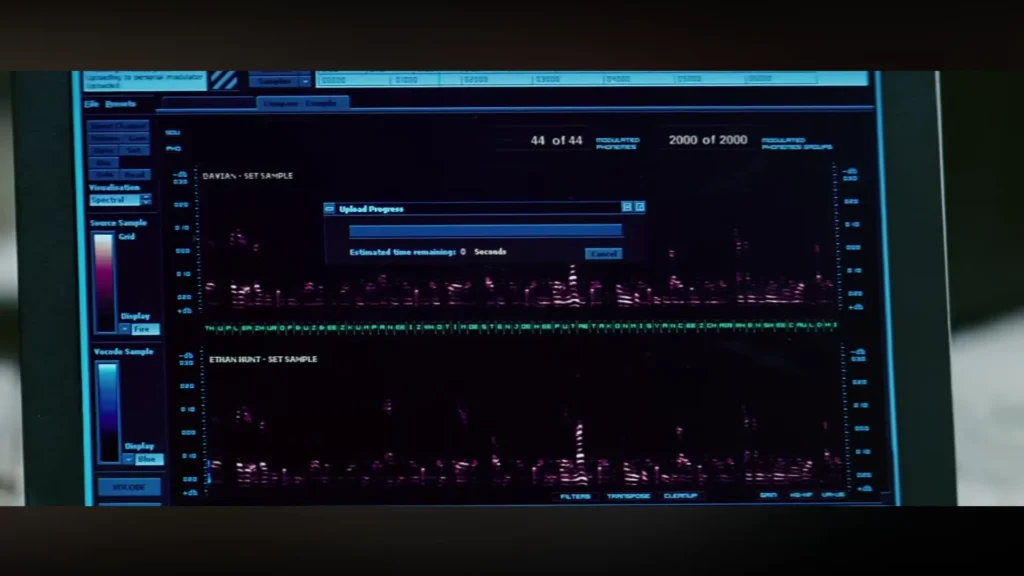
But today, thanks to Artificial Intelligence, Mission Impossible Gadgets is closer to reality than ever before.
Let’s see how.
🎬 How Voice Mimicry Works in Mission: Impossible
In the movies, IMF agents can instantly copy another person’s voice.
The technology allows them to:
- 🎤 Speak exactly like another person
- 😊 Match emotions and tone
- 🗣️ Copy accents perfectly
- 📞 Fool people during phone calls
- 🎧 Bypass voice-based security systems
🤖 What Is AI Voice Cloning?
AI voice cloning is a technology that learns how someone speaks and then generates new speech in that person’s voice.
Instead of recording every sentence, AI studies:
- 🗣️ Pronunciation
- 🎵 Pitch
- 😊 Emotion
- 🎙️ Speaking rhythm
- 🌍 Accent
- ⏱️ Pauses and breathing patterns
Once trained, AI can generate completely new sentences that the speaker never actually said.
🔬 How Does It Work?
Modern voice cloning uses Deep Learning.
The process usually looks like this:
Step 1️⃣ Collect Voice Samples
AI listens to recordings of the target person.
Examples include:
- 🎙️ Interviews
- 📞 Phone calls
- 🎥 Videos
- 🎧 Podcasts
The more recordings available, the better the results.
Step 2️⃣ Analyze Speech Patterns
The AI studies:
- Voice frequency
- Speaking speed
- Accent
- Emotional style
- Word pronunciation
- Sentence rhythm
It creates a digital model of the person’s voice.
Step 3️⃣ Generate New Speech
Now the AI can say almost anything in that voice. Even if the original person never spoke those words. This is exactly why AI voice cloning is both exciting and potentially dangerous.
🌍 Where Is This Technology Used Today?
AI voice cloning is no longer science fiction. It already has many practical uses.
🎬 Entertainment
- Movie dubbing
- Voice restoration
- Audiobooks
- Animated characters
❤️ Healthcare
Doctors use AI voices to help patients who have lost the ability to speak due to illness. Patients can sometimes preserve a digital version of their own voice before treatment.
📞 Customer Support
Many companies use AI-generated voices for:
- Banking
- Airlines
- Online support
- Virtual assistants
🎮 Gaming
Game developers create realistic NPC voices without recording thousands of lines manually.
⚠️ The Dark Side of Voice Cloning
Like many powerful technologies, AI voice cloning can be misused.
Possible risks include:
- 💰 Financial scams
- 📞 Fake emergency calls
- 🎭 Identity impersonation
- 📰 Fake political speeches
- 📢 Misinformation campaigns
This is why many organizations are developing tools to detect AI-generated voices.
🔐 Can AI Fool Voice Authentication?
Many banks and companies use voice biometrics for security. These systems analyze more than just sound.
They also examine:
- 🎵 Frequency patterns
- ⏱️ Speech timing
- 🌬️ Breathing sounds
- 🎤 Background noise
- 🧠 Vocal characteristics
Basic AI voices may fool simple systems, but advanced security platforms combine voice recognition with additional authentication methods, making attacks much harder.
🎬 Movie vs Reality
| 🎬 Mission: Impossible | 🔬 Today’s AI |
|---|---|
| Instant voice copying | Requires voice samples |
| Perfect in every situation | Very convincing, but not flawless |
| Works indefinitely | Depends on model quality and audio conditions |
| Impossible to detect | Detection tools are improving |
| No delay | Small processing delay may occur |
🚀 What Could Happen by 2040?
AI is improving rapidly.
Future voice systems may:
- 🤖 Clone voices from just a few seconds of audio
- 😊 Reproduce emotions more naturally
- 🌍 Translate speech while preserving the original voice
- 🎧 Enable real-time multilingual conversations
- 🧠 Adapt tone based on the situation
These developments could make voice cloning even more useful—and make strong authentication methods even more important.
📊 Reality Score
| Category | Rating |
|---|---|
| 🔬 Scientific Possibility | ⭐⭐⭐⭐⭐ |
| 🛠️ Current Technology | ⭐⭐⭐⭐☆ |
| 🚀 Future Potential | ⭐⭐⭐⭐⭐ |
| 🎬 Movie Accuracy | ⭐⭐⭐⭐☆ |
💡 Did You Know?
📌 A few years ago, cloning a person’s voice required hours of recorded audio.
Today, some AI systems can produce a convincing imitation from only a few seconds of speech, although quality and accuracy still improve with more training data.
This shows how quickly AI voice technology is advancing.
✅ Final Verdict
🎤 Can AI really copy someone’s voice like Mission: Impossible?
Yes—up to a point.
Modern AI can already generate remarkably realistic voices, making this one of the most scientifically accurate technologies shown in the Mission: Impossible franchise. However, the movies simplify the process, portraying instant, flawless impersonation under any condition, which remains beyond current capabilities.
Movie Myth Breaker Rating: 🟢 9/10 (Largely possible today, with some Hollywood exaggeration.)
👁️ Smart Contact Lens Camera: Could a Contact Lens Secretly Record Everything You See?
Imagine walking into a highly secured building.
You aren’t carrying a camera.
No phone.
No smartwatch.
No spy glasses.
Yet, everything you see is being secretly recorded through an ordinary-looking contact lens.
🎬 In Mission: Impossible, Ethan Hunt often uses advanced wearable technology that allows him to gather intelligence without attracting attention.
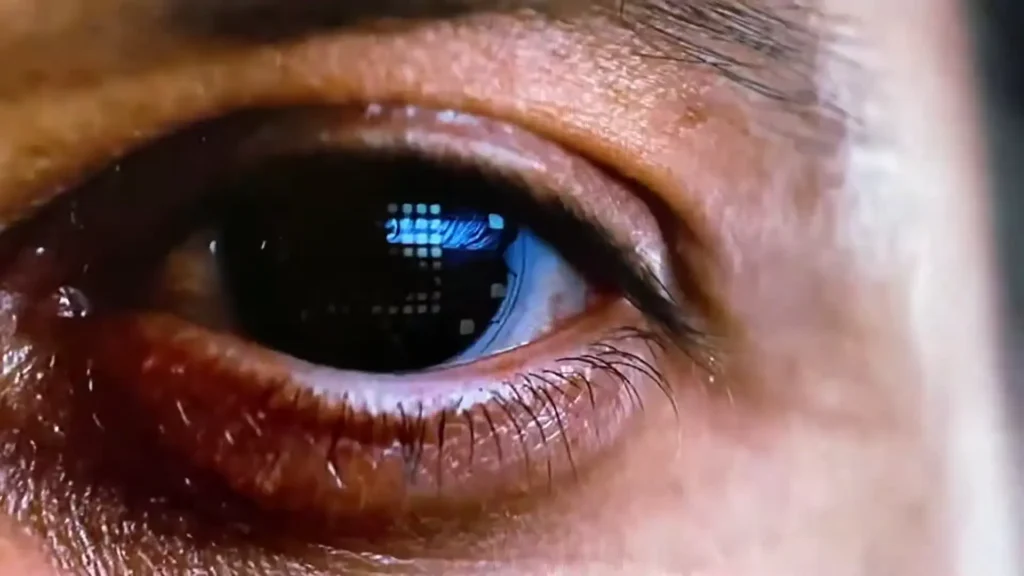
It looks like pure science fiction…
Or is it?
Let’s find out.
🎬 How the Contact Lens Works in Mission: Impossible
The movies suggest that the lens can:
- 👁️ Record high-definition video
- 📡 Transmit footage wirelessly
- 🔍 Zoom into distant objects
- 📊 Display mission information
- 🧭 Navigate using AR overlays
- 🎤 Communicate with teammates
All while looking like a normal contact lens.
It’s one of the most futuristic gadgets in the franchise.
🔬 Do Smart Contact Lenses Already Exist?
Yes—but not like the movies.
Scientists and technology companies have already developed experimental smart contact lenses.
Current research focuses on:
- 👁️ Vision correction
- 💉 Glucose monitoring
- ❤️ Health monitoring
- 🌡️ Eye pressure measurement
- 📡 Wireless communication
However, recording video is still beyond today’s commercial technology.
🧪 What Technology Would Be Needed?
To build Ethan Hunt’s contact lens, engineers would need to combine several tiny components.
📷 1. Miniature Camera
The lens would need:
- Tiny image sensor
- Mini camera lens
- Auto focus
- Low-light capability
Reality
Miniature cameras already exist.
But shrinking them enough to fit inside a soft contact lens remains extremely difficult.
🔋 2. Power Source
Every electronic device needs energy.
Possible options include:
- 🔋 Ultra-thin batteries
- ☀️ Solar charging
- 📡 Wireless charging
- ⚡ Energy harvesting from body heat
The Challenge
Today’s batteries are still too large for a comfortable contact lens.
Battery technology is currently the biggest obstacle.
📡 3. Wireless Transmission
A spy lens must send data somewhere.
Possible methods include:
- Bluetooth
- Wi-Fi
- Ultra-wideband (UWB)
- Future 6G networks
The problem?
Wireless transmission consumes power very quickly.
👁️ 4. Augmented Reality Display
Instead of recording video, many researchers are focusing on displaying information directly inside the user’s vision.
Imagine seeing:
- 📍 GPS directions
- ❤️ Health data
- 📩 Notifications
- 🌍 Live translations
- 🗺️ Navigation arrows
without looking at a phone.
This is much closer to reality.
🌍 What Exists Today?
Several companies and research teams have demonstrated smart contact lens prototypes.
Current prototypes can:
- 👁️ Monitor eye pressure
- 💉 Measure glucose in tears (still under research)
- 📡 Communicate with nearby devices
- 🧪 Test new display technologies
However, none currently match the all-in-one spy gadget shown in the movies.
🚧 Biggest Engineering Challenges
Building a spy contact lens isn’t just about making electronics smaller.
Engineers must solve several major problems.
🔋 Battery Life
A tiny battery would only power the device for a short time.
🌡️ Heat
Electronic components produce heat.
Even a small increase in temperature could make a contact lens unsafe for the eye.
👁️ Comfort
A contact lens must remain:
- Soft
- Flexible
- Breathable
- Comfortable for hours
Adding electronics makes this much harder.
📷 Camera Position
A camera inside the lens would constantly move with your eye.
Engineers would need advanced image stabilization to produce usable footage.
💧 Moisture Resistance
Contact lenses stay in a wet environment all day.
The electronics would need excellent waterproofing and long-term durability.
🎬 Movie vs Reality
| 🎬 Mission: Impossible | 🔬 Today’s Technology |
|---|---|
| Hidden HD camera | Mini cameras exist, but not inside normal contact lenses |
| Unlimited battery | Tiny batteries remain a major limitation |
| Live wireless streaming | Technically possible, but power-hungry |
| AR information | Experimental prototypes are under development |
| Comfortable for hours | Still an engineering challenge |
🚀 Could It Exist by 2045?
Many experts believe smart contact lenses will become far more capable over the next two decades.
Future improvements may include:
- 🤖 AI-powered vision assistance
- 🌍 Real-time language translation
- 📷 Tiny integrated cameras
- 🔋 Better micro-batteries
- 📡 Faster wireless communication
- 🥽 Seamless augmented reality
Even then, packing all these features into a safe, comfortable contact lens will require major advances in materials science and electronics.
📊 Reality Score
| Category | Rating |
|---|---|
| 🔬 Scientific Possibility | ⭐⭐⭐⭐☆ |
| 🛠️ Current Technology | ⭐⭐☆☆☆ |
| 🚀 Future Potential | ⭐⭐⭐⭐⭐ |
| 🎬 Movie Accuracy | ⭐⭐⭐☆☆ |
💡 Did You Know?
📌 Researchers are exploring microLED displays, ultra-thin flexible circuits, and biocompatible materials that could one day make smart contact lenses practical for everyday use. While these technologies are promising, they are still in development and not yet comparable to Ethan Hunt’s fictional gadget.
✅ Final Verdict
👁️ Could Ethan Hunt’s contact lens camera exist?
Partially—but not yet.
Today’s science has already produced experimental smart contact lenses for medical and augmented reality applications. However, a lens that can secretly record HD video, stream it wirelessly, display mission data, and operate comfortably for long periods remains beyond current technology.
Movie Myth Breaker Rating: 🟡 6.5/10 (Scientifically plausible in the future, but today’s technology isn’t there yet.)
🚁 Mini Spy Drones: Are They Already Used by Real Intelligence Agencies?
Imagine a drone no bigger than your palm.
It silently flies through a window, records an entire room, detects enemy movement, and returns without anyone noticing.
🎬 In Mission: Impossible, Ethan Hunt frequently relies on miniature drones for surveillance, reconnaissance, and high-risk missions.
It looks futuristic…
But unlike many movie gadgets, tiny spy drones already exist.
The real question is:
Are they as powerful as the movies show?
Let’s investigate.
🎬 How Spy Drones Work in Mission: Impossible
Throughout the franchise, miniature drones help the IMF team by:
- 🚁 Flying into restricted areas
- 📷 Recording live HD video
- 🎤 Capturing conversations
- 🌡️ Detecting enemy activity
- 📡 Sending live footage
- 🤖 Operating almost silently
- 🎯 Avoiding detection
Most importantly…
They are incredibly small, intelligent, and easy to control.
🔬 Do Mini Spy Drones Already Exist?
Yes.
Teledyne FLIR Black Hornet is the current example
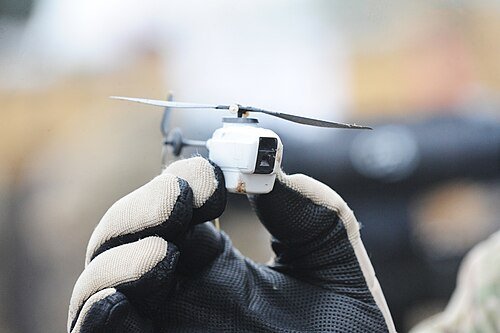
Modern military organizations already use miniature reconnaissance drones.
Today’s drones can:
- 📷 Record HD video
- 🎥 Live stream footage
- 🌙 Use night vision
- 📡 Fly using GPS
- 🚁 Hover automatically
- 🤖 Return to the operator automatically
Some are even small enough to fit inside a soldier’s pocket.
This makes drone technology one of the most realistic gadgets in Mission: Impossible.
🚁 Types of Real Spy Drones
1️⃣ Nano Drones
These are the smallest surveillance drones.
Features include:
- ✈️ Palm-sized design
- 📷 Tiny cameras
- 🔋 Lightweight batteries
- 🚶 Indoor navigation
- 🎯 Close-range reconnaissance
Military forces use them to inspect buildings before soldiers enter.
2️⃣ Quadcopters
The most common surveillance drones today.
Capabilities:
- 🎥 4K cameras
- 📡 Live streaming
- 🛰️ GPS navigation
- 🤖 Obstacle avoidance
- 🔄 Automatic return home
These are widely used by:
- Police
- Rescue teams
- Journalists
- Surveyors
- Security agencies
3️⃣ Military Reconnaissance Drones
Designed specifically for intelligence gathering.
They can carry:
- 📷 High-resolution cameras
- 🌡️ Thermal imaging
- 🌙 Infrared sensors
- 📡 Secure communication systems
Their purpose is observation—not Hollywood-style action scenes.
🤖 How Modern AI Makes Drones Smarter
Today’s drones don’t just fly.
Artificial Intelligence allows them to:
- 👤 Track moving people
- 🚗 Follow vehicles
- 🏢 Avoid buildings
- 🌳 Detect obstacles
- 📍 Plan efficient routes
- 🛬 Land automatically
Future AI will make them even more autonomous.
📷 Camera Technology
Mission: Impossible drones capture crystal-clear footage.
Modern drones already support:
- 📸 High-resolution imaging
- 🎥 4K video
- 🌙 Night vision
- 🔍 Optical zoom
- 🌡️ Thermal cameras
Camera technology is no longer the biggest challenge.
🔋 The Biggest Limitation: Battery Life
Hollywood drones seem to fly forever.
Reality is different.
Most compact drones can fly for approximately:
- ⏱️ 20–45 minutes
Smaller drones often have even shorter flight times.
Battery technology remains one of the biggest engineering challenges.
📡 Communication Range
Mission: Impossible often shows drones operating anywhere.
Real drones depend on communication systems.
Typical methods include:
- 📶 Radio signals
- 🛰️ GPS
- 📡 Wi-Fi
- 📱 Mobile networks
Inside buildings, thick walls and interference can reduce range.
🤫 Can They Fly Silently?
Movies often portray drones as nearly silent.
In reality:
- 🌀 Propellers create noticeable noise.
- 🌬️ Wind increases sound.
- 🏢 Indoor environments amplify it.
Engineers are developing quieter propellers, but completely silent drones remain extremely difficult.
🌍 Real-World Applications
Mini drones are already used for many important tasks.
🪖 Military
- Border surveillance
- Reconnaissance
- Urban operations
🚓 Law Enforcement
- Search operations
- Crime scene documentation
- Crowd monitoring
🚒 Emergency Services
- Disaster assessment
- Fire monitoring
- Rescue missions
🏭 Industrial Inspection
- Bridges
- Pipelines
- Power plants
- Wind turbines
🎬 Movie vs Reality
| 🎬 Mission: Impossible | 🔬 Today’s Technology |
|---|---|
| Silent flying | Quiet, but not silent |
| Unlimited flight | Limited by battery life |
| Instant AI navigation | AI-assisted navigation already exists |
| Tiny HD cameras | Already available |
| Indoor autonomous missions | Possible, but challenging |
| Impossible to detect | Can often be heard or detected |
🚀 Could Spy Drones Improve by 2045?
Absolutely.
Future drones may feature:
- 🤖 Fully autonomous AI
- 🔋 Longer-lasting batteries
- 🌞 Solar-assisted charging
- 🛰️ Satellite communication
- 👁️ Better obstacle avoidance
- 🤫 Quieter propulsion systems
- 🧠 Swarm intelligence, where multiple drones coordinate together
These advances could make them even closer to the fictional versions seen in Mission: Impossible.
📊 Reality Score
| Category | Rating |
|---|---|
| 🔬 Scientific Possibility | ⭐⭐⭐⭐⭐ |
| 🛠️ Current Technology | ⭐⭐⭐⭐⭐ |
| 🚀 Future Potential | ⭐⭐⭐⭐⭐ |
| 🎬 Movie Accuracy | ⭐⭐⭐⭐☆ |
💡 Did You Know?
📌 Some military reconnaissance drones are already small enough to fit in a soldier’s hand and can provide live video before troops enter a building. However, they still face practical limitations such as battery life, weather conditions, and communication range.
✅ Final Verdict
🚁 Are Mission: Impossible spy drones real?
Yes—more than most people realize.
Miniature surveillance drones, AI-assisted navigation, thermal cameras, and live video transmission already exist and are used by military and security organizations around the world. However, Hollywood exaggerates their endurance, stealth, and autonomy to create more exciting action sequences.
Movie Myth Breaker Rating: 🟢 9.5/10 (One of the most realistic technologies in the Mission: Impossible franchise.)
💻 Portable Hacking Devices: Can Ethan Hunt Really Hack Any Computer in Seconds?
One of the most exciting parts of the Mission: Impossible movies is watching Ethan Hunt and his IMF team break into highly secure computer systems.
A locked door?
💻 Hack it.
A security camera?
📡 Hack it.
A satellite?
🛰️ Hack it.
In the movies, almost every digital obstacle can be bypassed within seconds using a tiny handheld gadget.
🎬 It looks effortless.
But in reality…
Cybersecurity is far more complicated.
Let’s separate Hollywood fiction from real hacking technology.
🎬 How Hacking Works in Mission: Impossible
Throughout the franchise, portable hacking devices are used to:
- 💻 Unlock secure computers
- 🔓 Bypass biometric systems
- 📡 Disable CCTV cameras
- 🚪 Open electronic doors
- 🛰️ Access satellite networks
- 📱 Crack encrypted devices
- 📶 Intercept wireless communication
Most hacks take less than a minute.
No passwords.
No waiting.
No mistakes.
🔬 What Is Hacking?
Contrary to movies, hacking rarely means “typing very fast.”
Real hacking is about:
- 🔍 Finding vulnerabilities
- 🧠 Understanding computer systems
- 📡 Intercepting communication
- 🔓 Exploiting software flaws
- ⚙️ Using specialized tools
Most successful cyberattacks rely more on planning than speed.
💻 Can Portable Hacking Devices Exist?
Yes—but with limitations.
Security professionals use portable devices for:
- 📡 Network testing
- 🔍 Security audits
- 🔐 Penetration testing
- 📶 Wi-Fi analysis
- 💾 Digital forensics
These tools help identify weaknesses in systems—but they don’t magically hack everything.
🛠️ Types of Real Cybersecurity Tools
📶 1. Wi-Fi Analysis Tools
These devices help experts:
- Detect wireless networks
- Measure signal strength
- Identify security settings
- Test network vulnerabilities
They are commonly used by cybersecurity professionals—not movie spies.
🔑 2. Password Testing Tools
Some software can test password strength by trying many possible combinations.
However:
- 🔒 Strong passwords take much longer to crack.
- 🔐 Multi-factor authentication makes attacks significantly harder.
- ⏳ Success depends on the target’s security.
There is no universal “instant password breaker.”
📡 3. Radio Signal Analysis
Some portable devices analyze wireless signals such as:
- Bluetooth
- RFID
- NFC
- Wi-Fi
These tools help security researchers understand how devices communicate.
💾 4. Digital Forensics Equipment
Investigators use portable hardware to:
- Recover deleted files
- Copy storage devices
- Analyze evidence
- Preserve digital data
These tools are designed for investigation—not instant hacking.
🤖 How AI Is Changing Cybersecurity
Artificial Intelligence is transforming both defense and cyberattacks.
AI can help:
- 🔍 Detect malware
- ⚠️ Identify suspicious behavior
- 📊 Analyze network traffic
- 🧠 Find software vulnerabilities
- 🤖 Automate security monitoring
At the same time, attackers may also use AI to automate parts of phishing or vulnerability discovery, making cybersecurity an ongoing race between defenders and attackers.
🚪 Can Electronic Doors Be Hacked?
Movies often show electronic locks opening instantly.
Reality depends on the lock.
Some systems use:
- PIN codes
- RFID cards
- Fingerprints
- Face recognition
- Encryption
- Cloud authentication
Modern systems usually combine several security layers.
Breaking all of them is far more difficult than pressing one button.
📱 What About Smartphones?
Hollywood often shows smartphones being hacked within seconds.
Real attacks are much more challenging because phones include:
- 🔐 Hardware encryption
- 👆 Fingerprint authentication
- 😊 Face recognition
- 📲 Secure operating systems
- 🔒 App sandboxing
Compromising a modern smartphone generally requires exploiting specific vulnerabilities rather than simply connecting a gadget.
⏳ Why Real Hacking Takes Time
In Mission: Impossible:
✅ Connect device
⬇️
✅ Progress bar reaches 100%
⬇️
✅ System hacked
Reality is very different.
Cybersecurity professionals may spend:
- 🕒 Hours
- 📅 Days
- 📆 Weeks
- 📈 Months
researching and testing before successfully accessing a protected system.
Many attempts fail completely.
🎬 Movie vs Reality
| 🎬 Mission: Impossible | 🔬 Today’s Cybersecurity |
|---|---|
| Instant hacking | Often requires planning and testing |
| One device hacks everything | Different tools for different systems |
| Every password breaks quickly | Strong encryption is highly resistant |
| Doors open immediately | Depends on hardware and software |
| Satellites hacked in seconds | Extremely difficult and heavily protected |
🚀 Could Portable Hacking Become More Powerful?
Future cybersecurity tools may include:
- 🤖 AI-assisted vulnerability detection
- 🔍 Faster security analysis
- 📡 Improved wireless diagnostics
- 🧠 Automated penetration testing
- ⚡ Smarter defensive systems
However, stronger encryption and better authentication methods will also continue to evolve.
📊 Reality Score
| Category | Rating |
|---|---|
| 🔬 Scientific Possibility | ⭐⭐⭐⭐⭐ |
| 🛠️ Current Technology | ⭐⭐⭐☆☆ |
| 🚀 Future Potential | ⭐⭐⭐⭐☆ |
| 🎬 Movie Accuracy | ⭐⭐☆☆☆ |
💡 Did You Know?
📌 Many of the devices shown in spy movies resemble real penetration testing equipment used by ethical hackers. The difference is that real professionals operate with authorization, spend significant time analyzing systems, and cannot instantly bypass every security measure.
✅ Final Verdict
💻 Can Ethan Hunt’s portable hacking devices instantly break into any computer?
Not with today’s technology.
Portable cybersecurity tools do exist and are widely used by security professionals, but they are designed to analyze, test, and identify vulnerabilities, not magically unlock every device in seconds. Real hacking requires knowledge, preparation, and often a combination of software flaws and human mistakes.
Movie Myth Breaker Rating: 🟡 7.5/10 (Based on real cybersecurity concepts, but greatly accelerated and dramatized for the big screen.)
💣 Self-Destructing Messages: Could Secret Messages Really Destroy Themselves?
One of the most iconic moments in every Mission: Impossible movie begins with a simple message.
“Your mission, should you choose to accept it…”
A few seconds later…
💥 The message destroys itself.
No evidence.
No fingerprints.
No recovery.
This gadget has become the signature of the entire franchise.
But here’s the question:
Can a message really self-destruct in real life?
The answer is surprisingly interesting.
🎬 How Self-Destructing Messages Work in Mission: Impossible
In the movies, IMF agents receive classified instructions through various devices.
After reading the message:
- 💥 The device explodes.
- 🔥 The paper burns instantly.
- 💨 The recording disappears.
- 📱 Digital files are erased.
- 🧹 No trace remains.
The goal is simple:
👉 Prevent enemies from recovering secret information.
🔬 Do Self-Destructing Messages Already Exist?
Yes—but not exactly like the movies.
Modern communication apps already offer self-destructing messages.
Instead of exploding,
they automatically delete information after a chosen time.
Examples include:
- 📱 Disappearing chats
- ⏰ Auto-delete messages
- 📸 View-once photos
- 🎥 Temporary videos
These features are widely available today.
🔐 Why Governments Need Them
Sensitive information cannot remain available forever.
Military and intelligence agencies often need messages that:
- 🔒 Stay encrypted
- ⏳ Exist for only a short time
- 🚫 Cannot be forwarded
- 🗑️ Delete automatically
- 👀 Reduce the risk of leaks
Although real systems are highly classified, temporary communication is a common security principle.
📱 Digital Self-Destruction
Modern software can already:
⏰ Delete After Time
Examples:
- 30 seconds
- 1 minute
- 24 hours
- 7 days
The message disappears automatically.
📸 View Once
Some services allow:
- Photos
- Videos
- Documents
to be opened only once before they become unavailable.
🔑 Encryption
Before deletion, messages are usually protected using encryption.
This means:
- 🔒 Only the intended recipient can read them.
- 🚫 Others cannot easily intercept the content.
Encryption is one of the most important security features in modern communication.
🔥 What About Physical Self-Destruction?
This is where Mission: Impossible becomes more dramatic.
Scientists have explored electronics that can intentionally become unusable under controlled conditions.
Research has included concepts such as:
- 🧪 Dissolvable electronic materials
- 🌡️ Heat-sensitive circuits
- 💧 Water-soluble components
- ⚡ Temporary electronic devices
These ideas are mainly being studied for specialized applications and are not like the dramatic explosions shown in the films.
💻 Can Deleted Files Be Recovered?
Hollywood usually shows complete destruction.
Reality is more complicated.
Sometimes deleted files can be:
- 💾 Recovered from storage
- 🧠 Restored from backups
- ☁️ Found in cloud synchronization
- 📂 Retrieved using forensic techniques
Secure deletion is much more complex than simply pressing the “Delete” button.
🚨 The Biggest Weakness
Even if a message deletes itself…
Someone can still:
- 📸 Take a screenshot
- 📷 Photograph another screen
- ✍️ Copy the information manually
- 📝 Write it down
Technology cannot completely prevent human actions.
This is one reason why information security depends on both technology and user behavior.
🌍 Real-World Applications
Temporary messaging is already useful in many areas.
🏢 Business
- Confidential contracts
- Internal communication
🏥 Healthcare
- Temporary patient information
- Secure communication
🪖 Government
- Sensitive operational information
- Confidential discussions
👨💻 Cybersecurity
- Temporary passwords
- Authentication codes
- Secure verification links
🎬 Movie vs Reality
| 🎬 Mission: Impossible | 🔬 Today’s Technology |
|---|---|
| Message explodes | Messages auto-delete |
| Impossible to recover | Recovery may sometimes be possible |
| Physical destruction | Mostly digital deletion |
| No evidence remains | Screenshots and backups can still exist |
| Instant disappearance | Already available in many messaging apps |
🚀 Could We Build Movie-Style Self-Destructing Devices?
Future research may lead to devices that can:
- 🤖 Securely erase sensitive data
- 🧪 Use temporary electronic materials
- 🌡️ Disable circuits after a command
- 🔒 Destroy encryption keys automatically
However, dramatic exploding gadgets are neither practical nor desirable for everyday communication.
📊 Reality Score
| Category | Rating |
|---|---|
| 🔬 Scientific Possibility | ⭐⭐⭐⭐⭐ |
| 🛠️ Current Technology | ⭐⭐⭐⭐☆ |
| 🚀 Future Potential | ⭐⭐⭐⭐⭐ |
| 🎬 Movie Accuracy | ⭐⭐⭐☆☆ |
💡 Did You Know?
📌 Many online services already let users send disappearing messages or view-once media. While these features improve privacy, they cannot guarantee that the recipient won’t save the information by taking a screenshot or using another recording device.
✅ Final Verdict
💣 Can self-destructing messages like Mission: Impossible exist?
Yes—but in a digital form rather than a dramatic explosion.
Modern technology already supports disappearing messages, automatic deletion, encrypted communication, and temporary access to sensitive information. However, the movie’s explosive self-destruction is designed for cinematic impact rather than practical security.
Movie Myth Breaker Rating: 🟢 8.5/10 (The concept is real, but Hollywood makes it far more dramatic than reality.)
🛰️ Satellite Tracking & Global Surveillance: Can Intelligence Agencies Really Watch Anyone, Anywhere?
One of the most impressive technologies in Mission: Impossible is its global surveillance system.
Whenever Ethan Hunt is on a mission, the IMF team seems capable of tracking him almost anywhere in the world.
🎬 They can:
- 🛰️ Locate targets within seconds.
- 📍 Track moving vehicles.
- 🚁 Monitor live camera feeds.
- 📡 Access satellite imagery.
- 🌍 Follow people across different countries.
- 🎯 Identify suspects almost instantly.
It looks like someone is always watching from space.
But…
Is this really possible?
Let’s separate Hollywood fiction from modern surveillance technology.
🎬 How Satellite Tracking Works in Mission: Impossible
Throughout the movies, satellites appear capable of:
- 🌍 Tracking a person anywhere on Earth
- 🚗 Following moving cars in real time
- 📷 Zooming into buildings
- 🎥 Providing continuous live video
- 📡 Supporting military operations
- 🤖 Assisting spy missions instantly
The technology appears almost unlimited.
🔬 What Can Satellites Actually Do?
Modern satellites are incredibly powerful.
They can already perform tasks such as:
- 🛰️ Earth observation
- 🌦️ Weather monitoring
- 🚢 Ship tracking
- 🌾 Agriculture monitoring
- 🌍 Mapping cities
- 🌊 Disaster monitoring
- 🛰️ GPS navigation
However…
They also have important limitations.
📍 Can Satellites Track People?
This is one of Hollywood’s biggest exaggerations.
Reality:
Satellites cannot directly track an individual person walking on a street in real time.
Instead, they usually detect:
- 🚗 Vehicles
- 🚢 Ships
- ✈️ Aircraft
- 🏢 Buildings
- 🌳 Large objects
- 🌍 Terrain
To track a specific person continuously, agencies often combine information from multiple sources, not just satellites.
🛰️ How GPS Actually Works
Many people think GPS satellites watch us.
They don’t.
GPS satellites simply broadcast timing signals.
Your phone calculates its own position by receiving signals from multiple satellites.
That means:
❌ GPS satellites are not cameras.
✅ They act more like extremely accurate space-based clocks.
📷 Can Satellites Zoom Into Faces?
Movies often show satellites reading license plates or recognizing faces.
Reality is different.
Modern imaging satellites can capture impressive detail, but they still face limitations such as:
- Cloud cover ☁️
- Weather 🌧️
- Lighting 🌙
- Viewing angle 📐
- Orbital position 🛰️
Satellites cannot continuously hover above one location like helicopters.
🚁 Why Drones Are Often Better
For close surveillance, agencies frequently prefer drones because they can:
- 🎥 Fly lower
- 📷 Capture better detail
- 🎯 Focus on one location
- 🔄 Stay nearby for longer periods
This is why drones often complement satellite imagery rather than replace it.
🤖 How AI Improves Surveillance
Artificial Intelligence has greatly enhanced surveillance systems.
AI can help:
- 🚗 Detect vehicles
- 👤 Recognize movement
- 📍 Identify patterns
- 🌍 Compare satellite images
- 📊 Analyze huge amounts of data
Instead of replacing humans, AI helps analysts process information much faster.
🌍 Other Technologies Used for Tracking
In reality, intelligence agencies don’t rely on satellites alone.
They may combine information from:
- 📱 Mobile phone signals
- 📷 CCTV networks
- 🚗 Vehicle tracking
- 📡 GPS devices
- 💳 Transaction records
- 🌐 Internet activity (where legally authorized)
- 🤖 AI-powered analytics
Using multiple data sources is generally more effective than relying on a single satellite image.
🚧 Biggest Limitations
Even the world’s most advanced surveillance systems face challenges.
☁️ Weather
Clouds can block optical satellite images.
🌙 Night-Time
Some sensors work at night, but image quality varies depending on the technology used.
🛰️ Orbit
Satellites constantly move around Earth.
They cannot remain fixed over one location indefinitely unless they are in specific types of orbits, which are not suitable for high-resolution imaging of every location.
🌍 Coverage
No single satellite can continuously monitor the entire planet at high resolution.
Multiple satellites and other surveillance systems are usually required.
🎬 Movie vs Reality
| 🎬 Mission: Impossible | 🔬 Today’s Technology |
|---|---|
| Track anyone instantly | Uses multiple tracking methods |
| Continuous live video | Limited by satellite passes and technology |
| Read faces from space | Not realistically achievable |
| Unlimited zoom | Resolution has physical limits |
| Watch anywhere, anytime | Depends on available assets and conditions |
🚀 Could It Exist by 2050?
Future surveillance systems may include:
- 🤖 AI-powered image analysis
- 🛰️ Larger satellite constellations
- 📡 Faster communication networks
- 🚁 Autonomous reconnaissance drones
- 🌍 Better Earth observation sensors
- 🧠 Predictive intelligence systems
Even with these advances, physics, weather, privacy laws, and engineering constraints will continue to impose limits.
📊 Reality Score
| Category | Rating |
|---|---|
| 🔬 Scientific Possibility | ⭐⭐⭐⭐⭐ |
| 🛠️ Current Technology | ⭐⭐⭐⭐☆ |
| 🚀 Future Potential | ⭐⭐⭐⭐⭐ |
| 🎬 Movie Accuracy | ⭐⭐⭐☆☆ |
💡 Did You Know?
📌 Modern Earth-observation satellites can capture remarkably detailed images for mapping, environmental monitoring, and disaster response. However, the idea that a single satellite can continuously follow one person across the globe in real time is a common Hollywood myth.
✅ Final Verdict
🛰️ Can satellites track anyone, anywhere like Mission: Impossible?
Partially.
Satellites play a major role in navigation, mapping, weather forecasting, and Earth observation. However, the seamless, real-time global tracking shown in the movies relies on a combination of technologies—and Hollywood greatly simplifies what is actually a complex intelligence process.
Movie Myth Breaker Rating: 🟢 8/10 (Based on real surveillance technology, but significantly dramatized for cinematic effect.)
🥽 Augmented Reality Spy Glasses: Could Future Glasses Display Live Mission Data?
Imagine wearing a pair of ordinary-looking glasses.
As you walk through a crowded airport, the lenses instantly display:
- 👤 A person’s identity
- 🌍 Their nationality
- 📍 Live GPS directions
- 🎤 Real-time language translation
- ⚠️ Threat alerts
- 📡 Mission updates
No smartphone.
No laptop.
No smartwatch.
Everything appears directly in front of your eyes.
🎬 This is exactly the type of futuristic technology often seen in Mission: Impossible.
But here’s the exciting part…
Much of this technology is already being developed today.
Let’s explore how close we really are.
🎬 How AR Spy Glasses Work in Mission: Impossible
Throughout the movies, agents use wearable displays that can:
- 👤 Identify people instantly
- 📍 Show navigation routes
- 📡 Receive mission updates
- 🎥 Stream live video
- 🔍 Zoom into distant objects
- 🌍 Display tactical information
- 🤖 Assist decision making
Everything happens in real time.
Almost like having a computer inside your eyes.
🔬 What Is Augmented Reality (AR)?
Unlike Virtual Reality (VR), which creates a completely digital world,
Augmented Reality (AR) adds digital information to the real world.
Instead of replacing reality,
AR enhances it.
Examples include:
- 📍 Navigation arrows
- 🌡️ Weather information
- 📩 Notifications
- 👤 Face recognition
- 🗺️ Interactive maps
👓 Do Smart Glasses Already Exist?
Yes.
Modern smart glasses already provide features such as:
- 📷 Built-in cameras
- 🎤 Voice assistants
- 🎧 Speakers
- 📞 Phone calls
- 🎵 Music
- 📍 Navigation
- 🌍 Live translation
Although impressive,
they’re still far less advanced than the glasses used by Ethan Hunt.
🤖 Artificial Intelligence Makes AR Smarter
AI is the brain behind modern smart glasses.
It can already:
- 👤 Detect faces
- 🚗 Recognize vehicles
- 🌳 Identify objects
- 🌍 Translate languages
- 📖 Read text
- 🎤 Understand voice commands
Future AI will become even more capable.
📍 Navigation Without Looking at Your Phone
Imagine walking through an unfamiliar city.
Instead of checking Google Maps every minute,
your glasses simply display:
➡️ Turn Left
⬆️ Walk Straight
➡️ Destination 50 meters ahead
This technology is already being explored.
🌍 Real-Time Language Translation
One of the most useful future applications is live translation.
Imagine speaking with someone who speaks another language.
Your glasses could display:
🇯🇵 Japanese
⬇️
🇬🇧 English
within seconds.
Instead of replacing subtitles,
the translation appears naturally in your field of view.
👤 Facial Recognition
Mission Impossible often shows glasses instantly identifying people.
Today’s AI can already recognize faces under suitable conditions.
Possible applications include:
- Airport security
- Missing person searches
- Employee identification
- Device unlocking
However…
Using facial recognition in public raises major privacy and legal concerns in many countries.
📷 Can They Record Everything?
Some smart glasses already include cameras.
They can:
- 📸 Take photos
- 🎥 Record videos
- 📞 Live stream
- 🎙️ Capture audio
However,
they still face challenges like:
- 🔋 Battery life
- 🌡️ Heat
- 📶 Connectivity
- 👀 Privacy concerns
🔋 Biggest Engineering Challenges
To become true Mission Impossible glasses,
engineers must solve several problems.
🔋 Battery Life
AR displays consume significant power.
Long battery life remains difficult.
👓 Comfortable Design
People won’t wear heavy glasses all day.
Future devices must become:
- Lightweight
- Thin
- Comfortable
- Stylish
🌞 Bright Sunlight
Outdoor displays become harder to read in bright sunlight.
Researchers continue improving display technology.
🌡️ Heat Management
Tiny processors generate heat.
Keeping smart glasses cool is essential for comfort.
🎬 Movie vs Reality
| 🎬 Mission Impossible | 🔬 Today’s Technology |
|---|---|
| Live mission updates | Notifications already exist |
| Facial recognition everywhere | Technically possible but regulated |
| Real-time translation | Already available in limited forms |
| Instant satellite communication | Limited by networks |
| Unlimited battery | Still a major challenge |
| Perfect AR display | Improving rapidly |
🚀 Could It Exist by 2045?
Experts believe AR glasses will improve dramatically.
Future models may include:
- 🤖 AI assistants
- 🌍 Instant translation
- 👁️ Eye tracking
- 🧠 Brain-computer interaction
- 📡 6G connectivity
- 🛰️ Satellite communication
- 🥽 Holographic displays
Many of these technologies are already under active development.
📊 Reality Score
| Category | Rating |
|---|---|
| 🔬 Scientific Possibility | ⭐⭐⭐⭐⭐ |
| 🛠️ Current Technology | ⭐⭐⭐⭐☆ |
| 🚀 Future Potential | ⭐⭐⭐⭐⭐ |
| 🎬 Movie Accuracy | ⭐⭐⭐⭐☆ |
💡 Did You Know?
📌 Modern AI-powered smart glasses can already provide navigation, voice assistants, translations, and hands-free photography. While they aren’t as advanced as Ethan Hunt’s futuristic eyewear, they demonstrate that wearable augmented reality is rapidly moving from science fiction toward everyday reality.
✅ Final Verdict
🥽 Could Mission: Impossible spy glasses become reality?
Very likely.
Among all the gadgets in the franchise, AR spy glasses are one of the closest to becoming mainstream technology. Advances in artificial intelligence, augmented reality, miniaturized electronics, and wearable displays are steadily bringing many of their capabilities within reach. The movie versions are still more powerful and seamless than today’s devices, but the gap is shrinking.
Movie Myth Breaker Rating: 🟢 9/10 (One of the most realistic future technologies in the Mission: Impossible universe.)
🤖 Artificial Intelligence in Mission: Impossible: Could AI Really Become the Ultimate Spy?
Artificial Intelligence is the most fascinating Mission Impossible Gadgets in later series.
Imagine having an AI assistant that can:
- 🎤 Clone anyone’s voice
- 👤 Recognize thousands of faces instantly
- 🚁 Control spy drones
- 🌍 Translate every language
- 📡 Analyze satellite images
- 💻 Detect cyber threats
- 📊 Predict enemy movements
🎬 In Mission: Impossible, Artificial Intelligence quietly powers many of Ethan Hunt’s most advanced gadgets.
Unlike invisible lasers or impossible masks, AI isn’t science fiction anymore.
It’s already transforming the world around us.
Let’s see how much of Mission Impossible’s AI is already real.
🎬 How AI Is Used in Mission: Impossible
Although the movies focus on action, AI is behind many technologies used by the IMF team.
Examples include:
- 🎤 Voice cloning
- 👤 Facial recognition
- 🚁 Autonomous drones
- 📡 Satellite intelligence
- 💻 Cybersecurity
- 🌍 Language translation
- 📊 Data analysis
Instead of replacing agents,
AI works as an intelligent assistant.
🧠 What Is Artificial Intelligence?
Artificial Intelligence (AI) is the ability of computers to perform tasks that normally require human intelligence.
Examples include:
- 👀 Recognizing faces
- 🎤 Understanding speech
- 📝 Writing text
- 🌍 Translating languages
- 📷 Identifying objects
- 🚗 Driving vehicles
- 🤖 Learning from experience
Modern AI improves continuously as it processes more data.
🎤 1. AI Voice Cloning
One of Mission Impossible’s most realistic technologies.
Today’s AI can:
- 🎙️ Copy voices
- 😊 Mimic emotions
- 🌍 Preserve accents
- 📞 Generate natural conversations
Future systems may clone voices almost instantly.
Reality Score: ⭐⭐⭐⭐☆
👤 2. Facial Recognition
Imagine walking into an airport.
Within seconds,
AI identifies:
- Name
- Passport
- Watchlist status
- Previous records
Modern AI can already recognize faces under suitable conditions.
Common applications include:
- Airport security
- Smartphones
- Office access
- Missing person searches
However,
privacy laws restrict how facial recognition can be used.
Reality Score: ⭐⭐⭐⭐☆
🚁 3. Autonomous Spy Drones
Future spy drones won’t always need human pilots.
AI can already help drones:
- 🚁 Avoid obstacles
- 👤 Track moving targets
- 🛬 Land automatically
- 📍 Plan routes
- 🌳 Navigate around buildings
Military research continues improving autonomous flight.
Reality Score: ⭐⭐⭐⭐⭐
💻 4. AI in Cybersecurity
Modern cyber attacks happen every second.
AI helps defenders by:
- 🛡️ Detecting malware
- 📊 Monitoring networks
- ⚠️ Finding suspicious activity
- 🔒 Identifying vulnerabilities
- 🤖 Responding automatically
Instead of replacing security experts,
AI allows them to react much faster.
🌍 5. Language Translation
Mission Impossible agents travel worldwide.
AI translation can already:
- 🇯🇵 Japanese → English
- 🇫🇷 French → English
- 🇩🇪 German → English
- 🇮🇳 Hindi → English
Future AR glasses may display translations directly in front of your eyes.
🛰️ 6. AI Satellite Analysis
Satellites collect enormous amounts of data.
Instead of humans examining every image,
AI can:
- 🚗 Detect vehicles
- 🌊 Monitor floods
- 🌳 Track deforestation
- 🚢 Identify ships
- 🏭 Detect industrial activity
This dramatically speeds up intelligence analysis.
📊 7. Predictive Intelligence
Movies often show AI predicting what enemies will do next.
Real AI cannot predict the future.
However,
it can identify patterns by analyzing large datasets.
Examples include:
- 📈 Crime hotspots
- 🚦 Traffic flow
- 🌦️ Weather forecasting
- 📦 Supply chains
Prediction is based on probability—not certainty.
🚧 Biggest Limitations of AI
Despite its impressive abilities,
AI still has important limitations.
❌ No Common Sense
AI can make confident mistakes if given poor data.
❌ Bias
If training data contains bias,
AI may produce biased results.
❌ Privacy
Large-scale facial recognition and surveillance raise significant ethical and legal concerns.
❌ Human Judgment
AI cannot replace:
- Experience
- Creativity
- Moral decisions
- Strategic thinking
This is why human agents remain essential in Mission: Impossible.
🎬 Movie vs Reality
| 🎬 Mission: Impossible | 🔬 Today’s AI |
|---|---|
| Perfect voice cloning | Already highly convincing |
| Instant facial recognition | Available with limitations |
| AI-controlled drones | Already possible in many situations |
| Unlimited surveillance | Limited by privacy and technology |
| Perfect hacking | AI assists but doesn’t magically hack systems |
| Predicts every move | AI estimates probabilities, not certainty |
🚀 What Could AI Do by 2050?
Future AI may enable:
- 🤖 Fully autonomous reconnaissance drones
- 🥽 AI-powered AR glasses
- 🎤 Near-perfect real-time voice cloning
- 🌍 Universal live translation
- 🛰️ Faster satellite intelligence
- 🧠 Advanced mission planning
- 👁️ Smarter computer vision
Many of these technologies are already under active development.
📊 Overall Reality Score
| Technology | Rating |
|---|---|
| 🎤 Voice Cloning | ⭐⭐⭐⭐⭐ |
| 👤 Facial Recognition | ⭐⭐⭐⭐☆ |
| 🚁 AI Drones | ⭐⭐⭐⭐⭐ |
| 🌍 Translation | ⭐⭐⭐⭐⭐ |
| 🛰️ Satellite Analysis | ⭐⭐⭐⭐☆ |
| 💻 AI Cybersecurity | ⭐⭐⭐⭐☆ |
💡 Did You Know?
📌 Artificial Intelligence is one of the few technologies in Mission: Impossible that is advancing almost as quickly as the movies imagined. AI already assists with translation, voice synthesis, image analysis, cybersecurity, and autonomous systems, though it still depends heavily on human oversight and reliable data.
✅ Final Verdict
🤖 Could AI become Ethan Hunt’s ultimate spy partner?
Very likely.
Artificial Intelligence is already one of the most important technologies in modern security, robotics, and communication. While the movies portray AI as nearly flawless, today’s systems still face technical, ethical, and legal limitations. Even so, AI is arguably the closest real-world technology to matching the futuristic vision of Mission: Impossible.
Movie Myth Breaker Rating: 🟢 9.5/10 (Highly realistic and rapidly evolving.)
📊 Mission: Impossible Gadgets — Fact vs Fiction
After analyzing all the major technologies, here’s how they compare with today’s science.
| 🎬 Gadget | 🔬 Exists Today? | ⭐ Reality Score | 🚀 Future Possibility |
|---|---|---|---|
| 🎭 Hyper-Realistic Face Mask | Partially | ⭐⭐⭐☆☆ | Very High |
| 🎤 AI Voice Cloning | Yes | ⭐⭐⭐⭐⭐ | Almost Perfect |
| 👁️ Smart Contact Lens Camera | Experimental | ⭐⭐☆☆☆ | High |
| 🚁 Mini Spy Drones | Yes | ⭐⭐⭐⭐⭐ | Excellent |
| 💻 Portable Hacking Device | Partially | ⭐⭐⭐☆☆ | High |
| 💣 Self-Destructing Messages | Yes (Digital) | ⭐⭐⭐⭐☆ | Excellent |
| 🛰️ Satellite Tracking | Partially | ⭐⭐⭐⭐☆ | Very High |
| 🥽 AR Spy Glasses | Yes | ⭐⭐⭐⭐☆ | Excellent |
| 🤖 Artificial Intelligence | Yes | ⭐⭐⭐⭐⭐ | Revolutionary |
🏆 Ranking Mission: Impossible Gadgets From Most Realistic to Most Fictional
🥇 1. 🤖 Artificial Intelligence (9.5/10)
Already changing the world.
AI powers:
- 🎤 Voice cloning
- 👤 Face recognition
- 🌍 Translation
- 🚁 Drones
- 💻 Cybersecurity
This is no longer science fiction.
🥈 2. 🚁 Mini Spy Drones (9.5/10)
Modern military drones already perform:
- Surveillance
- Mapping
- Reconnaissance
- Thermal imaging
Hollywood only exaggerates battery life and stealth.
🥉 3. 🎤 AI Voice Cloning (9/10)
AI can now imitate human voices with remarkable accuracy.
Future improvements will make it even more realistic.
🏅 4. 🥽 AR Spy Glasses (9/10)
Smart glasses already exist.
Future versions may become almost identical to the movie.
🎖️ 5. 💣 Self-Destructing Messages (8.5/10)
Digital disappearing messages already exist.
Only the dramatic explosions belong to Hollywood.
🎖️ 6. 🛰️ Satellite Tracking (8/10)
Satellite surveillance is real.
Continuous tracking of one individual from space is not.
🎖️ 7. 💻 Portable Hacking Device (7.5/10)
Real hacking tools exist.
Instantly hacking every system does not.
🎖️ 8. 🎭 Hyper-Realistic Face Mask (7/10)
Silicone masks are impressive.
Perfect facial expressions remain a huge challenge.
🎖️ 9. 👁️ Smart Contact Lens Camera (6.5/10)
Researchers are making progress.
But the movie version remains decades away.
🔮 What Spy Technology Could Exist by 2050?
Technology is evolving faster than ever before.
By 2050, we may see:
🤖 AI Mission Assistants
Capable of:
- Threat analysis
- Mission planning
- Live translations
- Tactical recommendations
🥽 Advanced AR Glasses
Displaying:
- Navigation
- Facial recognition
- Medical information
- Mission objectives
without needing a smartphone.
🎤 Perfect Voice Translation
Imagine speaking Hindi while someone hears perfect English—in your own voice.
This could transform global communication.
🚁 Fully Autonomous Drones
Future drones may:
- Fly without pilots
- Work together in swarms
- Avoid obstacles automatically
- Return independently
👁️ Smart Contact Lenses
Future lenses may display:
- GPS
- Notifications
- Health information
- Live translation
Recording video may still remain challenging.
🧬 Better Biometric Security
Future security systems may use:
- Eye scans
- DNA verification
- Heartbeat recognition
- Behavioural biometrics
making disguise much harder.
🎯 Final Verdict
Mission: Impossible has always mixed real science with cinematic imagination.
Surprisingly,
many gadgets that looked impossible twenty years ago are becoming reality today.
Some technologies—
- 🤖 Artificial Intelligence
- 🚁 Spy Drones
- 🎤 Voice Cloning
- 🥽 Smart Glasses
already exist in impressive forms.
Others—
- 🎭 Face Masks
- 👁️ Contact Lens Cameras
still require major scientific breakthroughs.
The movies remind us that today’s science fiction can become tomorrow’s engineering.
So…
Could Mission Impossible Gadgets become real?
Some already have. Others may arrive within the next few decades.
❓Frequently Asked Questions (SEO Optimized)
1. Are Mission Impossible Gadgets real?
Some are. AI voice cloning, spy drones, satellite imaging, smart glasses, and disappearing messages already exist in various forms, while others remain fictional.
2. Can the Mission: Impossible face mask exist?
Modern silicone prosthetics are highly realistic, but a mask that perfectly copies facial expressions in minutes is not currently possible.
3. Is AI voice cloning like the movies possible?
Yes. Modern AI can generate highly convincing voices, although it still has limitations and requires safeguards against misuse.
4. Do intelligence agencies use spy drones?
Yes. Many governments use miniature drones for surveillance, reconnaissance, search-and-rescue, and security operations.
5. Can satellites track a person anywhere?
Not by themselves. Real-world tracking typically combines satellite data with GPS, communication networks, and other intelligence sources.
6. Are self-destructing messages real?
Yes. Many messaging services offer disappearing messages and view-once media, though they cannot prevent screenshots or manual copying.
7. Can hackers break into any computer in seconds?
No. Real hacking requires identifying vulnerabilities, planning, and time. There is no universal device that instantly hacks every system.
8. Could smart contact lenses become spy gadgets?
Researchers are developing smart contact lenses for medical and AR applications, but camera-equipped spy lenses remain experimental.
9. Which Mission Impossible Gadgets is closest to reality?
Artificial Intelligence, mini spy drones, AI voice cloning, and augmented reality glasses are among the closest to current technology.
10. Which gadget is the least realistic?
The hyper-realistic face mask with perfect expressions and the all-in-one spy contact lens remain the least realistic with today’s technology.
Image Credit: Paramount Pictures / Skydance Media. Screenshot from [Film Title]. Used for commentary and analysis.
Read More Articles:
Gravitational Time Dilation Explained: Is Interstellar Accurate?
Dinosaur Cloning Explained: Can Scientists Bring Them Back?
Lucy movie genre explained: Can Humans Actually Unlock 100% Brain Capacity?