
Imagine standing in a dark room, thumbing a switch, and watching a glowing blade of pure energy hiss into existence. It can cut through reinforced blast doors like butter and deflect incoming blaster bolts with a flick of the wrist. For decades, the Star Wars universe has made us crave this elegant weapon.
But as we move further into the 21st century, the burning question remains: Can we actually build a Real Life Lightsaber? Let’s dive into the physics, the plasma, and the power problems standing in our way.
What Exactly is a Lightsaber?
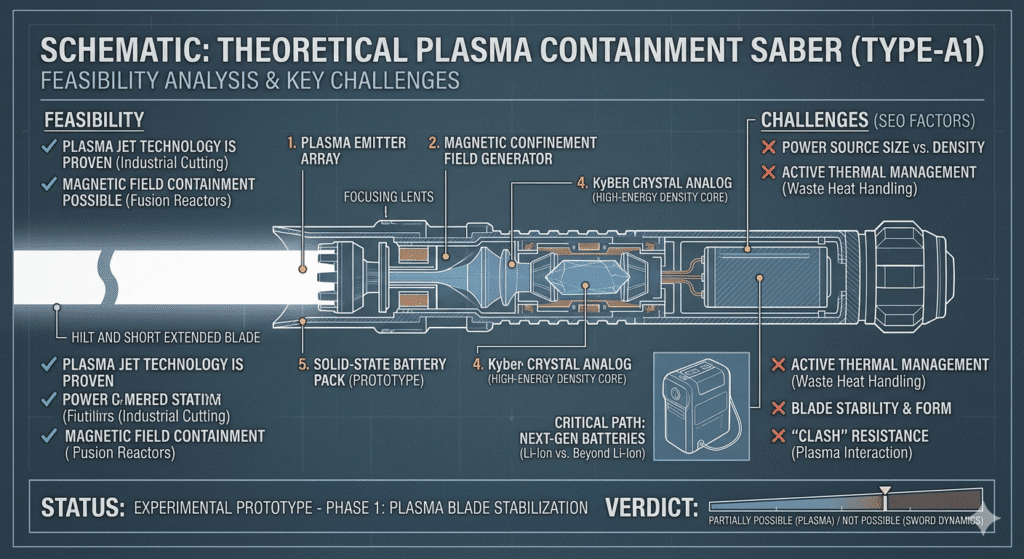
In the Star Wars lore, a lightsaber isn’t just a flashlight with a soul; it is a sophisticated piece of technology. According to the “blueprints,” a lightsaber consists of:
- A Plasma Blade: A glowing beam of superheated matter.
- Magnetic Containment: An invisible field that keeps the blade in a fixed shape.
- Kyber Crystals: The fictional power source that focuses the energy.
To make this a Real Life Lightsaber, we have to move past movie magic and look at the laws of thermodynamics.
The Closest Thing to “Blade Energy”: Plasma
If you want a Real Life Lightsaber it means you want a blade that glows and melts metal, you aren’t looking for a laser—you’re looking for plasma.
How hot is a lightsaber in Celsius?
Lucasfilm has never released official temperature,but a lightsaber is estimated to reach in range between 2,500°C and 25,000°C based on itobserved effects in the Star Wars universe.
Often called the “fourth state of matter,” plasma is essentially superheated gas where electrons are stripped from atoms. We see it every day in lightning bolts and the Sun.
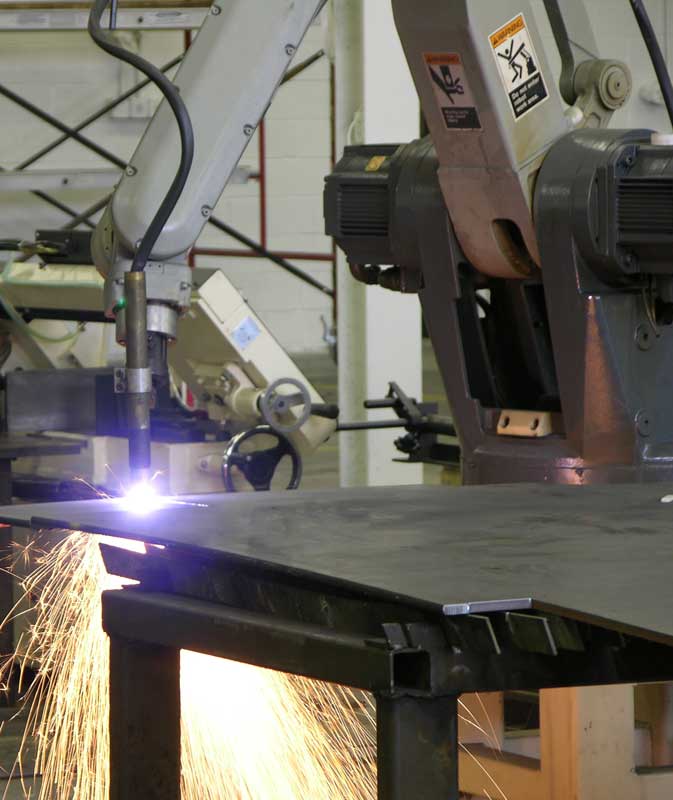
- Real-World Use: We already use plasma torches in industrial manufacturing to cut through thick steel plates.
- The Verdict: From a visual and “cutting power” standpoint, a plasma-based blade is scientifically sound.
The Containment Challenge: Why the Blade Doesn’t Stop
Here is where physics gets tricky. Light and plasma don’t just “stop” at three feet. A laser beam would travel until it hits a wall, and plasma would dissipate into a hot, shapeless cloud the moment it leaves the hilt. it means Real Life Lightsaber will not stop in 3 feet till now.
Why do lightsabers not go on forever?
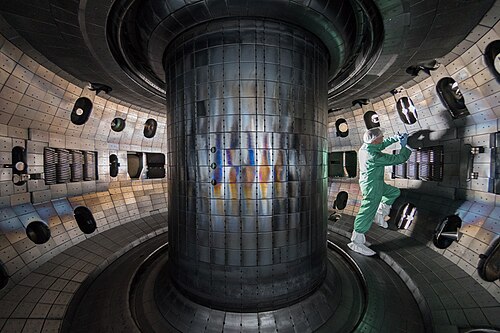
To create a “blade,” you would need an incredibly powerful magnetic field to loop the plasma back into the handle. While we use magnetic confinement in nuclear fusion reactors (like Tokamaks), these machines are the size of houses. Shrinking that technology down to a handheld hilt is currently beyond our engineering capabilities.
In the movies, a lightsaber can stay on for hours. In reality, the energy required to maintain a blade of plasma at several thousand degrees is astronomical.
- Energy Density: To power a Real Life Lightsaber for even ten minutes, you would need the energy equivalent of a small city’s power grid stored in a device the size of a D-cell battery.
- The Heat Issue: Even if you had the power, the “waste heat” from the handle would likely incinerate the user’s hand before they could even swing it.
The “Clash” Factor: Why Duelists Would Be Disappointed
One of the most iconic parts of Star Wars is the sound of two blades clashing. Unfortunately, if you had two plasma-based Real Life Lightsaber, they wouldn’t go clink.
Because plasma is a gas-like state, the two beams would simply pass through each other or, more likely, magnetically repel each other in a violent, unstable explosion of heat. You couldn’t “parry” a blow because there is no solid mass to provide resistance.
Do We Have Anything Close Today?
We aren’t completely in the dark ages. There have been some incredible “proto-saber” attempts which is close to Real Life Lightsaber.
Lightsaber vs Plasma Cutter: What’s the difference?
- Plasma Cutters: Handheld, but require a gas tank and a heavy power cord.
- Laminar Flow Torches: Some engineers have used glass-blowing torches to create long, thin flames that look remarkably like the real deal.
- High-Power Lasers: We have lasers that can pop balloons or etch wood, but they remain invisible until they hit smoke or dust.
The Final Verdict
Is a Real Life Lightsaber possible?
- As a “Sword”: Not with our current understanding of physics. The lack of a solid “clash” and the containment issues make it impractical as a melee weapon.
- As a Tool: We are getting closer! Handheld plasma technology is advancing every year.
While we might not be having Jedi duels by 2030, the quest to build a lightsaber is pushing the boundaries of material science and energy storage. For now, the lightsaber remains 10% science and 90% science fiction.